
用于抗菌和细胞毒性应用的壳聚糖整合姜黄素-氧化石墨烯/氧化铜杂化纳米复合材料
Chitosan-Integrated Curcumin-Graphene Oxide/Copper Oxide Hybrid Nanocomposites for Antibacterial and Cytotoxicity Applications.
作者信息
Sanmugam Anandhavelu, Sellappan Logesh Kumar, Sridharan Abbishek, Manoharan Swathy, Sairam Ananda Babu, Almansour Abdulrahman I, Veerasundaram Subha, Kim Hyun-Seok, Vikraman Dhanasekaran
机构信息
Department of Applied Chemistry, Sri Venkateswara College of Engineering, Sriperumbudur 602117, India.
Department of Chemical Engineering, Indian Institute of Technology Hyderabad, Kandi 502285, India.
出版信息
Antibiotics (Basel). 2024 Jul 3;13(7):620. doi: 10.3390/antibiotics13070620.
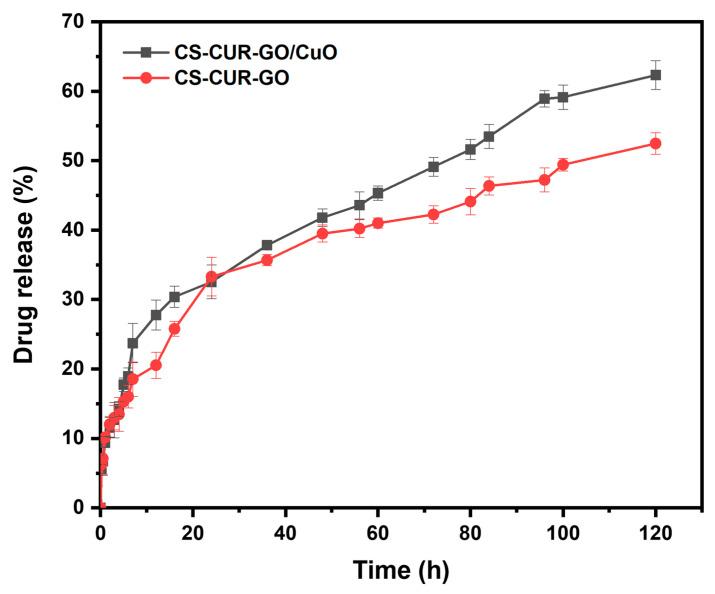
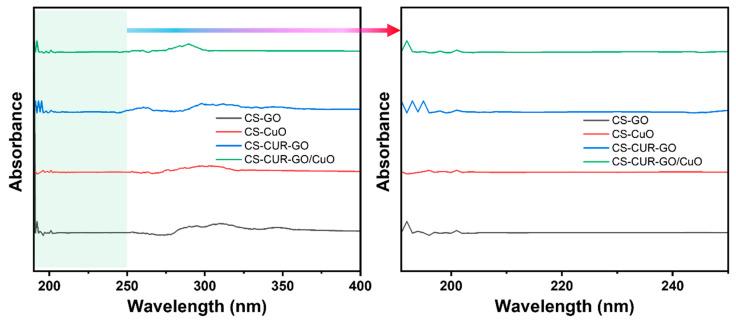
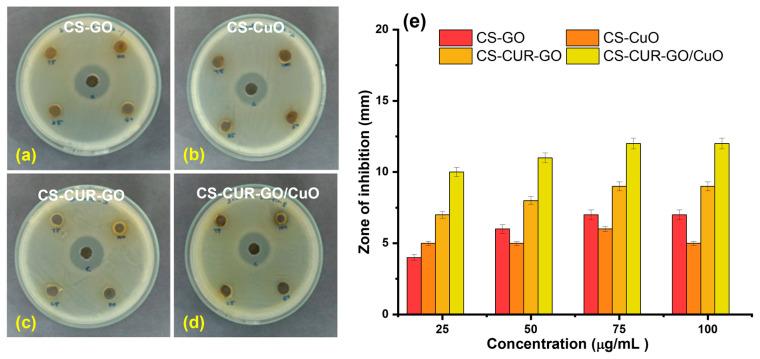
This study deals with the facile synthesis of a single-pot chemical technique for chitosan-curcumin (CUR)-based hybrid nanocomposites with nanostructured graphene oxide (GO) and copper oxide (CuO) as the antibacterial and cytotoxic drugs. The physicochemical properties of synthesized hybrid nanocomposites such as CS-GO, CS-CuO, CS-CUR-GO, and CS-CUR-GO/CuO were confirmed with various advanced tools. Moreover, the in vitro drug release profile of the CS-CUR-GO/CuO nanocomposite exhibited sustained and controlled release during different time intervals. Also, the antibacterial activity of the CS-CUR-GO/CuO hybrid nanocomposite presented the maximum bactericidal effect against and pathogens. The hybrid nanocomposites revealed improved cytotoxicity behaviour against cultured mouse fibroblast cells (L929) via cell adhesion, DNA damage, and proliferation. Thus, the chitosan-based hybrid nanocomposites offer rich surface area, biocompatibility, high oxidative stress, and bacterial cell disruption functionalities as a potential candidate for antibacterial and cytotoxicity applications.
本研究涉及一种简便的单步化学技术,用于合成基于壳聚糖 - 姜黄素(CUR)的杂化纳米复合材料,其中纳米结构的氧化石墨烯(GO)和氧化铜(CuO)作为抗菌和细胞毒性药物。通过各种先进工具证实了合成的杂化纳米复合材料如CS - GO、CS - CuO、CS - CUR - GO和CS - CUR - GO/CuO的物理化学性质。此外,CS - CUR - GO/CuO纳米复合材料的体外药物释放曲线在不同时间间隔内呈现出持续和可控的释放。而且,CS - CUR - GO/CuO杂化纳米复合材料的抗菌活性对 和 病原体表现出最大杀菌效果。杂化纳米复合材料通过细胞粘附、DNA损伤和增殖,对培养的小鼠成纤维细胞(L929)显示出改善的细胞毒性行为。因此,基于壳聚糖的杂化纳米复合材料具有丰富的表面积、生物相容性、高氧化应激和细菌细胞破坏功能,是抗菌和细胞毒性应用的潜在候选材料。





 Zotero 插件