Hematology Department, La Princesa University Hospital, 28006 Madrid, Spain.
College of Osteopathic Medicine, Kansas City University, Kansas City, MO 64804, USA.
Int J Mol Sci. 2024 Jul 10;25(14):7580. doi: 10.3390/ijms25147580.
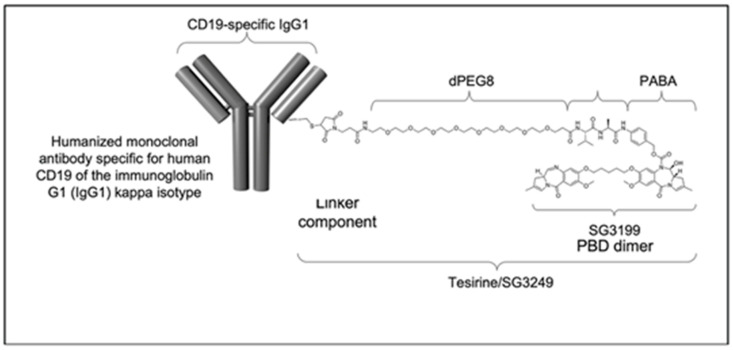
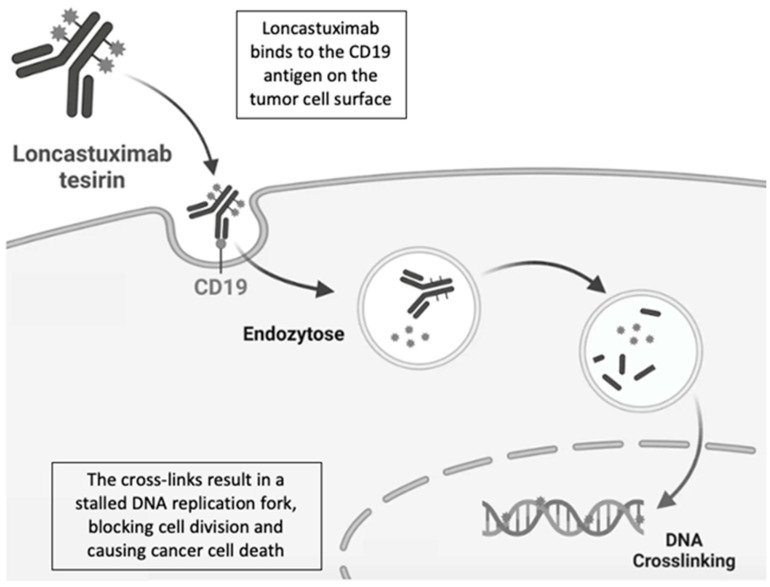
Currently, a significant percentage of patients with DLBCL are refractory or relapse after a first line of immunochemotherapy. Second relapses after autologous stem cell transplantation or chimeric antigen receptor T-cell therapies present few treatment options and do not yield good results. New molecules have entered the immunotherapy arsenal. Loncastuximab tesirine comprises a humanized anti-CD19 monoclonal conjugated antibody, which consists of an anti-CD19 antibody and cytotoxic alkylating agent, SG3199. Several studies have proven its efficacy in the treatment of refractory cases of DLBCL with a good safety profile, with the main adverse effects being neutropenia, thrombopenia, and liver enzyme involvement. In this review, we explain the mechanism of action of this molecule, the clinical data that have led to its acceptance by the FDA, and the new therapeutic options that are proposed in association with this drug.
目前,相当一部分弥漫性大 B 细胞淋巴瘤(DLBCL)患者在一线免疫化疗后出现耐药或复发。自体干细胞移植或嵌合抗原受体 T 细胞治疗后的二次复发选择有限,且效果不佳。新的分子已被纳入免疫治疗武器库。Loncastuximab tesirine 由一种人源化抗 CD19 单克隆抗体偶联药物组成,它由一种抗 CD19 抗体和细胞毒性烷化剂 SG3199 组成。多项研究证实,Loncastuximab tesirine 在治疗难治性弥漫性大 B 细胞淋巴瘤方面具有良好的疗效和安全性,主要不良反应为中性粒细胞减少症、血小板减少症和肝酶异常。在本文中,我们解释了该分子的作用机制、导致其被 FDA 批准的临床数据以及与该药物相关的新的治疗选择。