Yadav Pravendra, Petrella Andrea, Todaro Francesco, De Gisi Sabino, Vitone Claudia, Petti Rossella, Notarnicola Michele
Department of Civil, Environmental, Land, Building Engineering and Chemistry (DICATECh), Polytechnic University of Bari, Via E. Orabona 4, 70125 Bari, Italy.
Department of Industrial Engineering, University of Salerno, Via Giovanni Paolo II, 132, 84084 Fisciano, Italy.
Materials (Basel). 2024 Jul 21;17(14):3597. doi: 10.3390/ma17143597.
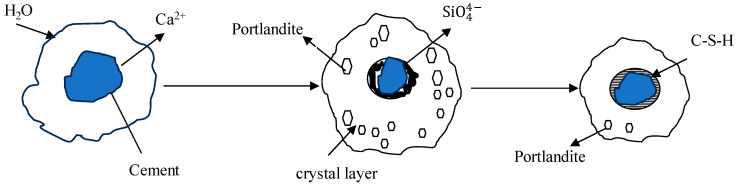
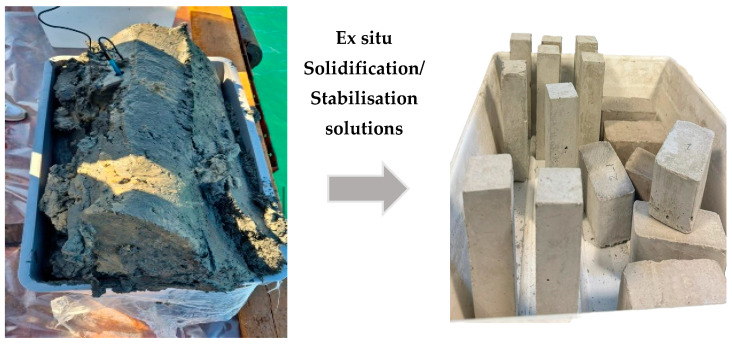
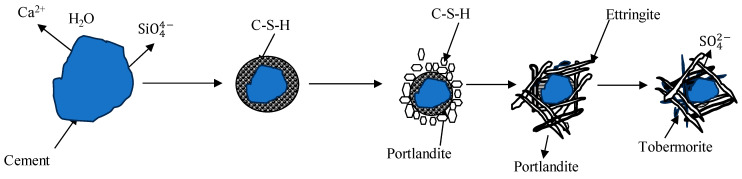
The routine dredging of waterways produces huge volumes of sediments. Handling contaminated dredged sediments poses significant and diverse challenges around the world. In recent years, novel and sustainable ex situ remediation technologies for contaminated sediments have been developed and applied. This review article focuses on cement-based binders in stabilizing contaminants through the stabilization/solidification (S/S) technique and the utilization of contaminated sediments as a resource. Through S/S techniques, heavy metals can be solidified and stabilized in dense and durable solid matrices, reducing their permeability and restricting their release into the environment. Industrial by-products like red mud (RM), soda residue (SR), pulverized fly ash (PFA), and alkaline granulated blast furnace slag (GGBS) can immobilize heavy metal ions such as lead, zinc, cadmium, copper, and chromium by precipitation. However, in a strong alkali environment, certain heavy metal ions might dissolve again. To address this, immobilization in low pH media can be achieved using materials like GGBS, metakaolin (MK), and incinerated sewage sludge ash (ISSA). Additionally, heavy metals can be also immobilized through the formation of silicate gels and ettringites during pozzolanic reactions by mechanisms such as adsorption, ion exchanges, and encapsulation. It is foreseeable that, in the future, the scientific community will increasingly turn towards multidisciplinary studies on novel materials, also after an evaluation of the effects on long-term heavy metal stabilization.
常规的水道疏浚会产生大量沉积物。处理受污染的疏浚沉积物在全球范围内带来了重大且多样的挑战。近年来,已开发并应用了用于受污染沉积物的新型可持续异位修复技术。这篇综述文章聚焦于基于水泥的粘结剂,通过稳定化/固化(S/S)技术稳定污染物以及将受污染沉积物作为一种资源加以利用。通过S/S技术,重金属可在致密且耐用的固体基质中固化和稳定,降低其渗透性并限制其释放到环境中。诸如赤泥(RM)、苏打渣(SR)、粉煤灰(PFA)和碱性粒化高炉矿渣(GGBS)等工业副产品可通过沉淀固定铅、锌、镉、铜和铬等重金属离子。然而,在强碱性环境中,某些重金属离子可能会再次溶解。为解决这一问题,可使用GGBS、偏高岭土(MK)和焚烧污水污泥灰(ISSA)等材料在低pH介质中实现固定化。此外,在火山灰反应过程中,重金属还可通过吸附、离子交换和包封等机制形成硅酸盐凝胶和钙矾石来实现固定化。可以预见,未来科学界在评估对长期重金属稳定化的影响之后,将越来越多地转向对新型材料的多学科研究。