Štrbac Mirjana, Joksimović Milko, Vuković Vladimir, Ristić Mioljub, Lončarević Goranka, Kanazir Milena, Nikolić Nataša, Pustahija Tatjana, Rajčević Smiljana, Ljubičić Stefan, Koprivica Marko, Laušević Dragan, Petrović Vladimir
Institute of Public Health of Vojvodina, Futoška 121, 21000 Novi Sad, Serbia.
Institute of Public Health of Montenegro, Džona Džeksona bb, 81110 Podgorica, Montenegro.
Vaccines (Basel). 2024 Jul 19;12(7):803. doi: 10.3390/vaccines12070803.
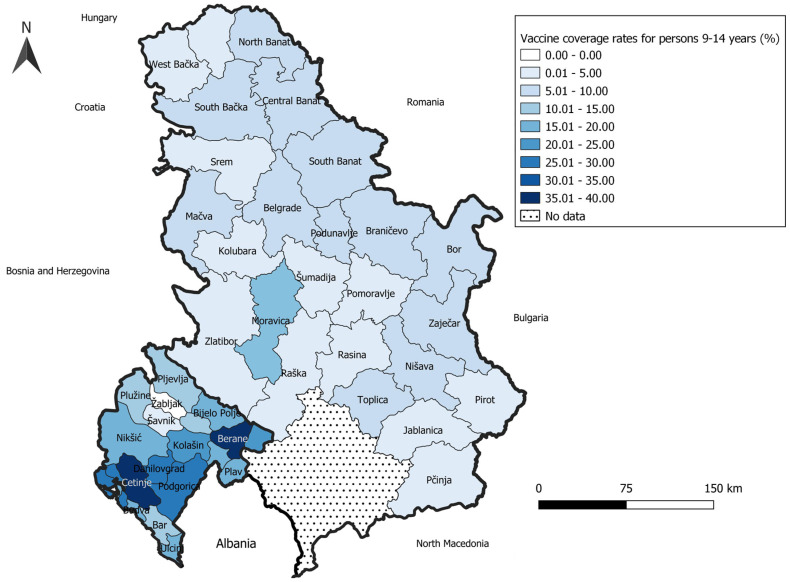
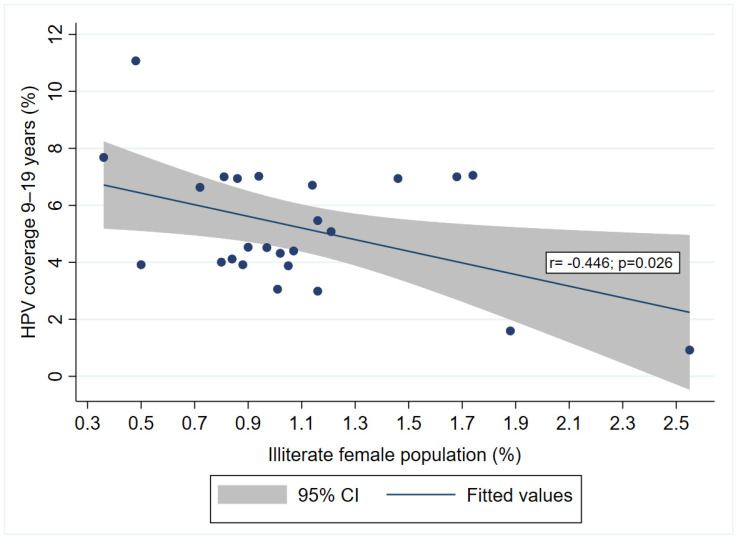
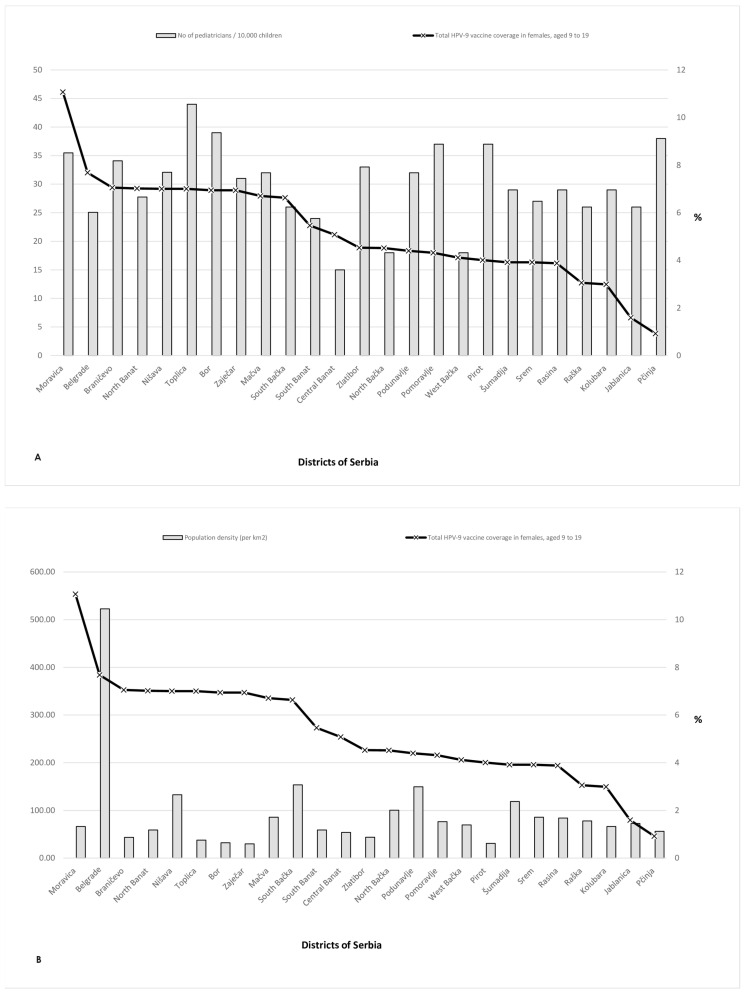
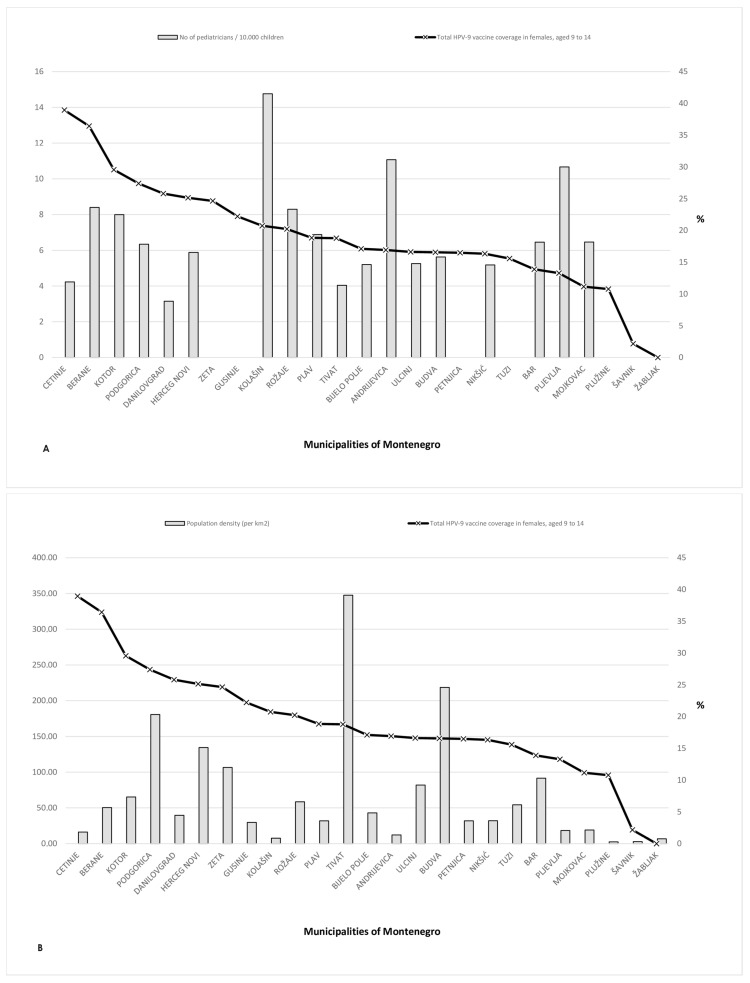
Despite the availability of a safe and effective vaccination, uptake of human papillomavirus (HPV) vaccination remains low worldwide. We aimed to analyze the coverage of HPV immunization during the first year of the immunization program and the sociodemographic characteristics across different administrative units in Serbia and Montenegro. Coverage of HPV vaccination in Serbia for females aged 9-14 and 15-19 years was 5.5% and 5.9%, respectively. The coverage rate of immunization against HPV in Montenegro for girls aged 9-14 years was 22.1%. Within Serbia, only one administrative region (Moravica) had HPV immunization coverage in girls 9-19 years old above 10%, 11 districts had coverage from 5 to 10%, while 13 districts had coverage below 5%. As per Montenegro, two administrative units, Cetinje and Berane, reported the highest coverage, with 39% and 36.4% of vaccinated eligible girls, respectively. When we explored the coverage of HPV immunization among girls aged 9-19 years across different regions in Serbia, we observed that the level of coverage did not correlate with the number of pediatricians or with the population density. In Montenegro, we observed a similar situation. On the other hand, we noticed a statistically significant moderate negative correlation (r = -0.446; = 0.026) between HPV immunization coverage and the percentage of illiterate women in the administrative units. Comparing the coverage between the two countries we found that the higher coverage in Montenegro corresponded with a smaller number of female populations aged 9-14 years, with higher average net monthly income, with smaller population density and smaller number of pediatricians, among divorced persons, and among those without formal education or incompletely primary education. Taking into account the experiences in Montenegro, increasing immunization coverage in Serbia could be achieved through a more vigorous educational campaign targeting schools, the general population, and healthcare workers as well as by additionally incentivizing those engaged in these activities.
尽管有安全有效的疫苗可用,但全球人乳头瘤病毒(HPV)疫苗的接种率仍然很低。我们旨在分析免疫规划第一年期间HPV免疫接种的覆盖率以及塞尔维亚和黑山不同行政单位的社会人口特征。塞尔维亚9至14岁和15至19岁女性的HPV疫苗接种率分别为5.5%和5.9%。黑山9至14岁女孩的HPV免疫接种率为22.1%。在塞尔维亚境内,只有一个行政区(莫拉维察)9至19岁女孩的HPV免疫接种率高于10%,11个区的接种率为5%至10%,而13个区的接种率低于5%。在黑山,两个行政单位,采蒂涅和贝拉内,报告的接种率最高,分别有39%和36.4%符合条件的女孩接种了疫苗。当我们探究塞尔维亚不同地区9至19岁女孩的HPV免疫接种覆盖率时,我们发现覆盖率水平与儿科医生数量或人口密度无关。在黑山,我们也观察到了类似情况。另一方面,我们注意到HPV免疫接种覆盖率与各行政单位文盲女性百分比之间存在统计学上显著的中度负相关(r = -0.446;P = 0.026)。比较两国的接种率,我们发现黑山较高的接种率与9至14岁女性人口数量较少、平均月净收入较高、人口密度较小、儿科医生数量较少、离婚人群以及未接受正规教育或小学未完成教育人群有关。考虑到黑山的经验,塞尔维亚可以通过针对学校、普通民众和医护人员开展更有力的教育活动,以及额外激励参与这些活动的人员来提高免疫接种覆盖率。