Ramos-Martínez Antonio, Múñez Elena, Del-Campo Rosa, Nieto-Fernández Alberto, Gonzalez-Haba Mariano, Calderón-Parra Jorge
Infectious Disease Unit, Hospital Universitario Puerta de Hierro, Instituto Investigación Sanitaria Puerta de Hierro - Segovia de Arana (IDIPHIM), Majadahonda, Spain.
Department of Microbiology, Hospital Universitario Ramón y Cajal, Madrid, Spain.
IDCases. 2024 Jul 3;37:e02025. doi: 10.1016/j.idcr.2024.e02025. eCollection 2024.
Recurrent acute cholangitis (RAC) is a relatively uncommon entity that presents significant management difficulties. We present the case of a patient with RAC in whom the number of episodes was reduced after a novel therapeutic procedure.
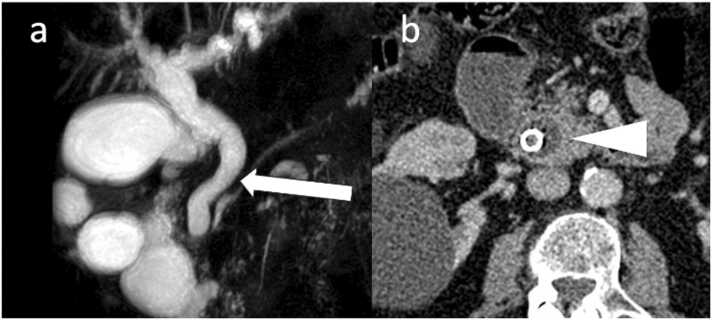
A 93-year-old male who in June 2019 was admitted for chills without fever, shivering, epigastric abdominal pain and moderate jaundice. Both abdominal ultrasound and CT scan showed intrahepatic and extrahepatic duct dilatation up to the papilla with no evidence of mass at that level. Endoscopic retrograde cholangiopancreatography (ERCP) was performed and abundant biliary sludge was removed. E. coli was identified as the cause of several of the episodes. Some isolates were shown to produce extended spectrum beta-lactamase (ESBL). Papillotomy was performed and plastic prosthesis and later a metallic prosthesis were implanted. Several months later a surgical bypass of the biliary tract was performed due to persistent episodes of cholangitis. When the chronic suppressive antibiotic treatment subsequently instituted to prevent new episodes of cholangitis failed, it was decided to perform a fecal microbiota transplant from a healthy donor and to suspend the chronic suppressive treatment. Since then, she has not presented new episodes of RAC for more than 10 months of clinical follow-up. BLEE-producing E. coli in the gastrointestinal tract could not be eradicated.
Chronic colonization of the biliary tract by certain enterobacteria such as E. coli has been identified as a relevant pathogenic factor in cases of RAC. FMT may be a promising tool to improve the clinical course of patients with RAC.
复发性急性胆管炎(RAC)是一种相对罕见的疾病,在治疗上存在重大困难。我们报告一例RAC患者,在接受一种新型治疗方法后发作次数减少。
一名93岁男性,于2019年6月因寒战(无发热)、颤抖、上腹部疼痛和中度黄疸入院。腹部超声和CT扫描均显示肝内和肝外胆管扩张至乳头水平,该水平未见肿块。进行了内镜逆行胰胆管造影(ERCP),清除了大量胆泥。已确定大肠杆菌是数次发作的病因。一些分离株显示产超广谱β-内酰胺酶(ESBL)。进行了乳头切开术,并植入了塑料支架,随后又植入了金属支架。数月后,由于胆管炎持续发作,进行了胆道外科搭桥手术。当随后为预防胆管炎新发作而采用的慢性抑制性抗生素治疗失败后,决定进行来自健康供体的粪便微生物群移植,并暂停慢性抑制性治疗。从那时起,在超过10个月的临床随访中,她未出现RAC新发作。胃肠道中产ESBL的大肠杆菌无法根除。
某些肠杆菌(如大肠杆菌)在胆道的慢性定植已被确定为RAC病例中的一个相关致病因素。粪便微生物群移植可能是改善RAC患者临床病程的一种有前景的工具。