Parial Laurence Lloyd B, Leyva Erwin William A, Siongco Kathryn Lizbeth L, Dones Luz Barbara P, Bernal Alexandra Belle S, Lupisan Julianne Anika C, Santos Daphne C, Diamaoden Micah Marnie C, Bonito And Sheila R
College of Nursing, University of the Philippines Manila, Manila, Philippines.
National Institute of Nursing Research, National Institutes of Health, Maryland, USA.
Acta Med Philipp. 2024 Jul 15;58(12):21-34. doi: 10.47895/amp.v58i12.9268. eCollection 2024.
Staffing shortages and health inequities are persistent barriers in the Philippines toward achieving universal health care. To ensure an adequate and responsive health workforce, there is a need to evaluate the Human Resources for Health (HRH) status across health facilities, particularly those in underserved communities. Hence, this study aims to determine the staffing requirements and workload pressure among primary care facilities in selected geographically isolated and disadvantaged areas (GIDAs) in the Philippines.
The study utilized the workload indicators of staffing need (WISN) methodology from the World Health Organization to determine the staffing and workload situation among three health worker cadres (physicians, nurses, and midwives) in the study sites. Particularly, six primary care facilities (four rural health units and two community hospitals) located in Surigao del Norte were involved in the study. WISN-related data (health service statistics, available working time, and health professionals' workload components) were collected through records review, focus group discussions, and key informant interviews. The WISN software was used to analyze the staffing levels and workload pressure in the selected facilities.
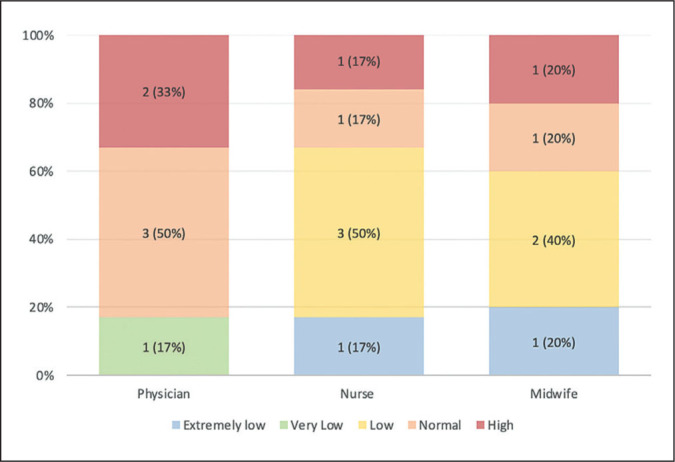
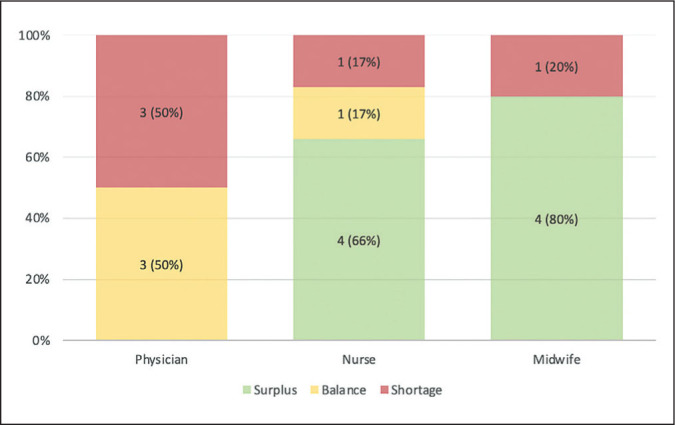
A total of 40 health workers, including physicians ( = 5, 13%), nurses ( = 21, 52%), and midwives ( = 14, 35%) participated in the study. The findings noted varying levels of staffing and workload pressures among the three cadres in selected primary care facilities, which were influenced by several factors. Particularly, health facilities with additional human resources obtained from deployment programs indicated adequate staffing and low to normal workload pressures. However, further analysis revealed potential HRH maldistribution and reliance on the temporary nature of the staff augmentation program in delivering primary care services, which need to be addressed to optimize health workforce planning. Service workload may also have been impacted by the temporary closure of health facilities due to disasters. Among the few cadres that reported staffing shortage and high workload pressure, these were due to higher service demands, increased task delegation, and inadequate service coordination. Hence, context-specific challenges and situational factors in GIDAs need to be considered when determining the staffing and workload requirements.
There is a need to improve the capacities of health facilities and local government units (LGUs) to engage in evidence-based HRH planning through the WISN methodology. Doing so could improve staffing and workload distribution among health care facilities in the country. Moreover, interorganizational collaboration (DOH, LGUs, and health facilities) should be strengthened to improve delineation and prevent duplication/omission of health services, rationalize HRH distribution and augmentation, and streamline the priority health services based on the local contextual factors.
人员短缺和健康不平等是菲律宾实现全民医疗保健的长期障碍。为确保有充足且能响应需求的卫生人力,有必要评估各医疗机构,尤其是服务不足社区的医疗机构的卫生人力资源(HRH)状况。因此,本研究旨在确定菲律宾选定的地理上孤立和处境不利地区(GIDAs)基层医疗设施的人员配备需求和工作量压力。
本研究采用世界卫生组织的人员配备需求工作量指标(WISN)方法,以确定研究地点三种卫生工作者(医生、护士和助产士)的人员配备和工作量情况。具体而言,北苏里高省的六家基层医疗设施(四家农村卫生单位和两家社区医院)参与了该研究。通过记录审查、焦点小组讨论和关键 informant 访谈收集了与 WISN 相关的数据(卫生服务统计数据、可用工作时间和卫生专业人员的工作量组成部分)。使用 WISN 软件分析选定设施的人员配备水平和工作量压力。
共有40名卫生工作者参与了该研究,其中包括医生(=5,13%)、护士(=21,52%)和助产士(=14,35%)。研究结果指出,选定基层医疗设施中这三类人员的人员配备和工作量压力水平各不相同,且受到多种因素影响。特别是,通过调配计划获得额外人力资源的医疗机构人员配备充足,工作量压力处于低至正常水平。然而,进一步分析显示,在提供基层医疗服务方面,可能存在卫生人力资源分配不均以及对人员扩充计划临时性质的依赖,需要加以解决以优化卫生人力规划。灾害导致的医疗机构临时关闭也可能影响了服务工作量。在少数报告人员短缺和工作量压力大的类别中,原因是服务需求增加、任务分配增多以及服务协调不足。因此,在确定人员配备和工作量需求时,需要考虑 GIDAs 地区特定的挑战和情境因素。
有必要提高医疗机构和地方政府单位(LGUs)通过 WISN 方法进行基于证据的卫生人力资源规划的能力。这样做可以改善该国医疗机构之间的人员配备和工作量分配。此外,应加强组织间合作(卫生部、地方政府单位和医疗机构),以改善卫生服务的划分并防止重复/遗漏,使卫生人力资源分配和扩充合理化,并根据当地情境因素简化优先卫生服务。