Geng Hao, Wang Kai, Liang Dan, Ni Xiaoqing, Yu Hui, Tang Dongdong, Lv Mingrong, Wu Huan, Li Kuokuo, Shen Qunshan, Gao Yang, Xu Chuan, Zhou Ping, Wei Zhaolian, Cao Yunxia, Sha Yanwei, Yang Xiaoyu, He Xiaojin
Reproductive Medicine Center, Department of Obstetrics and Gynecology, the First Affiliated Hospital of Anhui Medical University, Hefei, Anhui, China.
NHC Key Laboratory of Study on Abnormal Gametes and Reproductive Tract (Anhui Medical University), Hefei, Anhui, China.
iScience. 2024 Jun 24;27(7):110366. doi: 10.1016/j.isci.2024.110366. eCollection 2024 Jul 19.
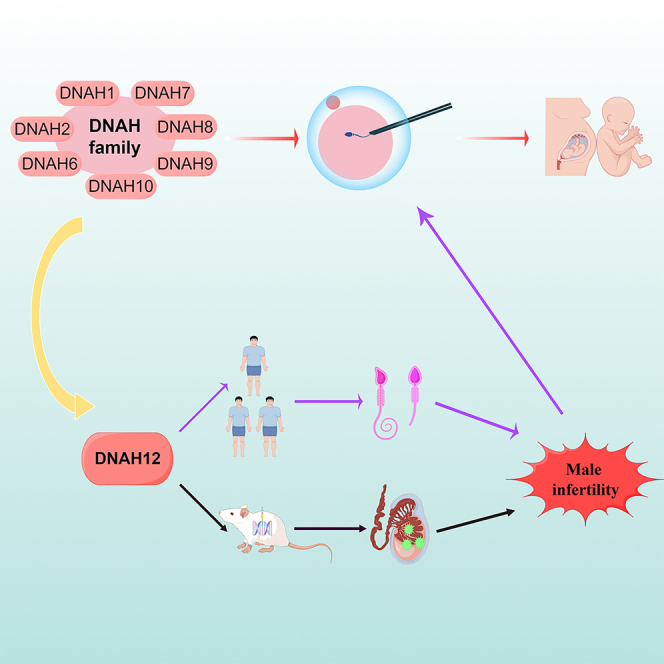
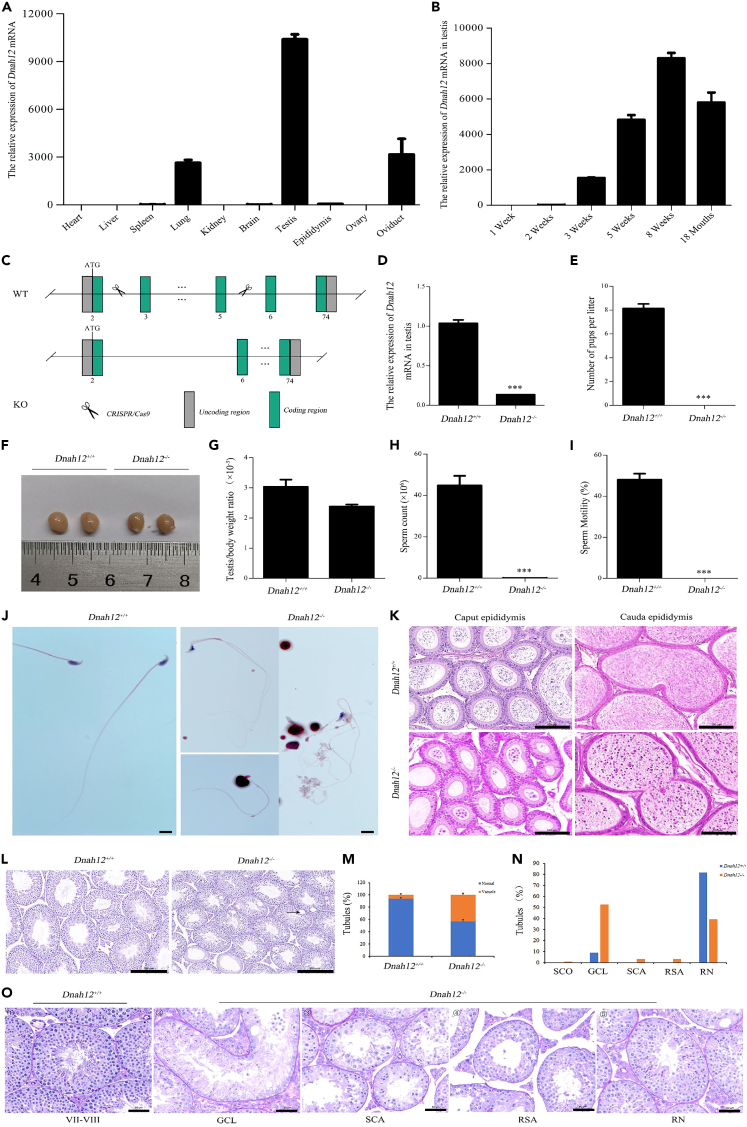
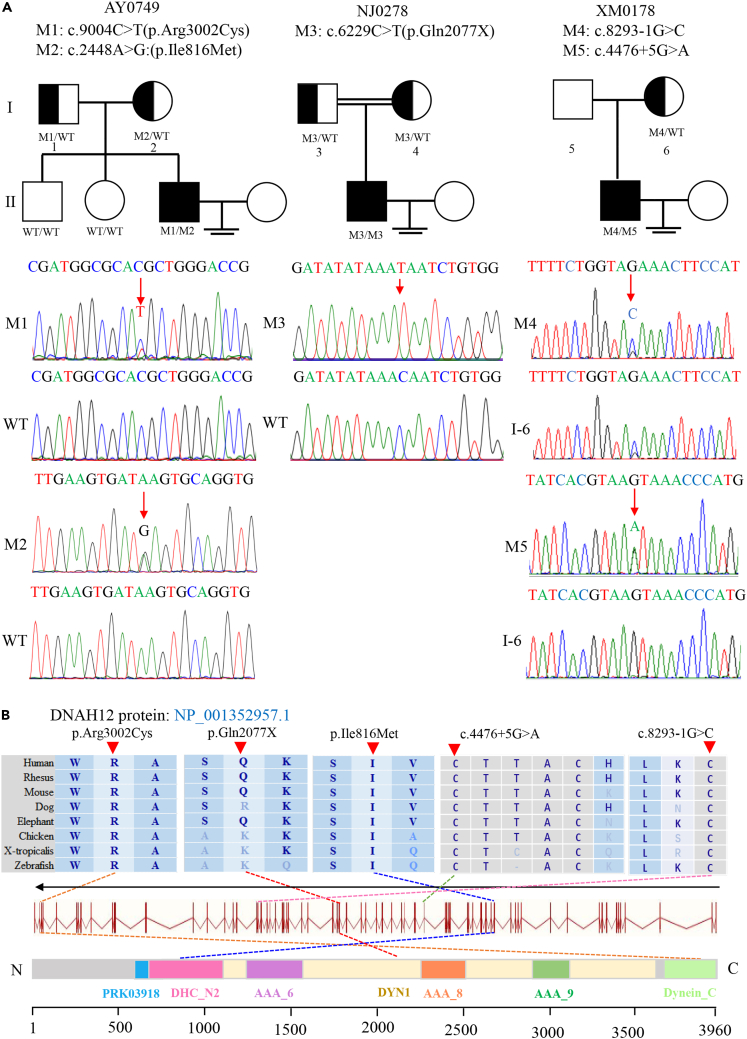
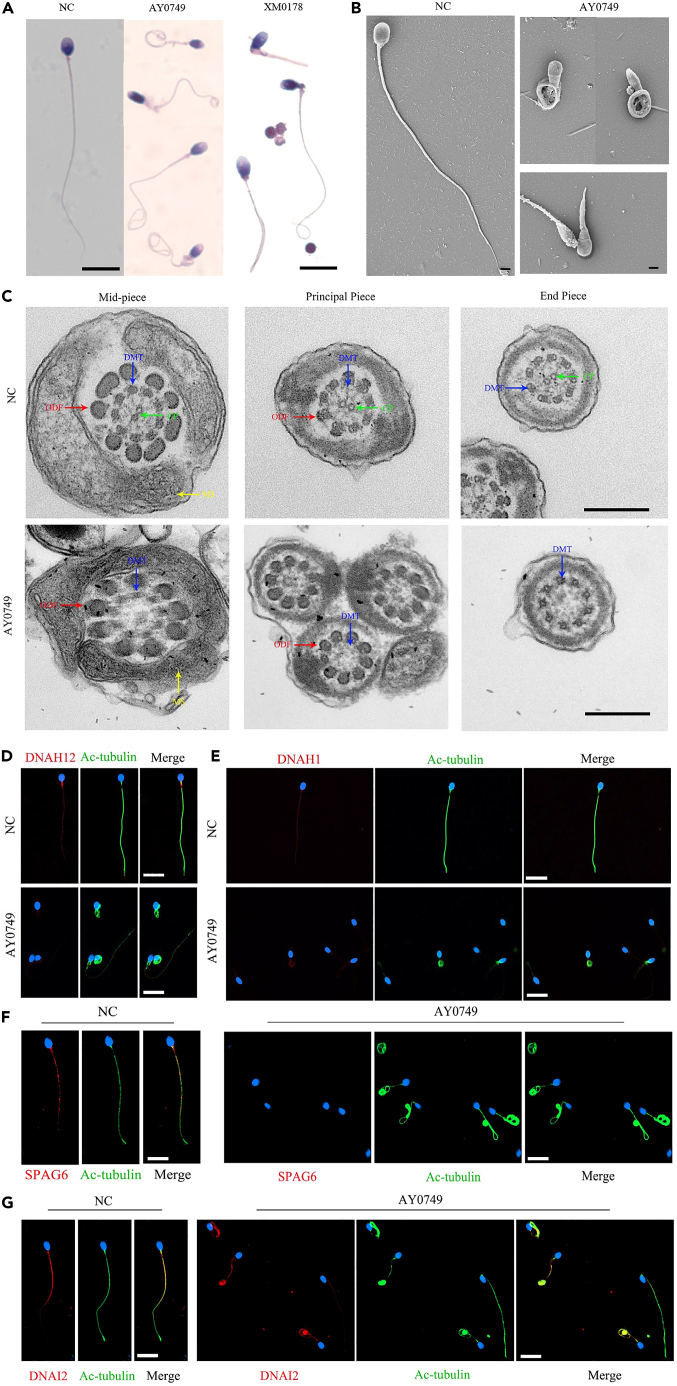
Male infertility is a major concern affecting reproductive health. Biallelic deleterious variants of most DNAH gene family members have been linked to male infertility, with intracytoplasmic sperm injection (ICSI) being an efficacious way to achieve offspring. However, the association between and male infertility is still limited. Here, we identified one homozygous variant and two compound heterozygous variants in from three infertile Chinese men. Semen analysis revealed severe asthenozoospermia, abnormal morphology, and structure of sperm flagella. Furthermore, the knock-out mouse revealed severe spermatogenesis failure and validated the same male infertility phenotype. Favorable fertility outcomes were achieved through ICSI in three human individuals and knock-out mice. Collectively, our study indicated that biallelic variants of can induce male infertility in both human beings and mice. Notably, evidence from enhanced that ICSI was an optimal intervention to achieve favorable fertility outcomes for infertile males with DNAH gene family variants.
男性不育是影响生殖健康的一个主要问题。大多数DNAH基因家族成员的双等位基因有害变异已与男性不育相关联,胞浆内单精子注射(ICSI)是实现生育后代的一种有效方法。然而,[基因名称]与男性不育之间的关联仍然有限。在此,我们从三名中国不育男性中鉴定出[基因名称]的一个纯合变异和两个复合杂合变异。精液分析显示严重的弱精子症、精子形态和结构异常。此外,[基因名称]敲除小鼠显示出严重的精子发生失败,并验证了相同的男性不育表型。通过ICSI,三名人类个体和[基因名称]敲除小鼠都获得了良好的生育结果。总体而言,我们的研究表明,[基因名称]的双等位基因变异可导致人类和小鼠的男性不育。值得注意的是,[基因名称]的证据进一步表明,ICSI是为患有DNAH基因家族变异的不育男性实现良好生育结果的最佳干预措施。