Department of Pharmacy Practice, School of Pharmacy, South University, Savannah, Georgia, United States of America.
Department of Biomedical Sciences, School of Medicine, Mercer University, Savannah, Georgia, United States of America.
PLoS One. 2024 Jul 29;19(7):e0304135. doi: 10.1371/journal.pone.0304135. eCollection 2024.
Renin-angiotensin system (RAS) modulators, including Angiotensin receptor blockers (ARB) and angiotensin-converting enzyme inhibitors (ACEI), are effective medications for controlling blood pressure. Cognitive deficits, including lack of concentration, memory loss, and confusion, were reported after COVID-19 infection. ARBs or ACEI increase the expression of angiotensin-converting enzyme-2 (ACE-2), a functional receptor that allows binding of SARS-CoV-2 spike protein for cellular invasion. To date, the association between the use of RAS modulators and the severity of COVID-19 cognitive dysfunction is still controversial.
This study addressed the following questions: 1) Does prior treatment with RAS modulator worsen COVID-19-induced cerebrovascular and cognitive dysfunction? 2) Can post-treatment with RAS modulator improve cognitive performance and cerebrovascular function following COVID-19? We hypothesize that pre-treatment exacerbates COVID-19-induced detrimental effects while post-treatment displays protective effects.
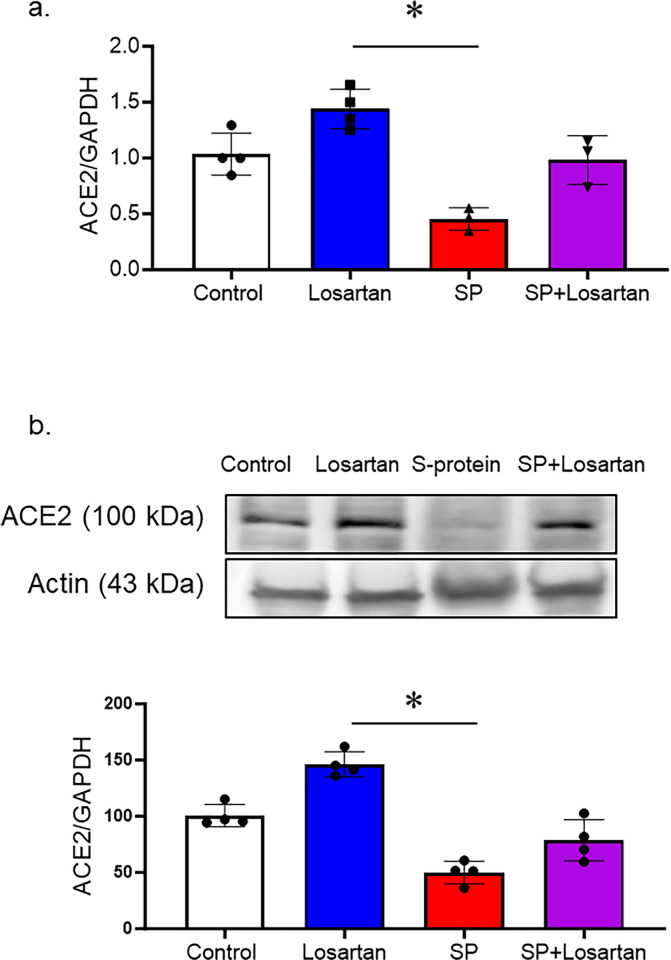
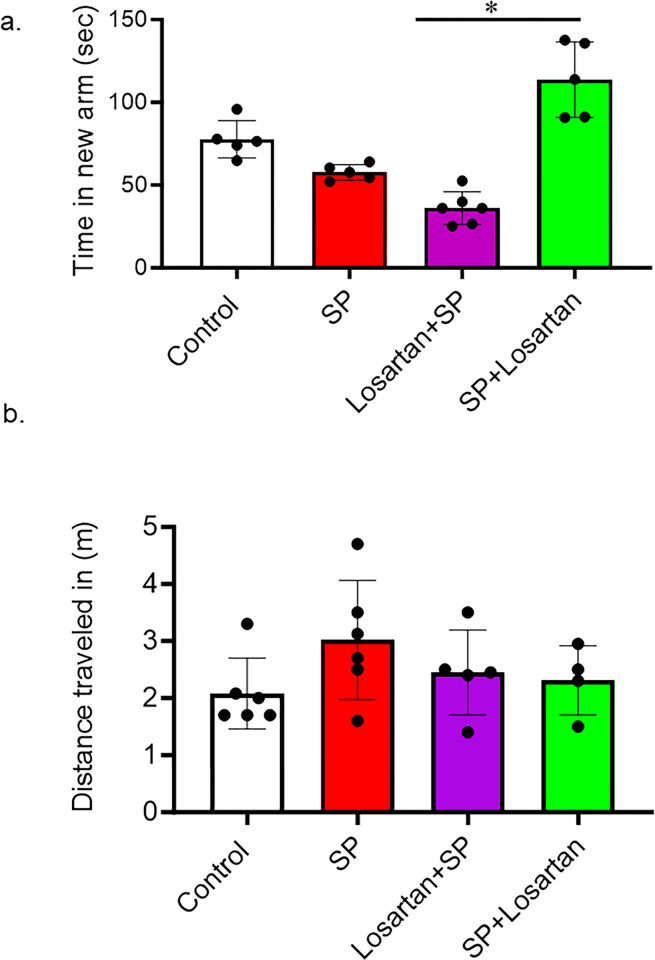
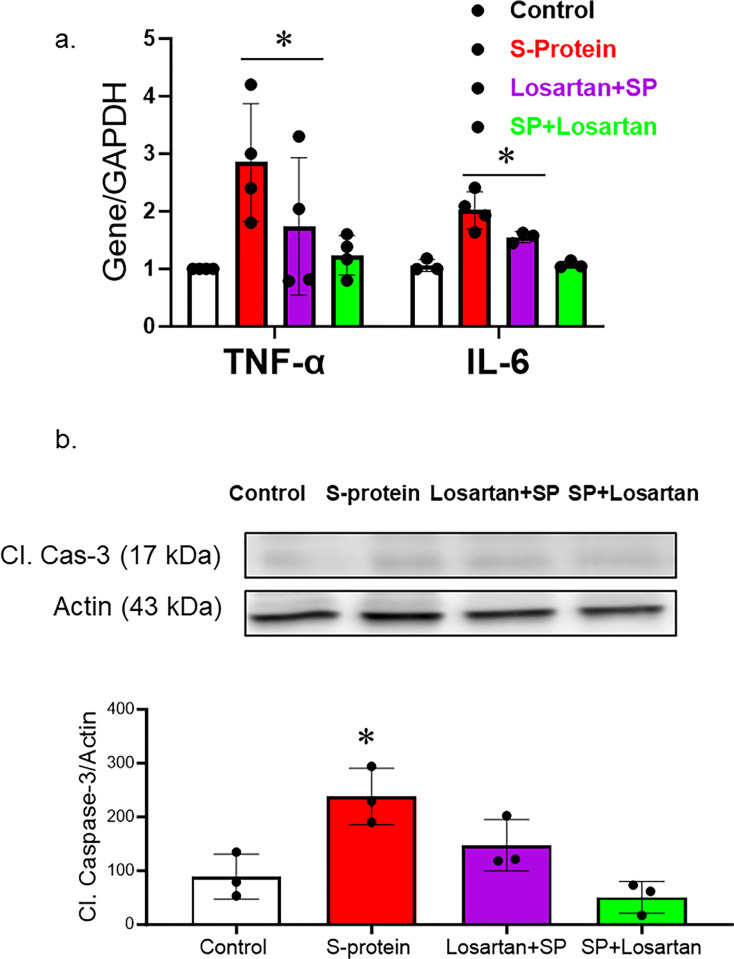
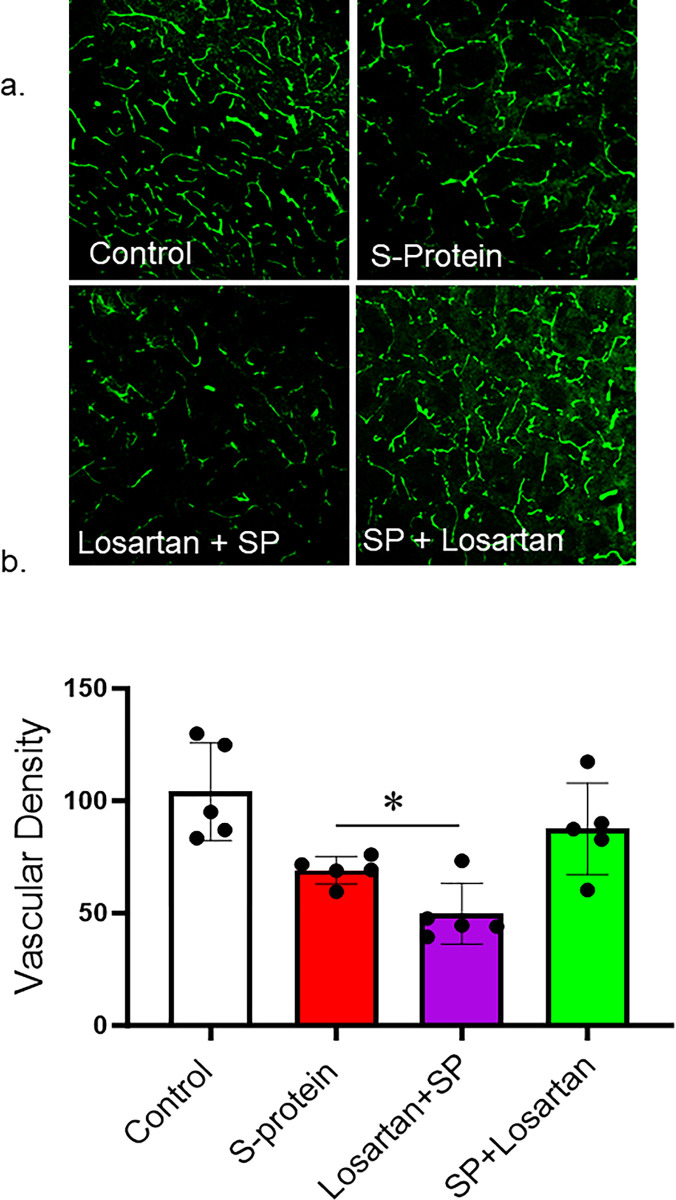
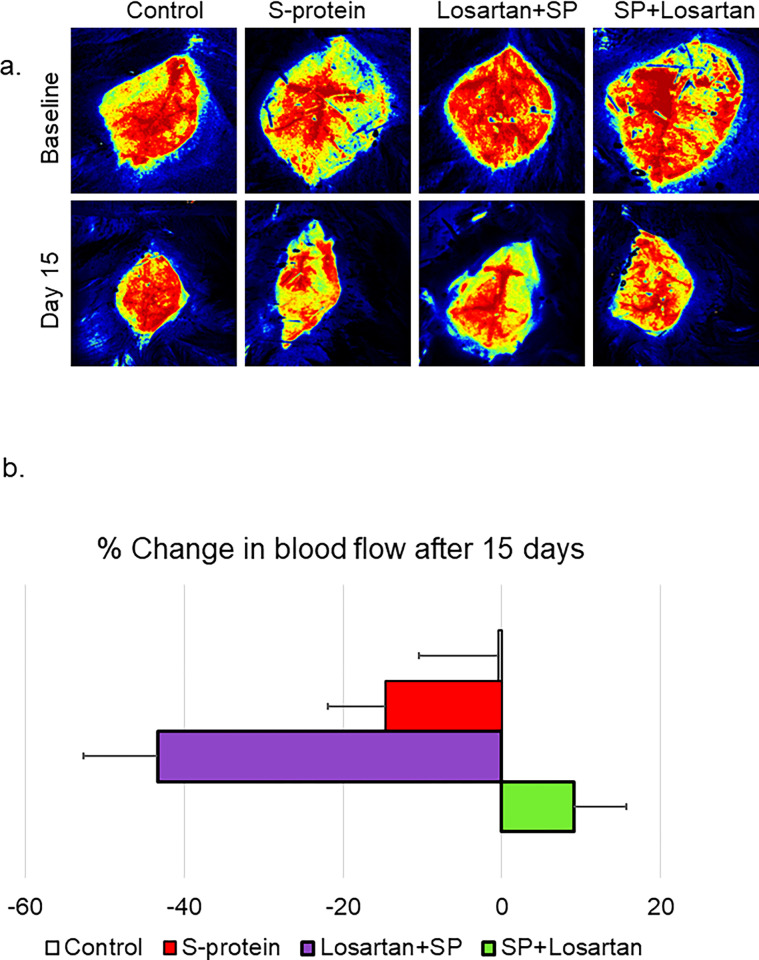
Clinical study: Patients diagnosed with COVID-19 between May 2020 and December 2022 were identified through the electronic medical record system. Inclusion criteria comprised a documented medical history of hypertension treated with at least one antihypertensive medication. Subsequently, patients were categorized into two groups: those who had been prescribed ACEIs or ARBs before admission and those who had not received such treatment before admission. Each patient was evaluated on admission for signs of neurologic dysfunction. Pre-clinical study: Humanized ACE-2 transgenic knock-in mice received the SARS-CoV-2 spike protein via jugular vein injection for 2 weeks. One group had received Losartan (10 mg/kg), an ARB, in their drinking water for two weeks before the injection, while the other group began Losartan treatment after the spike protein injection. Cognitive functions, cerebral blood flow, and cerebrovascular density were determined in all experimental groups. Moreover, vascular inflammation and cell death were assessed.
Signs of neurological dysfunction were observed in 97 out of 177 patients (51%) taking ACEIs/ARBs prior to admission, compared to 32 out of 118 patients (27%) not receiving ACEI or ARBs. In animal studies, spike protein injection increased vascular inflammation, increased endothelial cell apoptosis, and reduced cerebrovascular density. In parallel, spike protein decreased cerebral blood flow and cognitive function. Our results showed that pretreatment with Losartan exacerbated these effects. However, post-treatment with Losartan prevented spike protein-induced vascular and neurological dysfunctions.
Our clinical data showed that the use of RAS modulators before encountering COVID-19 can initially exacerbate vascular and neurological dysfunctions. Similar findings were demonstrated in the in-vivo experiments; however, the protective effects of targeting the RAS become apparent in the animal model when the treatment is initiated after spike protein injection.
本研究旨在探讨以下问题:1)RAS 调节剂的预先治疗是否会加重 COVID-19 引起的脑血管和认知功能障碍?2)COVID-19 后使用 RAS 调节剂能否改善认知表现和脑血管功能?我们假设预先治疗会加重 COVID-19 引起的有害影响,而后续治疗则具有保护作用。
临床研究:通过电子病历系统确定 2020 年 5 月至 2022 年 12 月期间确诊 COVID-19 的患者。纳入标准包括有高血压病史且至少接受过一种降压药物治疗。随后,将患者分为两组:一组在入院前接受 ACEI 或 ARB 治疗,另一组在入院前未接受此类治疗。每位患者入院时均评估有无神经功能障碍迹象。临床前研究:人类 ACE-2 转基因敲入小鼠通过颈静脉注射接受 SARS-CoV-2 刺突蛋白,持续 2 周。一组在注射前两周的饮用水中给予氯沙坦(10mg/kg),一种 ARB,另一组在注射刺突蛋白后开始给予氯沙坦治疗。所有实验组均测定认知功能、脑血流和脑血管密度。此外,还评估了血管炎症和细胞死亡。
在入院前接受 ACEI/ARB 治疗的 177 例患者中有 97 例(51%)出现神经系统功能障碍迹象,而在未接受 ACEI 或 ARB 治疗的 118 例患者中有 32 例(27%)出现神经系统功能障碍迹象。在动物研究中,刺突蛋白注射增加了血管炎症、增加了内皮细胞凋亡,并降低了脑血管密度。同时,刺突蛋白降低了脑血流和认知功能。我们的结果表明,预先给予氯沙坦会加重这些影响。然而,给予氯沙坦后治疗可预防刺突蛋白引起的血管和神经功能障碍。
我们的临床数据显示,在遇到 COVID-19 之前使用 RAS 调节剂可能会最初加重血管和神经功能障碍。体内实验也得到了类似的发现;然而,当在刺突蛋白注射后开始治疗时,针对 RAS 的治疗在动物模型中显示出了保护作用。