Faculty of Medicine and Health Technology, Tampere University, Arvo Ylpön katu 34, Tampere 33520, Finland.
Faculty of Medicine and Health Technology, Tampere University, Arvo Ylpön katu 34, Tampere 33520, Finland
eNeuro. 2024 Jul 30;11(7). doi: 10.1523/ENEURO.0035-24.2024. Print 2024 Jul.
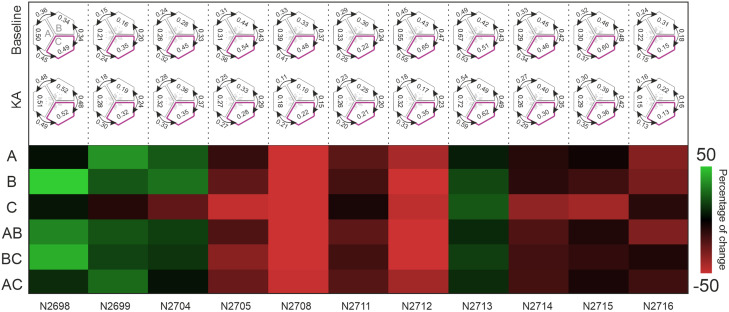
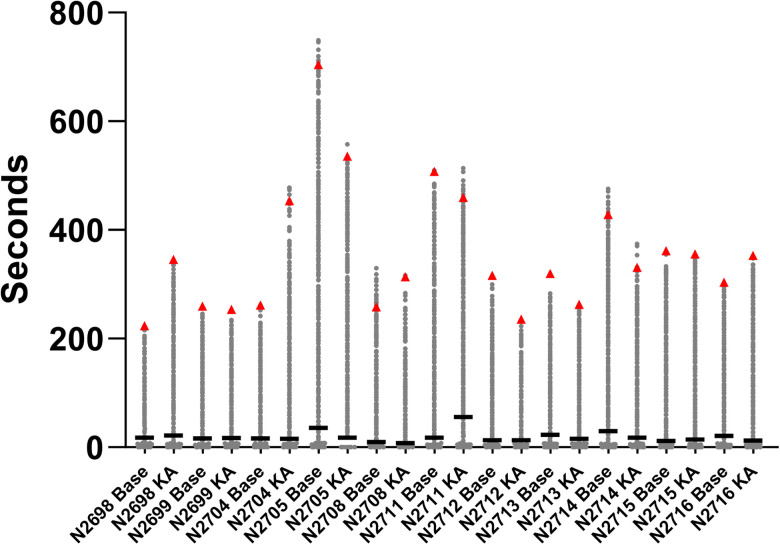
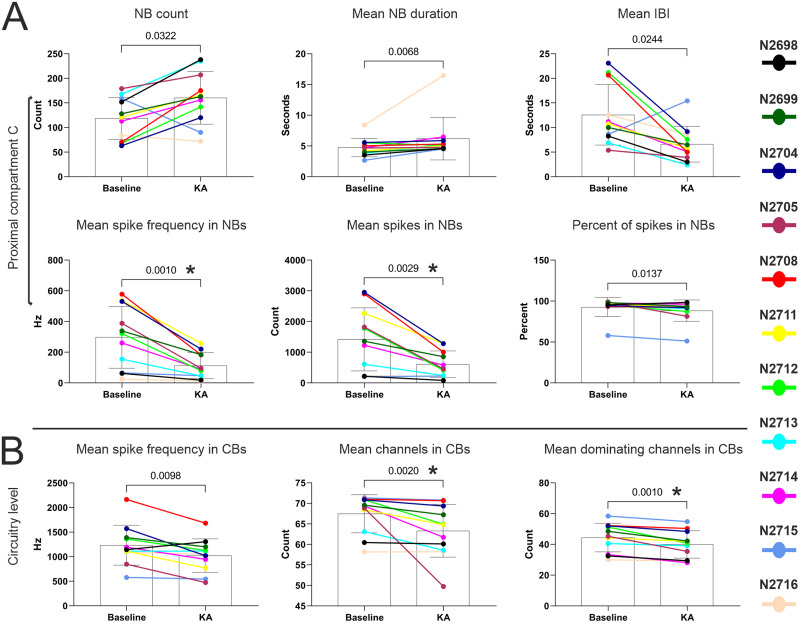
Brain activity implies the orchestrated functioning of interconnected brain regions. Typical in vitro models aim to mimic the brain using single human pluripotent stem cell-derived neuronal networks. However, the field is constantly evolving to model brain functions more accurately through the use of new paradigms, e.g., brain-on-a-chip models with compartmentalized structures and integrated sensors. These methods create novel data requiring more complex analysis approaches. The previously introduced circular tripartite network concept models the connectivity between spatially diverse neuronal structures. The model consists of a microfluidic device allowing axonal connectivity between separated neuronal networks with an embedded microelectrode array to record both local and global electrophysiological activity patterns in the closed circuitry. The existing tools are suboptimal for the analysis of the data produced with this model. Here, we introduce advanced tools for synchronization and functional connectivity assessment. We used our custom-designed analysis to assess the interrelations between the kainic acid (KA)-exposed proximal compartment and its nonexposed distal neighbors before and after KA. Novel multilevel circuitry bursting patterns were detected and analyzed in parallel with the inter- and intracompartmental functional connectivity. The effect of KA on the proximal compartment was captured, and the spread of this effect to the nonexposed distal compartments was revealed. KA induced divergent changes in bursting behaviors, which may be explained by distinct baseline activity and varied intra- and intercompartmental connectivity strengths. The circular tripartite network concept combined with our developed analysis advances importantly both face and construct validity in modeling human epilepsy in vitro.
脑活动意味着相互连接的脑区的协调功能。典型的体外模型旨在使用单个人类多能干细胞衍生的神经元网络模拟大脑。然而,该领域不断发展,通过使用新的范例更准确地模拟大脑功能,例如具有分区结构和集成传感器的“大脑在芯片”模型。这些方法创建了需要更复杂分析方法的新数据。先前介绍的圆形三分网络模型模拟了空间上不同的神经元结构之间的连接。该模型由一个微流控设备组成,允许分离的神经元网络之间的轴突连接,其中嵌入了一个微电极阵列,以记录封闭电路中的局部和全局电生理活动模式。现有的工具对于分析该模型产生的数据并不理想。在这里,我们引入了用于同步和功能连接评估的高级工具。我们使用我们自定义设计的分析来评估 KA 暴露的近端隔室与其未暴露的远端邻居之间的相互关系,在 KA 之前和之后。在并行分析中检测到并分析了新型多层次电路突发模式及其与隔室间和隔室内的功能连接。KA 对近端隔室的影响被捕获,并且这种影响扩展到未暴露的远端隔室。KA 诱导了爆发行为的发散变化,这可以通过不同的基线活动和不同的隔室内和隔室间连接强度来解释。圆形三分网络概念与我们开发的分析相结合,在体外模拟人类癫痫方面重要地提高了模型的表面和结构有效性。