Department of Biology, Technion-Israel Institute of Technology, Haifa, Israel.
Department of Microbiology and Molecular Genetics, Institute of Medical Research Israel-Canada, Faculty of Medicine, The Hebrew University, Jerusalem, Israel.
Nat Commun. 2024 Jul 30;15(1):6417. doi: 10.1038/s41467-024-50882-0.
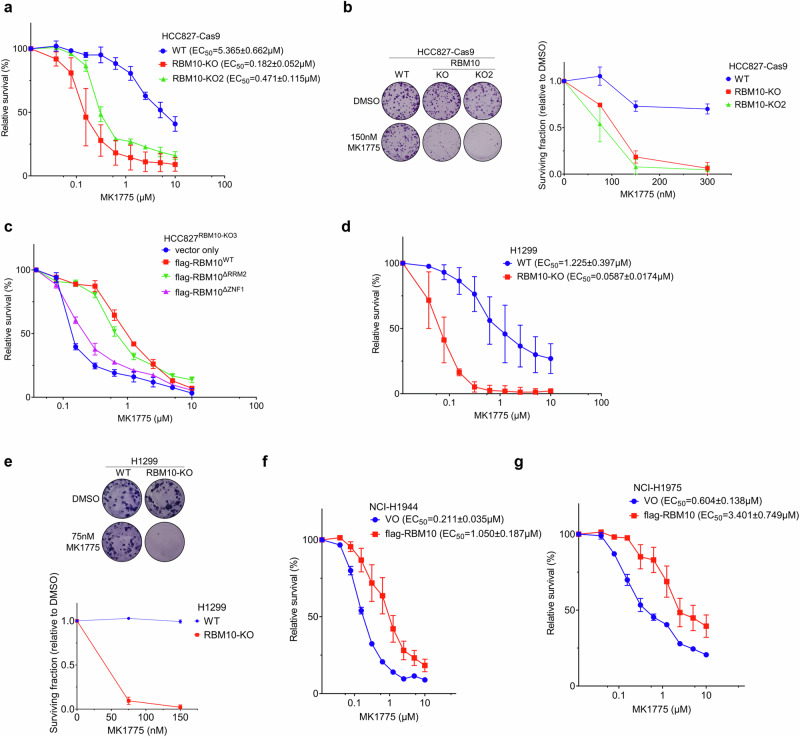
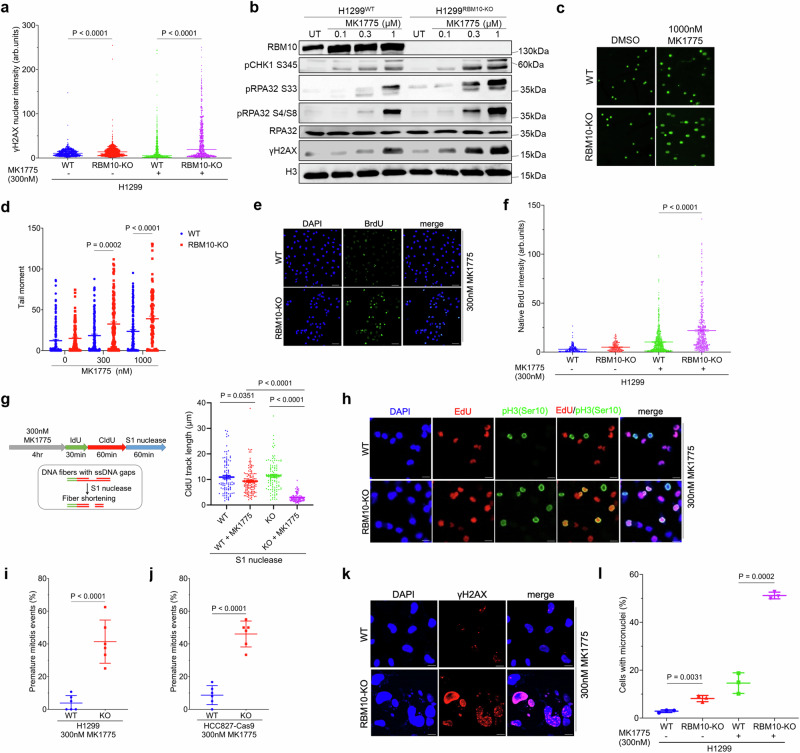
The splicing factor RNA-binding motif protein 10 (RBM10) is frequently mutated in lung adenocarcinoma (LUAD) (9-25%). Most RBM10 cancer mutations are loss-of-function, correlating with increased tumorigenesis and limiting the efficacy of current LUAD targeted therapies. Remarkably, therapeutic strategies leveraging RBM10 deficiency remain unexplored. Here, we conduct a CRISPR-Cas9 synthetic lethality (SL) screen and identify ~60 RBM10 SL genes, including WEE1 kinase. WEE1 inhibition sensitizes RBM10-deficient LUAD cells in-vitro and in-vivo. Mechanistically, we identify a splicing-independent role of RBM10 in regulating DNA replication fork progression and replication stress response, which underpins RBM10-WEE1 SL. Additionally, RBM10 interacts with active DNA replication forks, relying on DNA Primase Subunit 1 (PRIM1) that synthesizes Okazaki RNA primers. Functionally, we demonstrate that RBM10 serves as an anchor for recruiting Histone Deacetylase 1 (HDAC1) to facilitate H4K16 deacetylation and R-loop homeostasis to maintain replication fork stability. Collectively, our data reveal a role of RBM10 in fine-tuning DNA replication and provide therapeutic arsenal for targeting RBM10-deficient tumors.
RNA 结合基序蛋白 10(RBM10)剪接因子在肺腺癌(LUAD)中经常发生突变(9-25%)。大多数 RBM10 癌症突变是失活功能,与增加肿瘤发生相关,并限制了当前 LUAD 靶向治疗的疗效。值得注意的是,利用 RBM10 缺乏的治疗策略仍未得到探索。在这里,我们进行了 CRISPR-Cas9 合成致死(SL)筛选,并鉴定了约 60 个 RBM10 SL 基因,包括 WEE1 激酶。WEE1 抑制在体外和体内使 RBM10 缺陷的 LUAD 细胞敏感。从机制上讲,我们发现 RBM10 在调节 DNA 复制叉进展和复制应激反应方面具有与剪接无关的作用,这是 RBM10-WEE1 SL 的基础。此外,RBM10 与活性 DNA 复制叉相互作用,依赖于合成冈崎 RNA 引物的 DNA 引发酶亚单位 1(PRIM1)。从功能上讲,我们证明 RBM10 可作为招募组蛋白去乙酰化酶 1(HDAC1)的锚定点,以促进 H4K16 去乙酰化和 R 环稳态,从而维持复制叉稳定性。总之,我们的数据揭示了 RBM10 在精细调节 DNA 复制中的作用,并为靶向 RBM10 缺陷肿瘤提供了治疗武器。