Linley Grant D, Geary William L, Jolly Chris J, Spencer Emma E, Ashman Kita R, Michael Damian R, Westaway Dylan M, Nimmo Dale G
Gulbali Institute for Agriculture, Water and Environment, Charles Sturt University, Thurgoona, NSW 2640, Australia.
School of Agricultural, Environmental and Veterinary Sciences, Charles Sturt University, Thurgoona, NSW 2640, Australia.
J Mammal. 2024 May 16;105(4):752-764. doi: 10.1093/jmammal/gyae034. eCollection 2024 Aug.
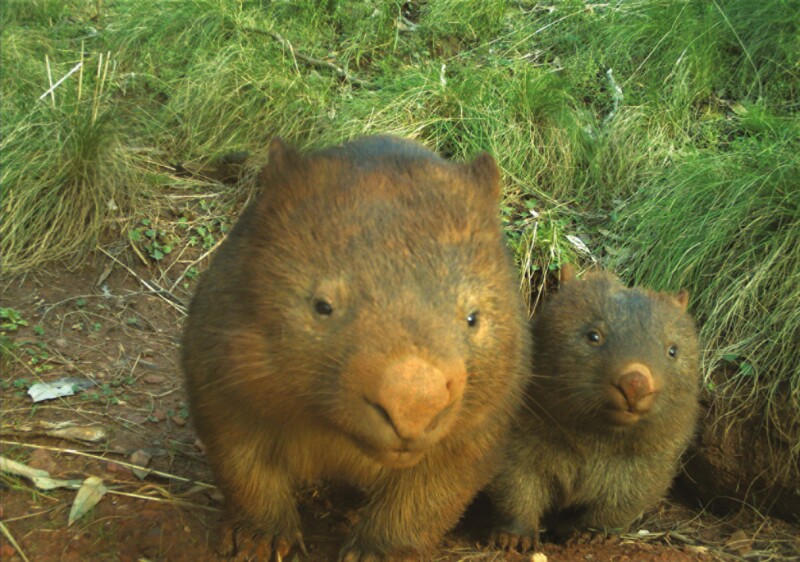
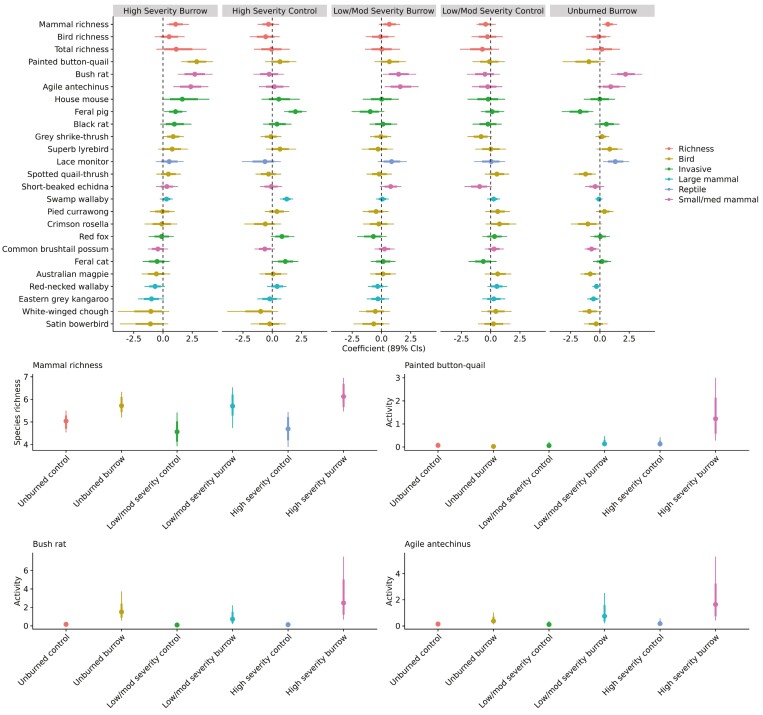
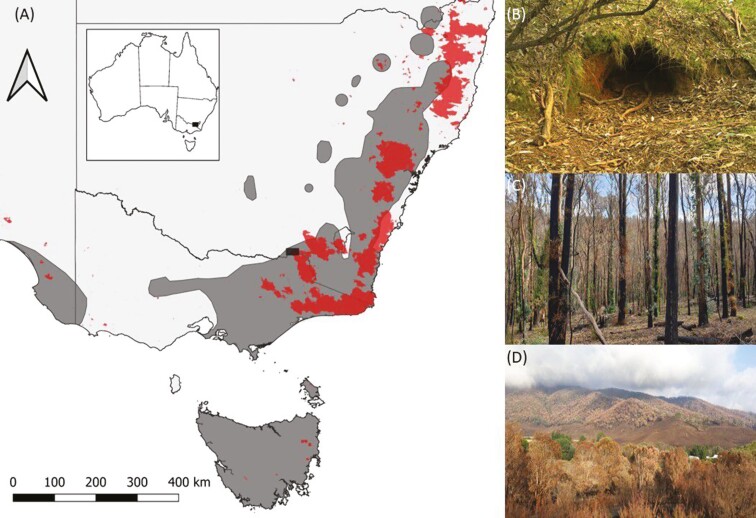
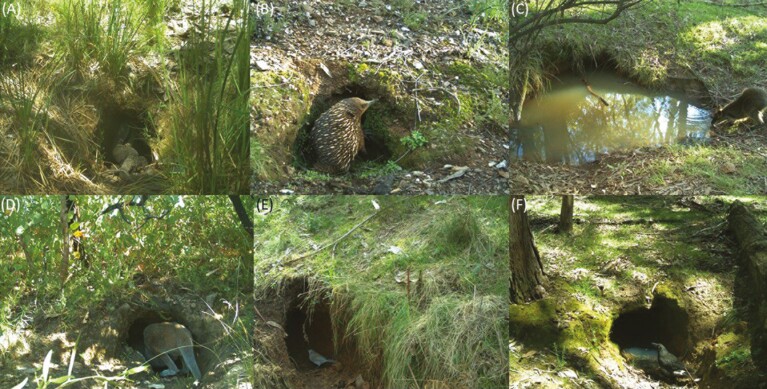
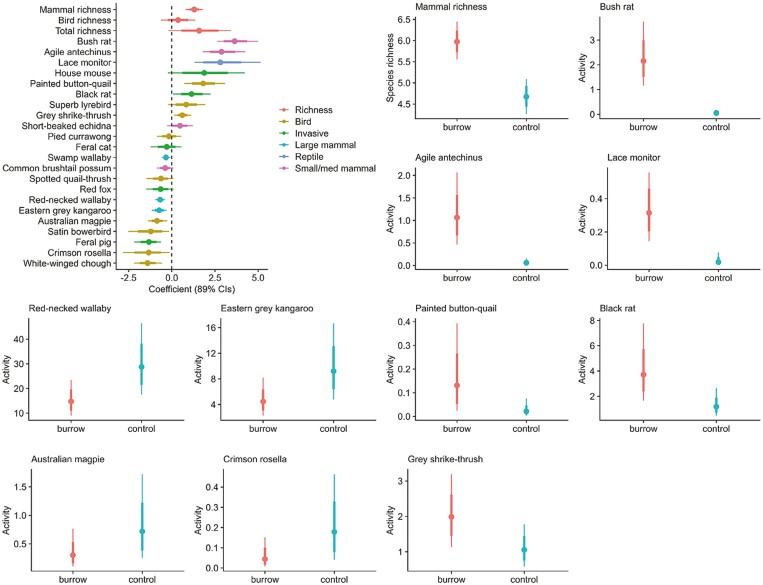
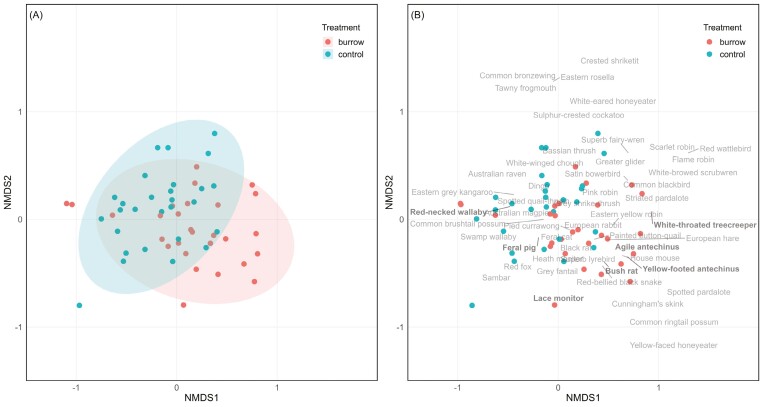
Ecosystem engineers modify their environment and influence the availability of resources for other organisms. Burrowing species, a subset of allogenic engineers, are gaining recognition as ecological facilitators. Burrows created by these species provide habitat for a diverse array of other organisms. Following disturbances, burrows could also serve as ecological refuges, thereby enhancing ecological resistance to disturbance events. We explored the ecological role of Common Wombat () burrows using camera traps in forests of southeastern Australia. We compared animal activity at paired sites with and without burrows, from the same fire severity class and habitat. We examined how animal activity at Common Wombat burrows was affected by the 2019-20 Black Summer bushfires in Australia. We predicted that burrows would serve as hotspots for animal activity and as refuges in burned areas. The activity of several species including Bush Rat (), Agile Antechinus (), Lace Monitor (), Painted Button-quail (), and Grey Shrike-thrush () increased at sites where Common Wombat burrows were present, while other species avoided burrows. Species that were more active at burrows tended to be smaller mammal and bird species that are vulnerable to predation, whereas species that avoided burrows tended to be larger mammals that might compete with Common Wombat for resources. Species composition differed between sites with and without burrows, and burrow sites had higher native mammal species richness. The association of several species with burrows persisted or strengthened in areas that burned during the 2019-20 Black Summer bushfires, suggesting that Common Wombat burrows may act as ecological refuges for animals following severe wildfire. Our findings have relevance for understanding how animals survive, persist, and recover following extreme wildfire events.
生态系统工程师会改变其所处环境,并影响其他生物可获取的资源。打洞物种作为异源工程师的一个子集,正逐渐被视为生态促进者。这些物种挖掘的洞穴为各种各样的其他生物提供了栖息地。在受到干扰后,洞穴还可以作为生态避难所,从而增强对干扰事件的生态抵抗力。我们在澳大利亚东南部的森林中使用相机陷阱,探究了袋熊洞穴的生态作用。我们比较了来自相同火灾严重程度等级和栖息地的、有洞穴和无洞穴的配对地点的动物活动情况。我们研究了澳大利亚2019 - 20年黑色夏季丛林大火对袋熊洞穴处动物活动的影响。我们预测洞穴将成为动物活动的热点区域以及火灾区域的避难所。包括丛林鼠、敏捷白齿袋鼩、花边巨蜥、彩绘纽扣鹌鹑和灰伯劳鸫在内的几种物种,在有袋熊洞穴的地点活动增加,而其他物种则避开洞穴。在洞穴处更活跃的物种往往是易受捕食的小型哺乳动物和鸟类物种,而避开洞穴的物种往往是可能与袋熊争夺资源的大型哺乳动物。有洞穴和无洞穴的地点物种组成不同,且有洞穴的地点本土哺乳动物物种丰富度更高。在2019 - 20年黑色夏季丛林大火中被烧毁的区域,几种物种与洞穴的关联持续存在或增强,这表明袋熊洞穴可能在严重野火后为动物充当生态避难所。我们的研究结果对于理解极端野火事件后动物如何生存、存续和恢复具有重要意义。