Liu Fengna, Gao Aiai, Zhang Meiying, Li Yazhuo, Zhang Fan, Herman James G, Guo Mingzhou
Department of Gastroenterology and Hepatology, the First Medical Center, Chinese PLA General Hospital, Beijing 100853, China.
Department of Pathology, The Fourth Medical Center of PLA General Hospital, Beijing 100048, China.
J Transl Int Med. 2024 Jul 27;12(3):274-287. doi: 10.2478/jtim-2023-0128. eCollection 2024 Jun.
Pancreatic ductal adenocarcinoma (PDAC) is one of the deadliest malignancies. An epigenetic-based synthetic lethal strategy provides a novel opportunity for PDAC treatment. Finding more DNA damage repair (DDR)-related or cell fate-related molecules with aberrant epigenetic changes is becoming very important. Family with sequence similarity 110C () is a cell fate-related gene and its function in cancer remains unclear.
Seven cell lines, 34 cases of intraductal papillary mucinous neoplasm (IPMN), 15 cases of mucinous cystic neoplasm (MCN) and 284 cases of PDAC samples were employed. Methylation-specific PCR, western blot, CRISPR knockout, immunoprecipitation and a xenograft mouse model were used in this study.
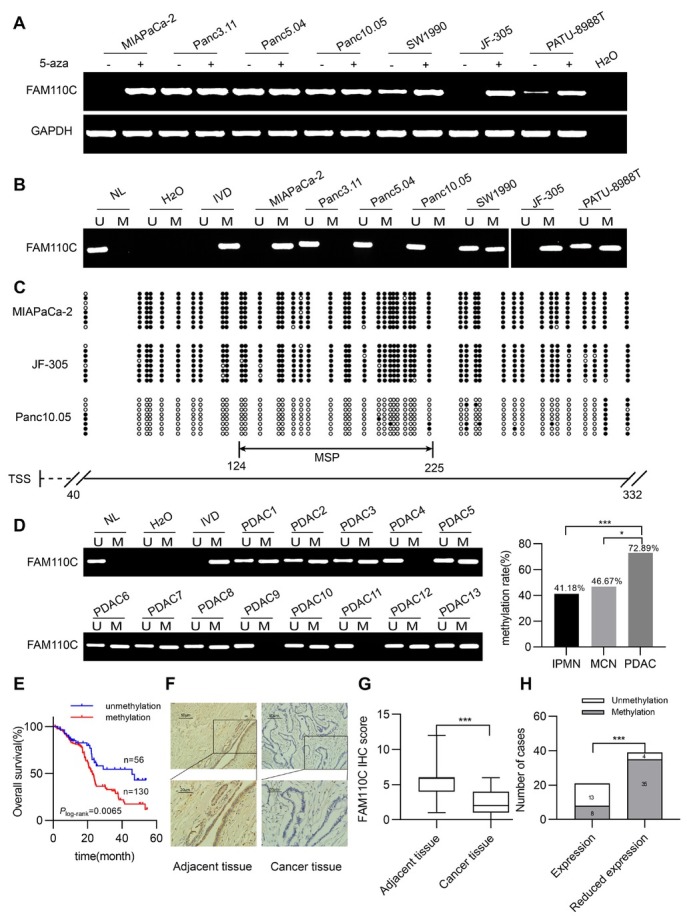
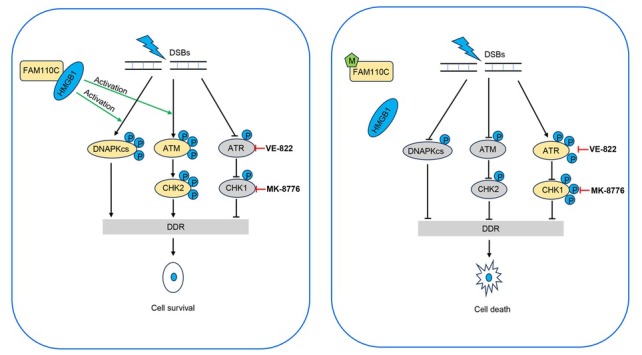
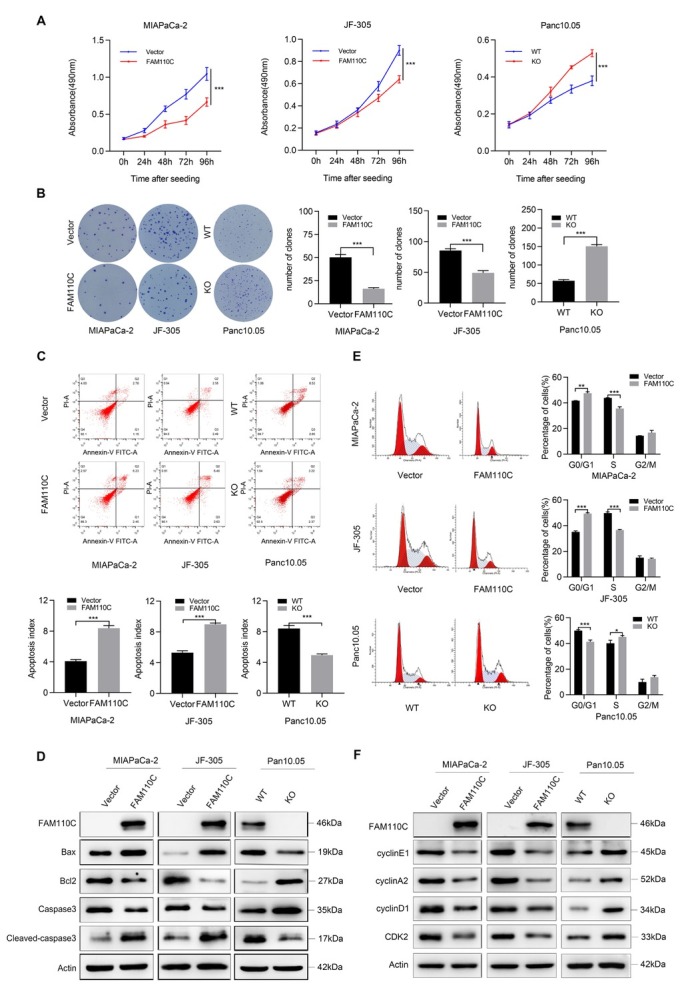
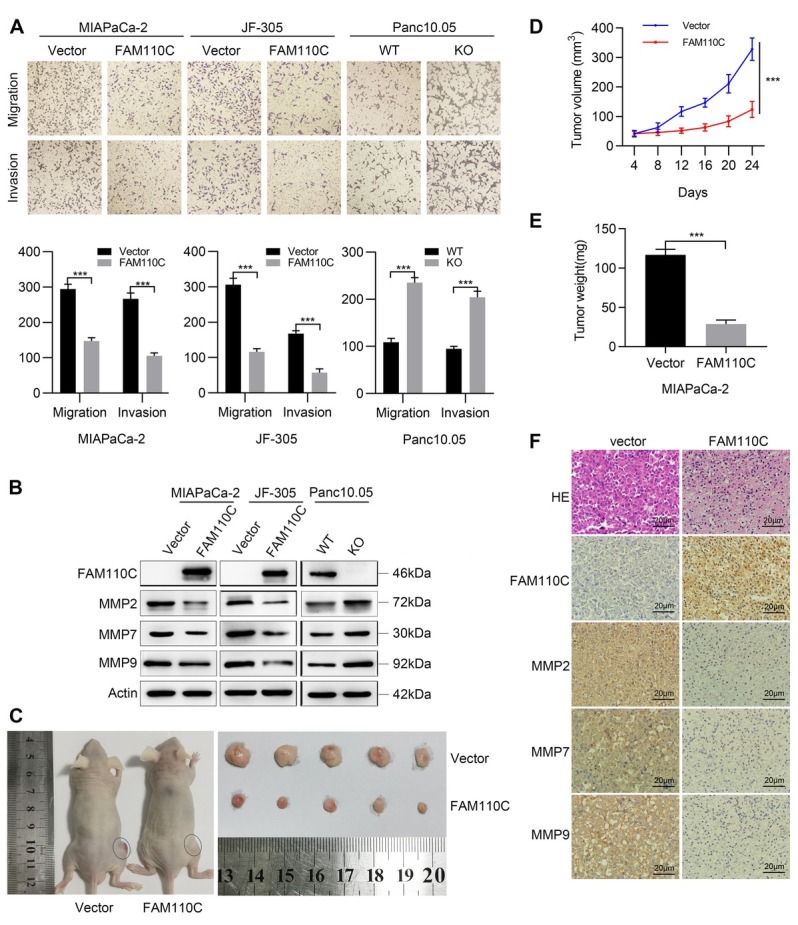
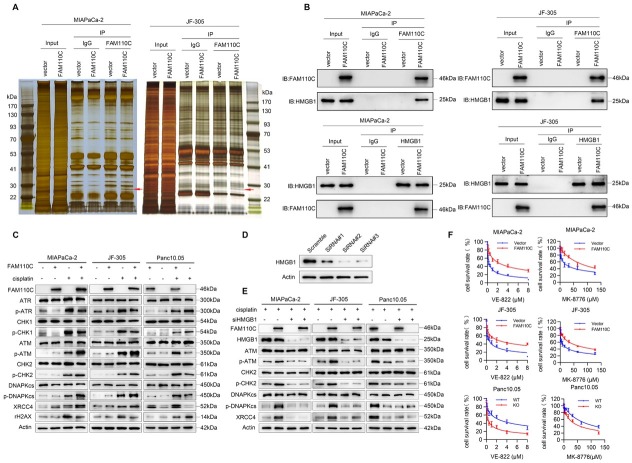
is methylated in 41.18% (14/34) of IPMN, 46.67% (7/15) of MCN and 72.89% (207/284) of PDAC, with a progression trend from IPMN/MCN to pancreatic cancer ( = 0.0001, = 0.0389). methylation is significantly associated with poor overall survival (OS) ( = 0.0065) and is an independent prognostic marker for poor OS ( = 0.0159). inhibits PDAC cells growth both and , serving as a novel tumor suppressor. activates ATM and NHEJ signaling pathways by interacting with HMGB1. Loss of expression sensitizes PDAC cells to VE-822 (an ATR inhibitor) and MK-8776 (a CHK1 inhibitor).
methylation is a potential diagnostic and prognostic marker in PDAC, and its epigenetic silencing sensitizes PDAC cells to ATR/CHK1 inhibitors.
胰腺导管腺癌(PDAC)是最致命的恶性肿瘤之一。基于表观遗传学的合成致死策略为PDAC治疗提供了新的契机。寻找更多具有异常表观遗传变化的DNA损伤修复(DDR)相关或细胞命运相关分子变得非常重要。序列相似性家族110C()是一个细胞命运相关基因,其在癌症中的功能尚不清楚。
使用了7种细胞系、34例导管内乳头状黏液性肿瘤(IPMN)、15例黏液性囊性肿瘤(MCN)和284例PDAC样本。本研究采用甲基化特异性PCR、蛋白质免疫印迹法、CRISPR基因敲除、免疫沉淀和异种移植小鼠模型。
在41.18%(14/34)的IPMN、46.67%(7/15)的MCN和72.89%(207/284)的PDAC中发生甲基化,呈现从IPMN/MCN到胰腺癌的进展趋势(=0.0001,=0.0389)。甲基化与总体生存率差(OS)显著相关(=0.0065),并且是OS差的独立预后标志物(=0.0159)。在体内和体外均抑制PDAC细胞生长,作为一种新的肿瘤抑制因子。通过与HMGB1相互作用激活ATM和NHEJ信号通路。表达缺失使PDAC细胞对VE-822(一种ATR抑制剂)和MK-8776(一种CHK1抑制剂)敏感。
甲基化是PDAC的潜在诊断和预后标志物,其表观遗传沉默使PDAC细胞对ATR/CHK1抑制剂敏感。