Department of Gastroenterology, Nara Medical University, Kashihara 634-8521, Japan.
World J Gastroenterol. 2024 Jul 28;30(28):3428-3446. doi: 10.3748/wjg.v30.i28.3428.
Alcohol-associated liver disease (ALD) is a leading cause of liver-related morbidity and mortality, but there are no therapeutic targets and modalities to prevent ALD-related liver fibrosis. Peroxisome proliferator activated receptor (PPAR) α and δ play a key role in lipid metabolism and intestinal barrier homeostasis, which are major contributors to the pathological progression of ALD. Meanwhile, elafibranor (EFN), which is a dual PPARα and PPARδ agonist, has reached a phase III clinical trial for the treatment of metabolic dysfunction-associated steatotic liver disease and primary biliary cholangitis. However, the benefits of EFN for ALD treatment is unknown.
To evaluate the inhibitory effects of EFN on liver fibrosis and gut-intestinal barrier dysfunction in an ALD mouse model.
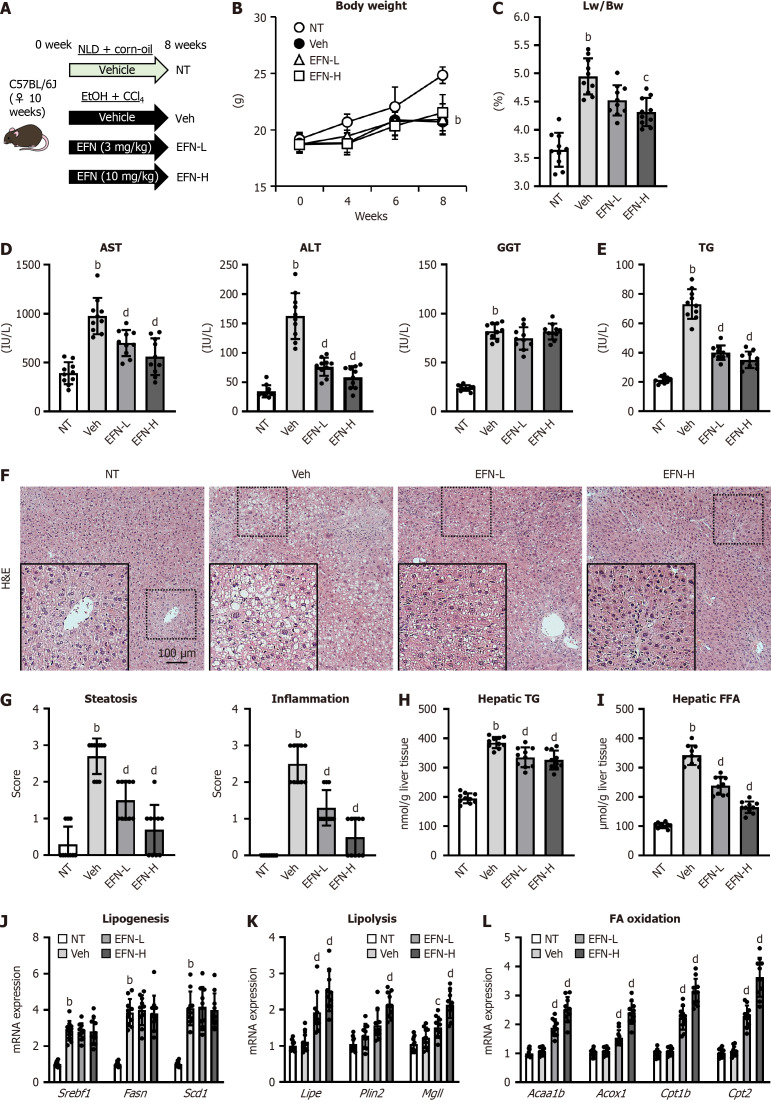
ALD-related liver fibrosis was induced in female C57BL/6J mice by feeding a 2.5% ethanol (EtOH)-containing Lieber-DeCarli liquid diet and intraperitoneally injecting carbon tetrachloride thrice weekly (1 mL/kg) for 8 weeks. EFN (3 and 10 mg/kg/day) was orally administered during the experimental period. Histological and molecular analyses were performed to assess the effect of EFN on steatohepatitis, fibrosis, and intestinal barrier integrity. The EFN effects on HepG2 lipotoxicity and Caco-2 barrier function were evaluated by cell-based assays.
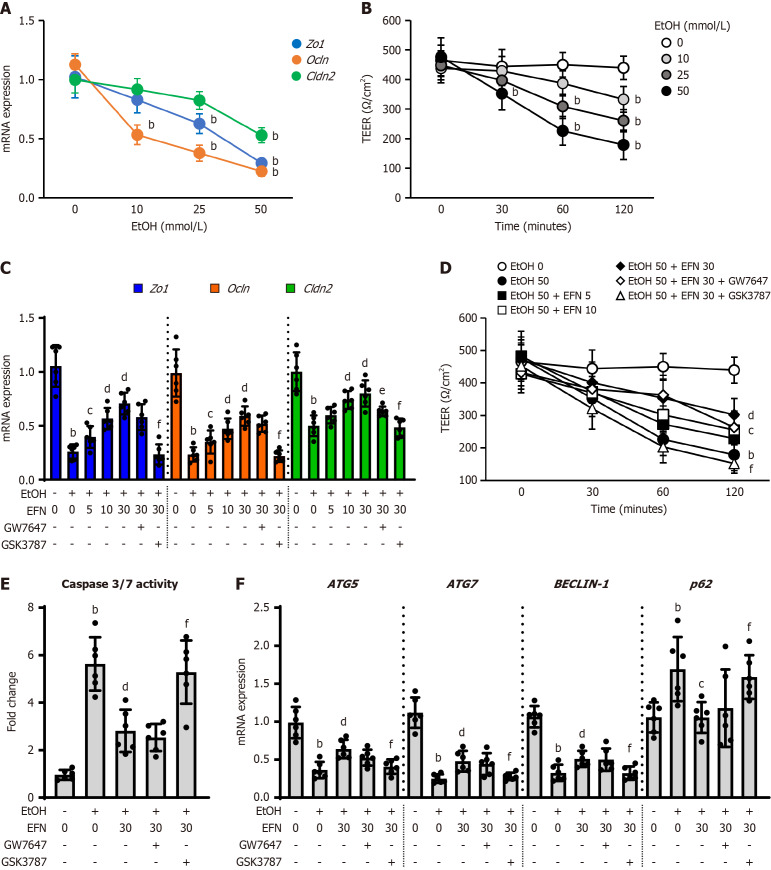
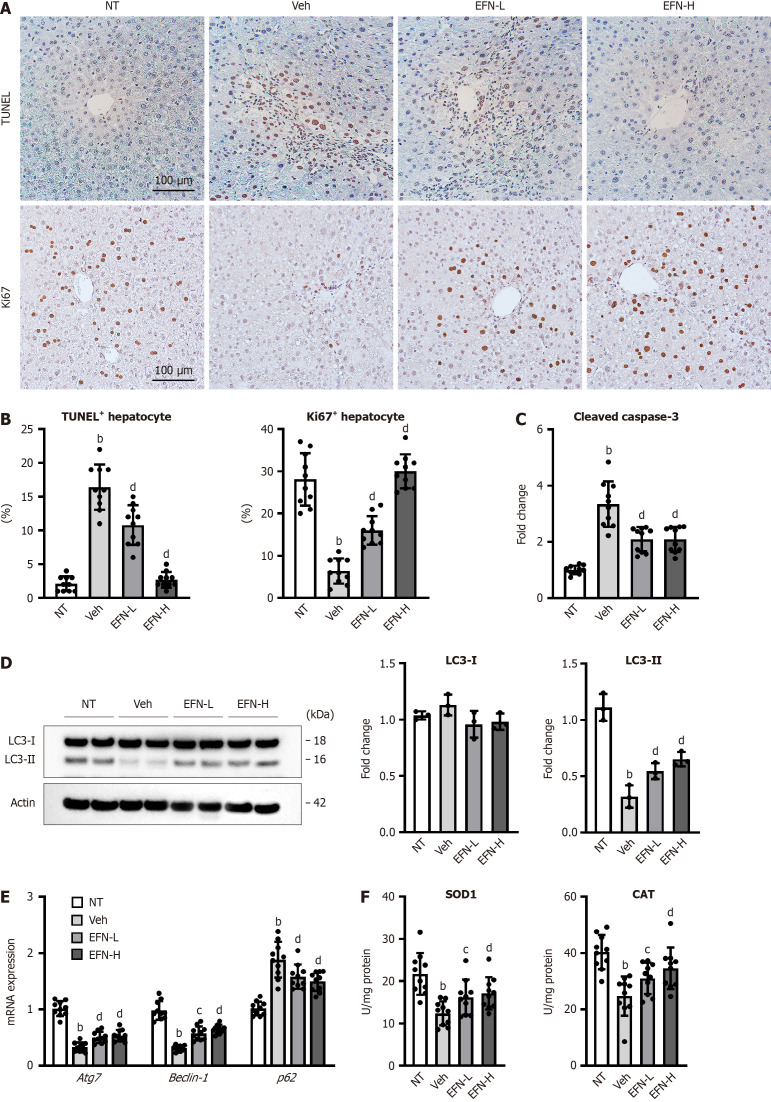
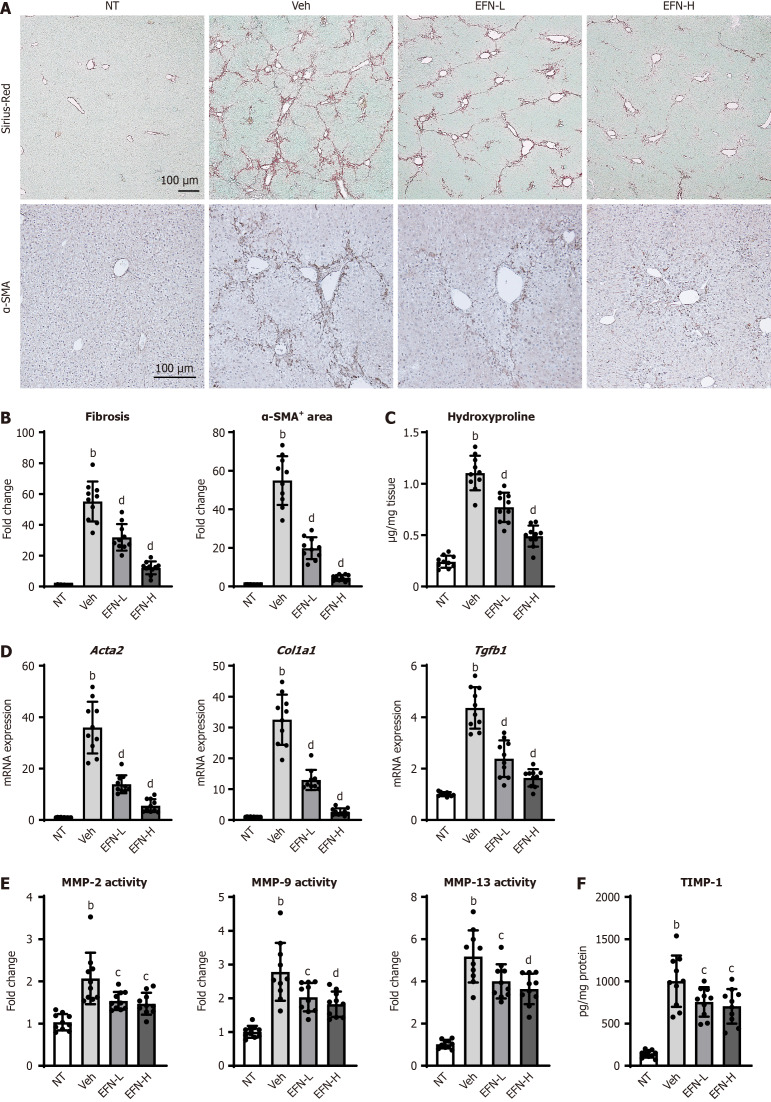
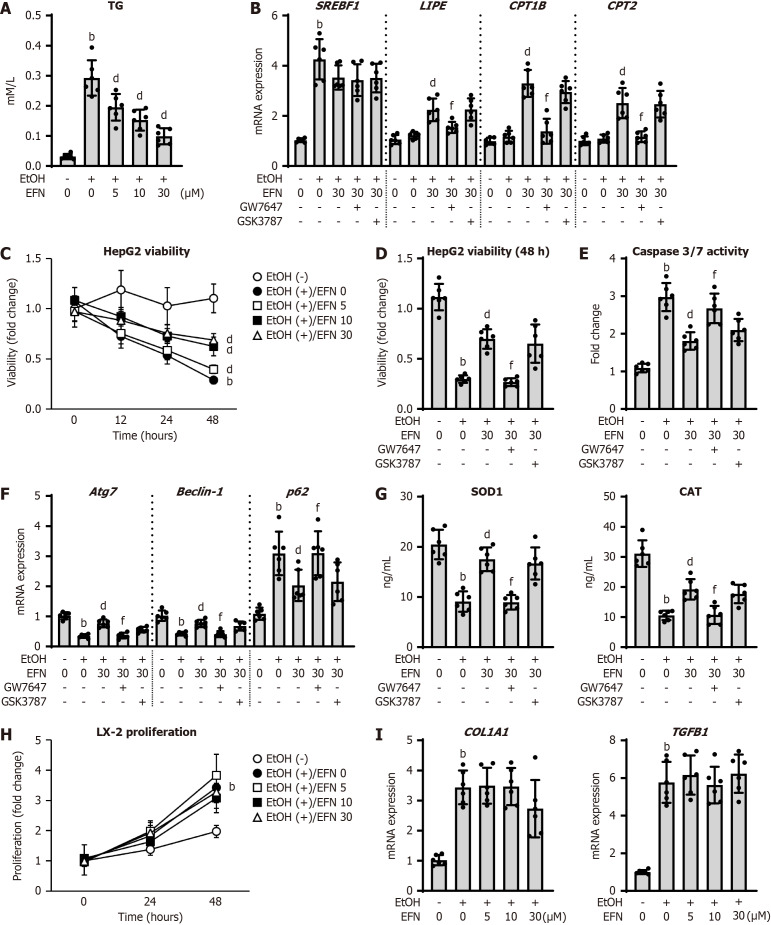
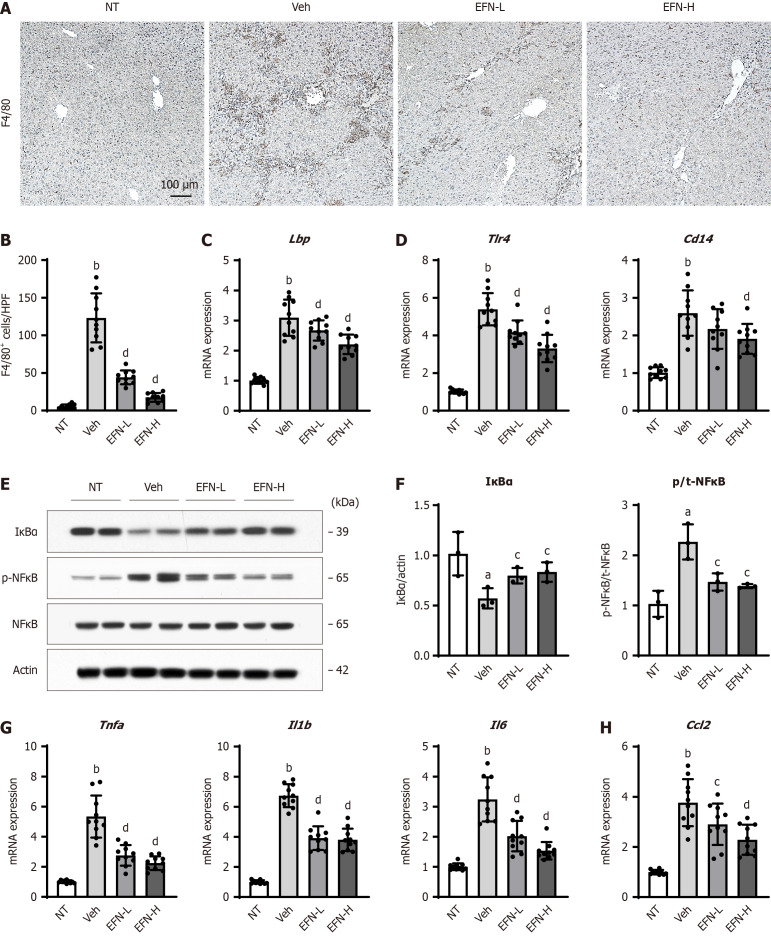
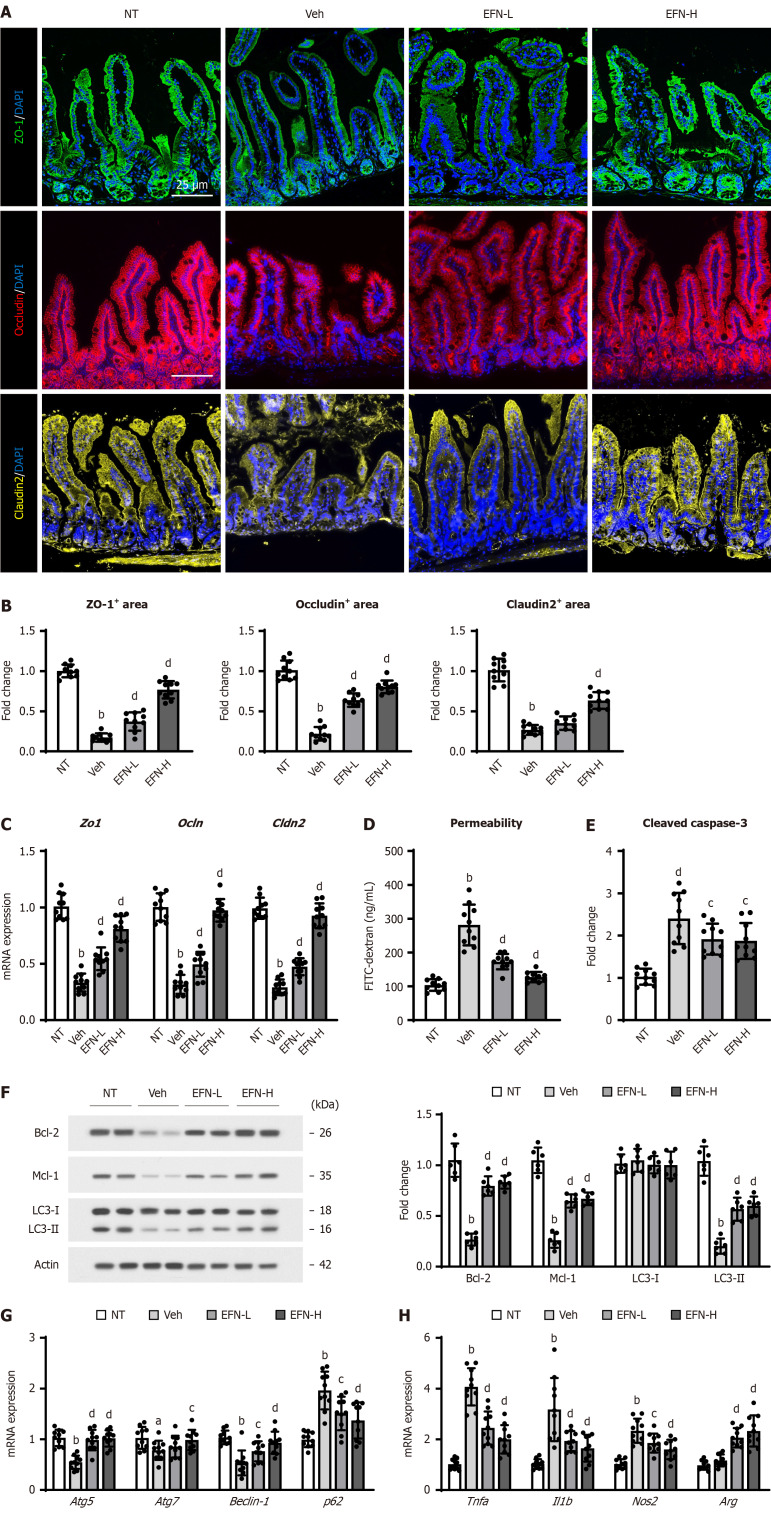
The hepatic steatosis, apoptosis, and fibrosis in the ALD mice model were significantly attenuated by EFN treatment. EFN promoted lipolysis and β-oxidation and enhanced autophagic and antioxidant capacities in EtOH-stimulated HepG2 cells, primarily through PPARα activation. Moreover, EFN inhibited the Kupffer cell-mediated inflammatory response, with blunted hepatic exposure to lipopolysaccharide (LPS) and toll like receptor 4 (TLR4)/nuclear factor kappa B (NF-κB) signaling. EFN improved intestinal hyperpermeability by restoring tight junction proteins and autophagy and by inhibiting apoptosis and proinflammatory responses. The protective effect on intestinal barrier function in the EtOH-stimulated Caco-2 cells was predominantly mediated by PPARδ activation.
EFN reduced ALD-related fibrosis by inhibiting lipid accumulation and apoptosis, enhancing hepatocyte autophagic and antioxidant capacities, and suppressing LPS/TLR4/NF-κB-mediated inflammatory responses by restoring intestinal barrier function.
酒精相关性肝病(ALD)是肝脏相关发病率和死亡率的主要原因,但目前尚无预防 ALD 相关肝纤维化的治疗靶点和方法。过氧化物酶体增殖物激活受体(PPAR)α和δ在脂质代谢和肠道屏障稳态中发挥关键作用,这是 ALD 病理进展的主要因素。同时,双 PPARα和 PPARδ激动剂依帕司他(EFN)已进入治疗代谢功能障碍相关脂肪性肝病和原发性胆汁性胆管炎的 III 期临床试验。然而,EFN 治疗 ALD 的益处尚不清楚。
评估 EFN 对 ALD 小鼠模型中肝纤维化和肠道-肠屏障功能障碍的抑制作用。
通过给予含有 2.5%乙醇(EtOH)的 Lieber-DeCarli 液体饮食和每周三次腹膜内注射四氯化碳(1 mL/kg)8 周,在雌性 C57BL/6J 小鼠中诱导 ALD 相关肝纤维化。在实验期间,每天口服 EFN(3 和 10 mg/kg)。通过组织学和分子分析评估 EFN 对脂肪性肝炎、纤维化和肠道屏障完整性的影响。通过细胞基础测定评估 EFN 对 HepG2 细胞脂毒性和 Caco-2 屏障功能的影响。
EFN 治疗显著减轻了 ALD 小鼠模型中的肝脂肪变性、细胞凋亡和纤维化。EFN 通过激活 PPARα促进 EtOH 刺激的 HepG2 细胞中的脂肪分解和β氧化,并增强自噬和抗氧化能力。此外,EFN 抑制了枯否细胞介导的炎症反应,减少了肝脏对脂多糖(LPS)和 Toll 样受体 4(TLR4)/核因子 kappa B(NF-κB)信号的暴露。EFN 通过恢复紧密连接蛋白和自噬以及抑制凋亡和促炎反应来改善肠道通透性。EFN 在 EtOH 刺激的 Caco-2 细胞中对肠道屏障功能的保护作用主要通过 PPARδ 激活介导。
EFN 通过抑制脂质积累和细胞凋亡、增强肝细胞自噬和抗氧化能力以及通过恢复肠道屏障功能抑制 LPS/TLR4/NF-κB 介导的炎症反应,减少与 ALD 相关的纤维化。