School of Biomedical Sciences and Pharmacy, College of Health, Medicine and Wellbeing, University of Newcastle, Callaghan, N.S.W, 2308, Australia.
Womens Health Research Program, Hunter Medical Research Institute, New Lambton Heights, N.S.W, 2305, Australia.
Curr Hypertens Rep. 2024 Dec;26(12):483-495. doi: 10.1007/s11906-024-01316-1. Epub 2024 Aug 2.
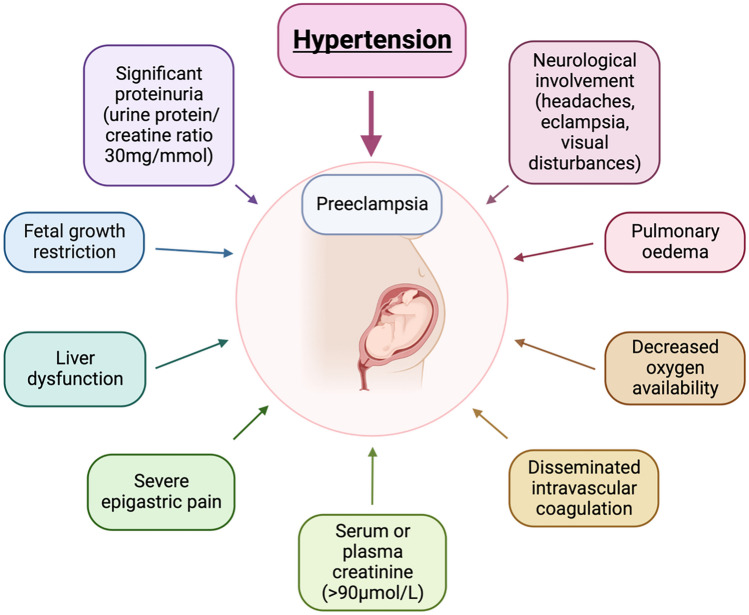
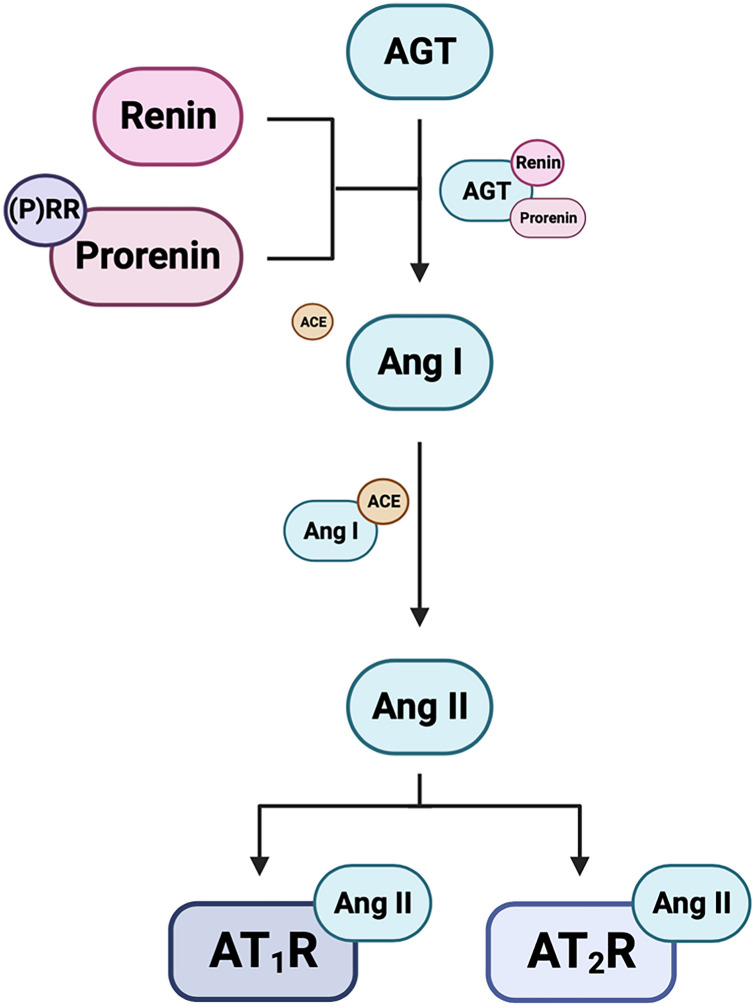
For a healthy pregnancy to occur, a controlled interplay between the maternal circulating renin-angiotensin-aldosterone system (RAAS), placental renin-angiotensin system (RAS) and intrarenal renin-angiotensin system (iRAS) is necessary. Functionally, both the RAAS and iRAS interact to maintain blood pressure and cardiac output, as well as fluid and electrolyte balance. The placental RAS is important for placental development while also influencing the maternal circulating RAAS and iRAS. This narrative review concentrates on the (pro)renin receptor ((P)RR) and its soluble form (s(P)RR) in the context of the hypertensive pregnancy pathology, preeclampsia.
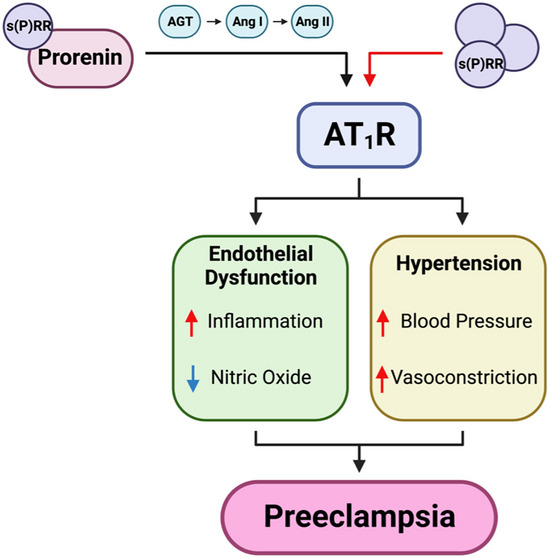
The (P)RR and the s(P)RR have become of particular interest as not only can they activate prorenin and renin, thus influencing levels of angiotensin II (Ang II), but s(P)RR has now been shown to directly interact with and stimulate the Angiotensin II type 1 receptor (ATR). Levels of both placental (P)RR and maternal circulating s(P)RR are elevated in patients with preeclampsia. Furthermore, s(P)RR has been shown to increase blood pressure in non-pregnant and pregnant rats and mice. In preeclamptic pregnancies, which are characterised by maternal hypertension and impaired placental development and function, we propose that there is enhanced secretion of s(P)RR from the placenta into the maternal circulation. Due to its ability to both activate prorenin and act as an ATR agonist, excess maternal circulating s(P)RR can act on both the maternal vasculature, and the kidney, leading to RAS over-activation. This results in dysregulation of the maternal circulating RAAS and overactivation of the iRAS, contributing to maternal hypertension, renal damage, and secondary changes to neurohumoral regulation of fluid and electrolyte balance, ultimately contributing to the pathophysiology of preeclampsia.
为了实现健康妊娠,母体循环肾素-血管紧张素-醛固酮系统(RAAS)、胎盘肾素-血管紧张素系统(RAS)和肾内肾素-血管紧张素系统(iRAS)之间需要进行受控的相互作用。从功能上讲,RAAS 和 iRAS 相互作用以维持血压和心输出量以及液体和电解质平衡。胎盘 RAS 对于胎盘发育很重要,同时也影响母体循环 RAAS 和 iRAS。本综述集中讨论了(前)肾素受体((P)RR)及其可溶性形式(s(P)RR)在高血压妊娠病理即子痫前期中的作用。
(P)RR 和 s(P)RR 变得特别有趣,因为它们不仅可以激活前肾素和肾素,从而影响血管紧张素 II(Ang II)的水平,而且 s(P)RR 现在已被证明可以直接相互作用并刺激血管紧张素 II 型 1 受体(ATR)。子痫前期患者的胎盘(P)RR 和母体循环 s(P)RR 水平均升高。此外,s(P)RR 已被证明可升高非妊娠和妊娠大鼠和小鼠的血压。在子痫前期中,母体高血压和胎盘发育及功能受损为特征,我们提出胎盘向母体循环中过度分泌 s(P)RR。由于其激活前肾素和作为 ATR 激动剂的能力,母体循环中过多的 s(P)RR 可以作用于母体血管和肾脏,导致 RAS 过度激活。这导致母体循环 RAAS 失调和 iRAS 过度激活,导致母体高血压、肾脏损伤以及对液体和电解质平衡的神经激素调节的继发性改变,最终导致子痫前期的病理生理学。