Cargnin Faccin Flavio, Cáceres C Joaquin, Gay L Claire, Seibert Brittany, van Bentem Nick, Rodriguez Luis A, Soares Fraiha Ana Luiza, Cardenas Matias, Geiger Ginger, Ortiz Lucia, Carnaccini Silvia, Kapczynski Darrell R, Rajao Daniela S, Perez Daniel R
Department of Population Health, College of Veterinary Medicine, University of Georgia, Athens, GA, USA.
W. Harry Feinstone Department of Molecular Microbiology and Immunology, The Johns Hopkins Bloomberg School of Public Health, Baltimore, MD, USA.
NPJ Vaccines. 2024 Aug 3;9(1):136. doi: 10.1038/s41541-024-00923-y.
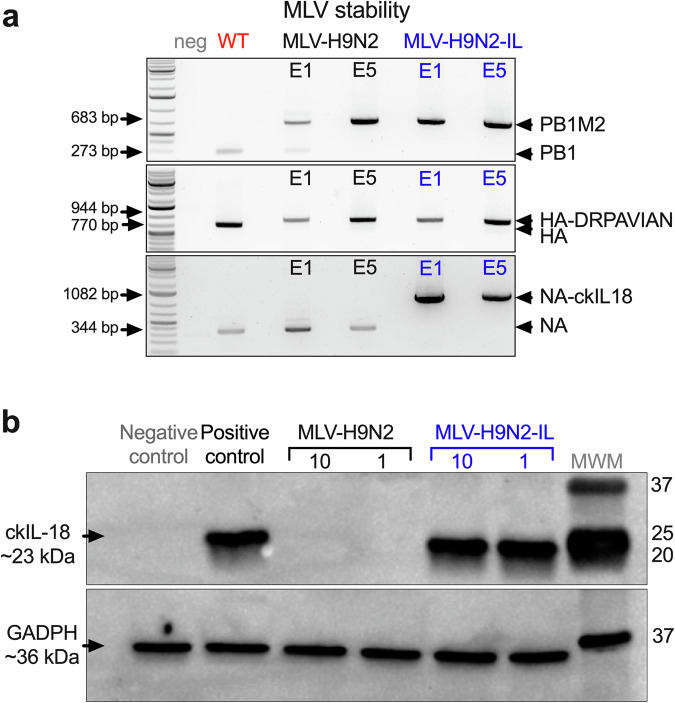
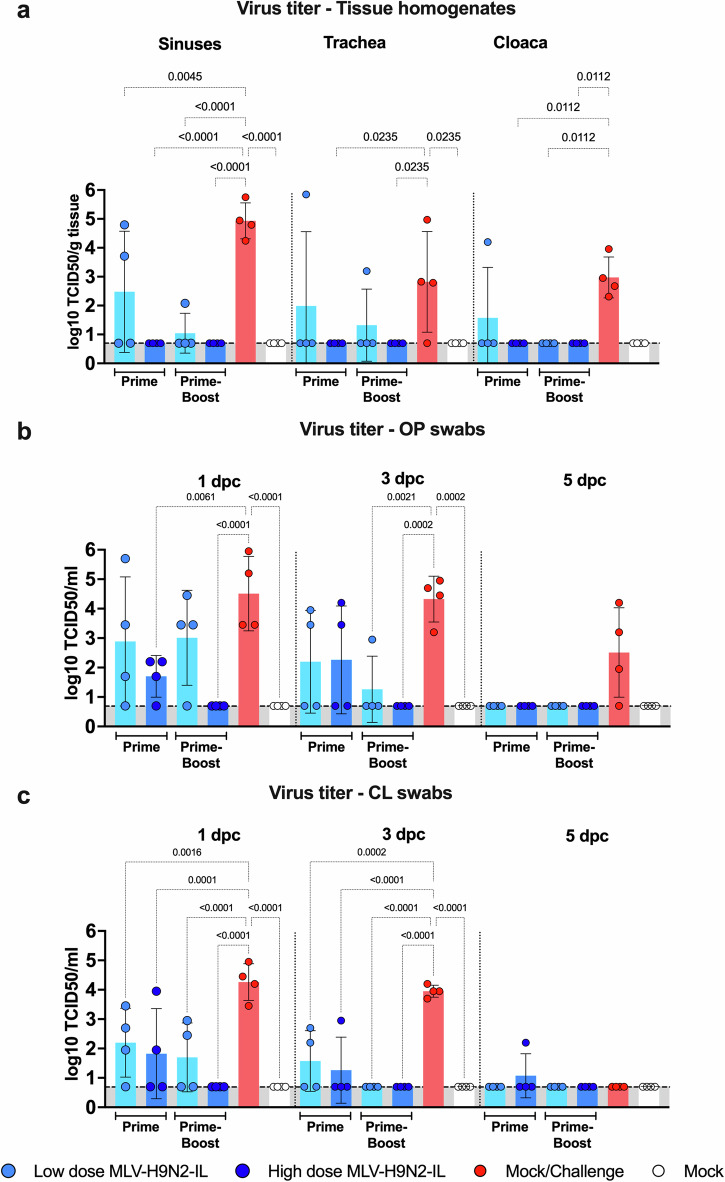
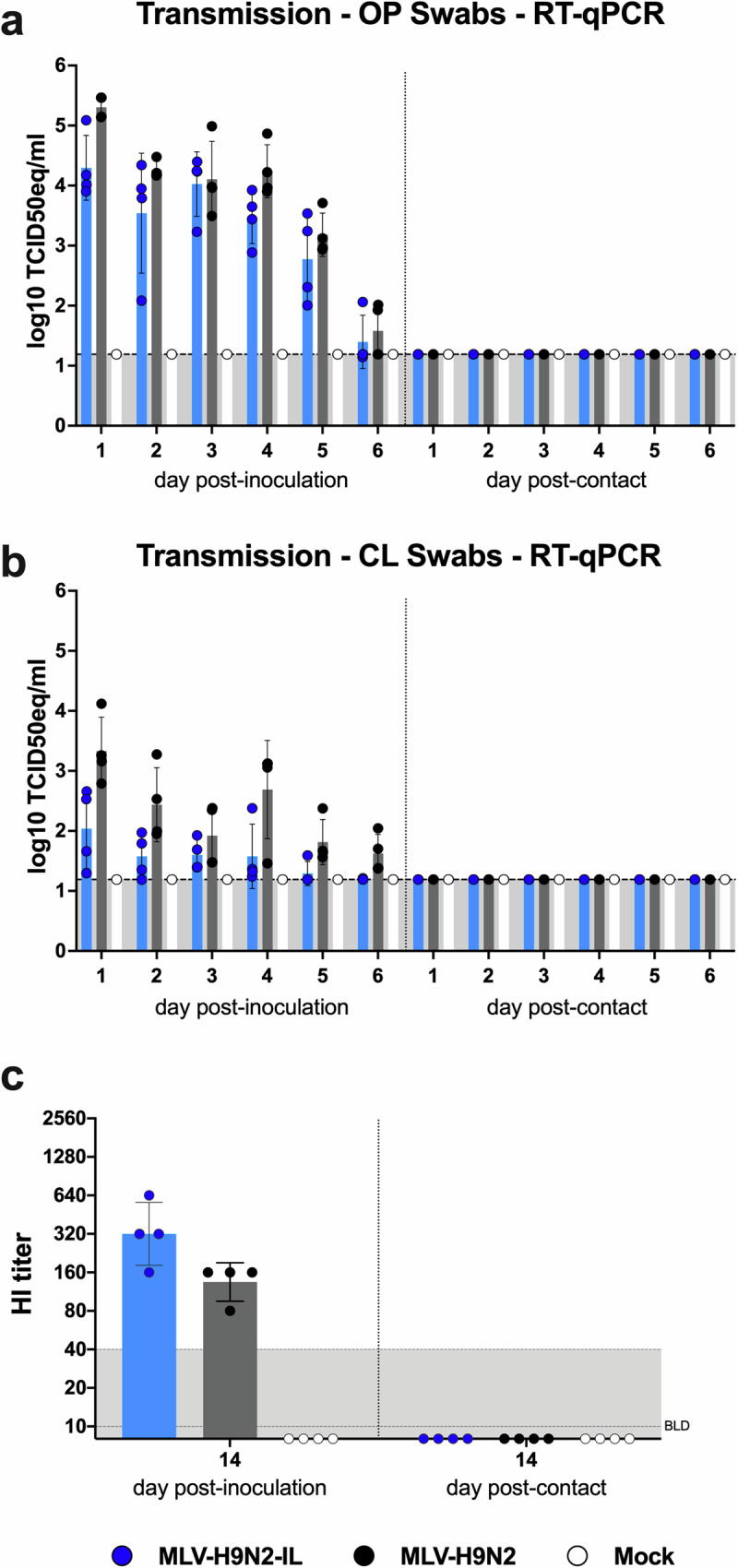
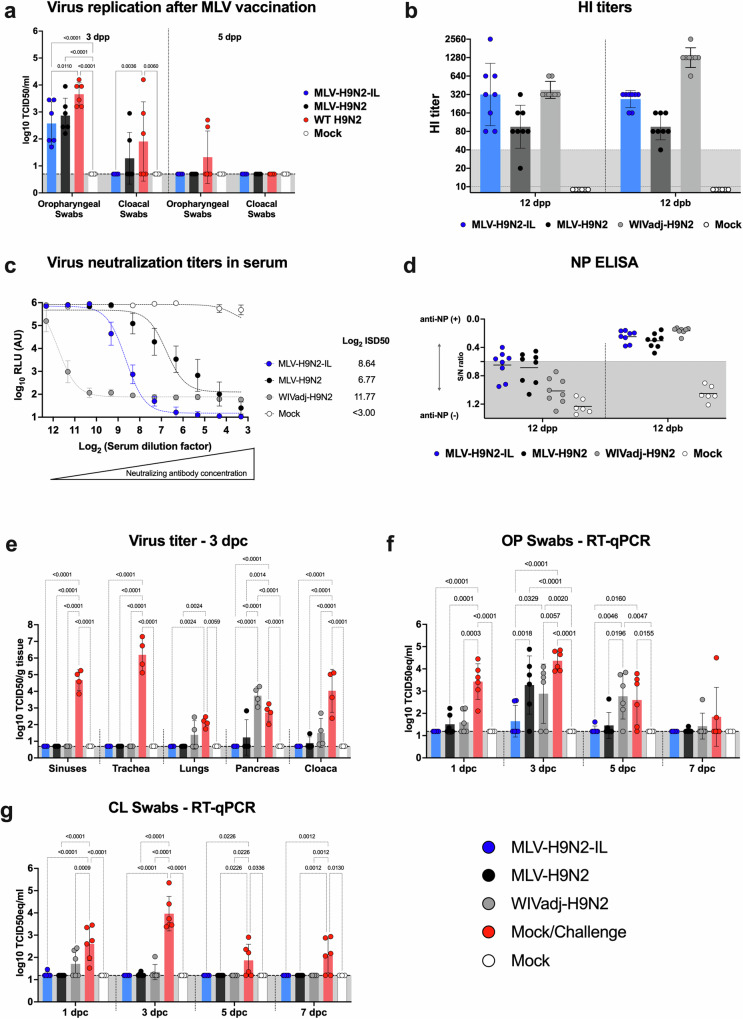
Avian influenza poses a severe threat to poultry production and global food security, prompting the development of vaccination programs in numerous countries. Modified live virus (MLV) vaccines, with their potential for mass application, offer a distinct advantage over existing options. However, concerns surrounding reversion, recombination, and unintended transmission have hindered the progress of MLV development for avian influenza in poultry. To address these concerns, we engineered reassortment-impaired, non-transmissible, safe, immunogenic, and protective MLVs through the rearrangement of internal gene segments and additional modifications to the surface gene segments HA and NA. The unique peptide marker aspartic acid-arginine-proline-alanine-valine-isoleucine-alanine-asparragine (DRPAVIAN) was incorporated into HA, while NA was modified to encode the chicken interleukin-18 (ckIL18) gene (MLV-H9N2-IL). In vitro, the MLV-H9N2 and MLV-H9N2-IL candidates demonstrated stability and virus titers comparable to the wild-type H9N2 strain. In chickens, the MLV-H9N2 and MLV-H9N2-IL candidates did not transmit via direct contact. Co-infection studies with wild-type virus confirmed that the altered HA and NA segments exhibited fitness disadvantages and did not reassort. Vaccinated chickens showed no clinical signs upon vaccination, all seroconverted, and the inclusion of ckIL18 in the MLV-H9N2-IL vaccine enhanced neutralizing antibody production. A significant decrease in viral loads post-challenge underscored the protective effect of the MLVs. The MLV-H9N2-IL vaccine, administered via drinking water, proved immunogenic in chickens in a dose-dependent manner, generating protective levels of neutralizing antibodies upon aggressive homologous virus challenge. In summary, this study lays the groundwork for safe MLVs against avian influenza suitable for mass vaccination efforts.
禽流感对家禽生产和全球粮食安全构成严重威胁,促使许多国家制定疫苗接种计划。改良活病毒(MLV)疫苗具有大规模应用的潜力,比现有选择具有明显优势。然而,对病毒回复突变、重组和意外传播的担忧阻碍了家禽禽流感MLV开发的进展。为了解决这些担忧,我们通过重排内部基因片段以及对表面基因片段HA和NA进行额外修饰,构建了重排受损、不可传播、安全、具有免疫原性和保护性的MLV。独特的肽标记天冬氨酸-精氨酸-脯氨酸-丙氨酸-缬氨酸-异亮氨酸-丙氨酸-天冬酰胺(DRPAVIAN)被整合到HA中,同时NA被修饰以编码鸡白细胞介素-18(ckIL18)基因(MLV-H9N2-IL)。在体外,MLV-H9N2和MLV-H9N2-IL候选疫苗表现出与野生型H9N2毒株相当的稳定性和病毒滴度。在鸡中,MLV-H9N2和MLV-H9N2-IL候选疫苗不会通过直接接触传播。与野生型病毒的共感染研究证实,改变的HA和NA片段表现出适应性劣势且不会发生重排。接种疫苗的鸡在接种后没有出现临床症状,全部发生血清转化,并且MLV-H9N2-IL疫苗中包含ckIL18增强了中和抗体的产生。攻毒后病毒载量显著降低突出了MLV的保护作用。通过饮水给药时,MLV-H9N2-IL疫苗在鸡中呈剂量依赖性地具有免疫原性,在受到同源病毒强烈攻击时产生保护性水平的中和抗体。总之,本研究为适用于大规模疫苗接种的安全抗禽流感MLV奠定了基础。