Yabuki Jun, Yoshikawa Kenichi, Koseki Kazunori, Ishibashi Kiyoshige, Matsushita Akira, Kohno Yutaka
Department of Physical Therapy, Mejiro University, Saitama, JPN.
Department of Physical Therapy, Ibaraki Prefectural University of Health Sciences Hospital, Ami, JPN.
Cureus. 2024 Jul 5;16(7):e63882. doi: 10.7759/cureus.63882. eCollection 2024 Jul.
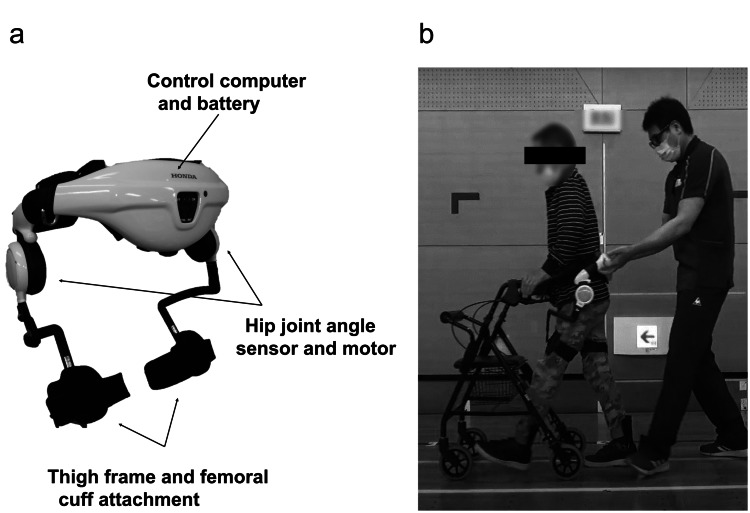
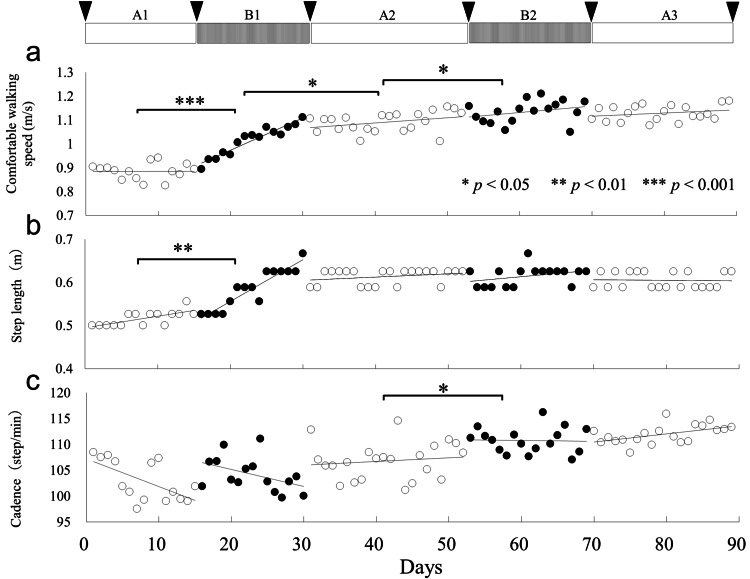
Patients with Guillain-Barré syndrome (GBS) occasionally have residual gait disturbance one year after disease onset. We hypothesized that providing hip joint movement assistance can improve gait in patients with GBS and residual gait disturbance. A 78-year-old man with GBS showed improvement in gait following conventional rehabilitation and gait training using GAIT TRAINER HWA-01 (HWA-01; Honda Motor Co., Ltd., Tokyo, Japan), which is a hip-wearable exoskeleton robot. Initially, he presented with gastrointestinal symptoms, subsequently flaccid quadriplegia, and respiratory muscle paralysis. He was diagnosed with acute motor axonal neuropathy and was transferred to our hospital on day 185 after the disease onset. Seven months after rehabilitation, his walking ability plateaued. On day 382, a single-case study with ABABA design intervention, with conventional gait training in phase A and gait training using HWA-01 in phase B, was conducted. The primary outcomes included a comfortable walking speed, stride length, and cadence. Comfortable walking speed, stride length, and cadence statistically improved after gait training using HWA-01. Furthermore, improvement in exercise capacity and activities of daily living exceeded the minimal clinically important difference for the intervention. The use of the HWA-01 gait trainer potentially improves gait in patients with GBS who have residual gait disturbance.
吉兰-巴雷综合征(GBS)患者在发病一年后偶尔会出现残留步态障碍。我们假设提供髋关节运动辅助可以改善GBS和残留步态障碍患者的步态。一名78岁的GBS男性患者在接受传统康复治疗以及使用GAIT TRAINER HWA-01(HWA-01;本田汽车有限公司,东京,日本)进行步态训练后,步态有所改善。该设备是一种可穿戴于髋部的外骨骼机器人。起初,他出现胃肠道症状,随后发展为弛缓性四肢瘫痪和呼吸肌麻痹。他被诊断为急性运动轴索性神经病,并在发病后第185天被转入我院。康复治疗七个月后,他的步行能力达到平稳状态。在第382天,进行了一项采用ABABA设计干预的单病例研究,A阶段为传统步态训练,B阶段为使用HWA-01进行步态训练。主要结局指标包括舒适步行速度、步幅和步频。使用HWA-01进行步态训练后,舒适步行速度、步幅和步频在统计学上有显著改善。此外,运动能力和日常生活活动能力的改善超过了该干预措施的最小临床重要差异。使用HWA-01步态训练器有可能改善有残留步态障碍的GBS患者的步态。