Candiolo Cancer Institute, FPO-IRCCS, Candiolo, Turin, Italy.
IRCCS Candiolo Cancer Institute, Candiolo, Italy.
J Exp Clin Cancer Res. 2024 Aug 7;43(1):219. doi: 10.1186/s13046-024-03142-4.
In non-small cell lung cancer (NSCLC) the efficacy of chemo-immunotherapy is affected by the high expression of drug efflux transporters as ABCC1 and by the low expression of ABCA1, mediating the isopentenyl pyrophosphate (IPP)-dependent anti-tumor activation of Vγ9Vδ2 T-lymphocytes. In endothelial cells ABCA1 is a predicted target of the transcription factor EB (TFEB), but no data exists on the correlation between TFEB and ABC transporters involved in the chemo-immuno-resistance in NSCLC.
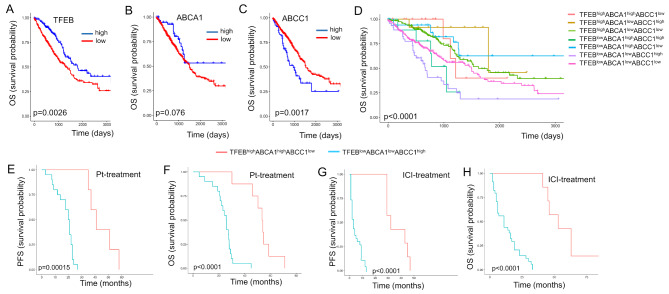
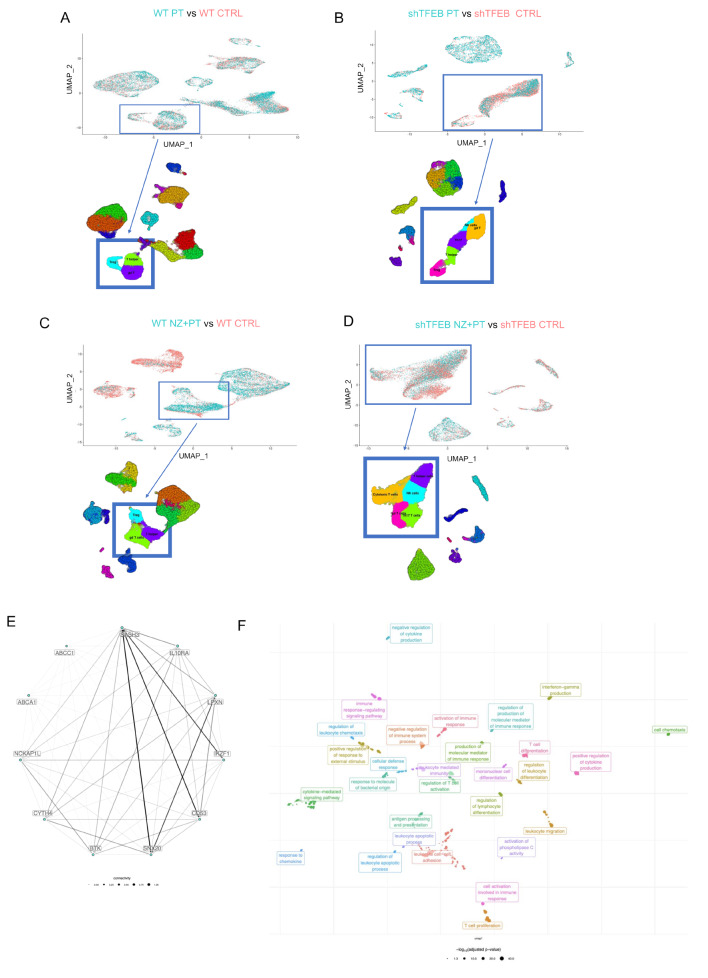
The impact of TFEB/ABCC1/ABCA1 expression on NSCLC patients' survival was analyzed in the TCGA-LUAD cohort and in a retrospective cohort of our institution. Human NSCLC cells silenced for TFEB (shTFEB) were analyzed for ABC transporter expression, chemosensitivity and immuno-killing. The chemo-immuno-sensitizing effects of nanoparticles encapsulating zoledronic acid (NZ) on shTFEB tumors and on tumor immune-microenvironment were evaluated in Hu-CD34 mice by single-cell RNA-sequencing.
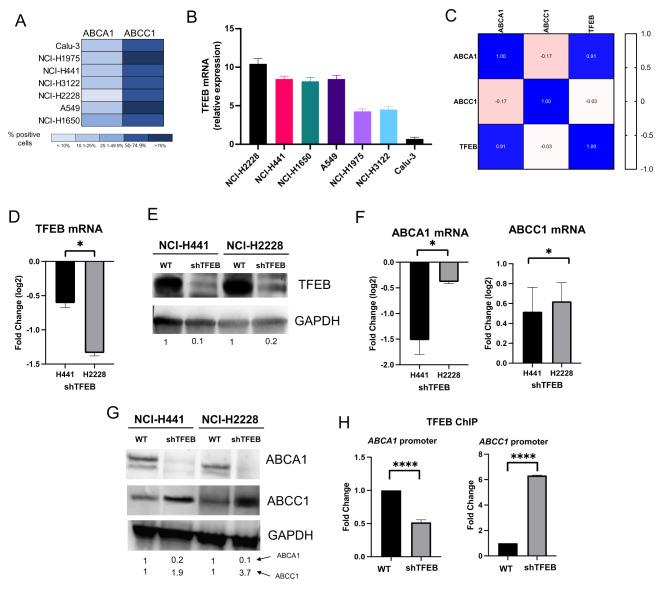
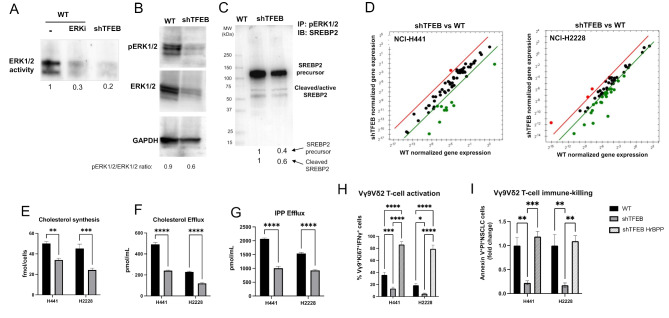
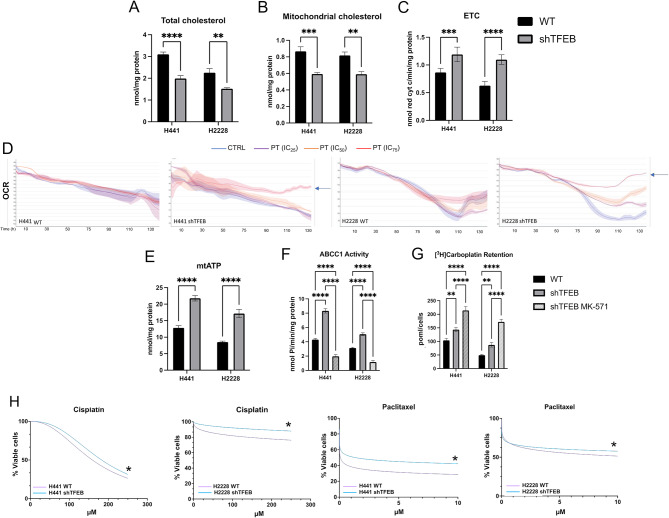
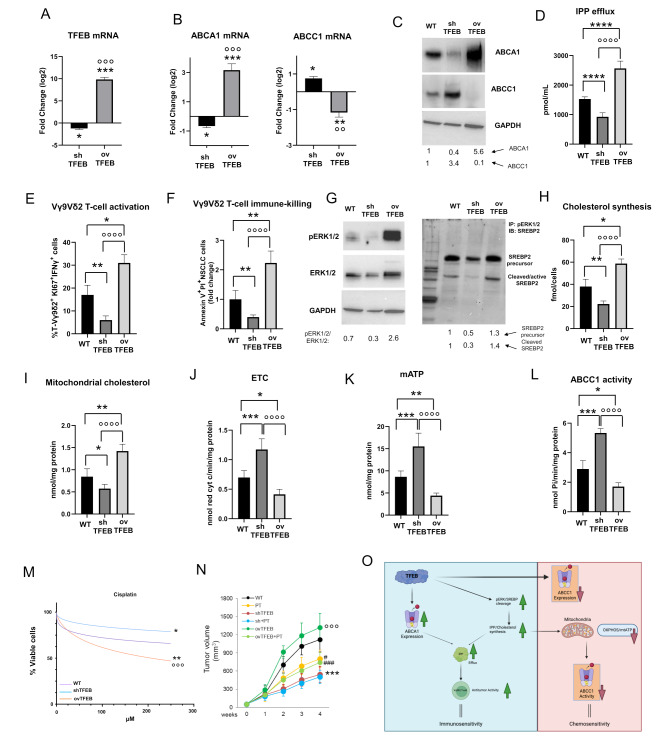
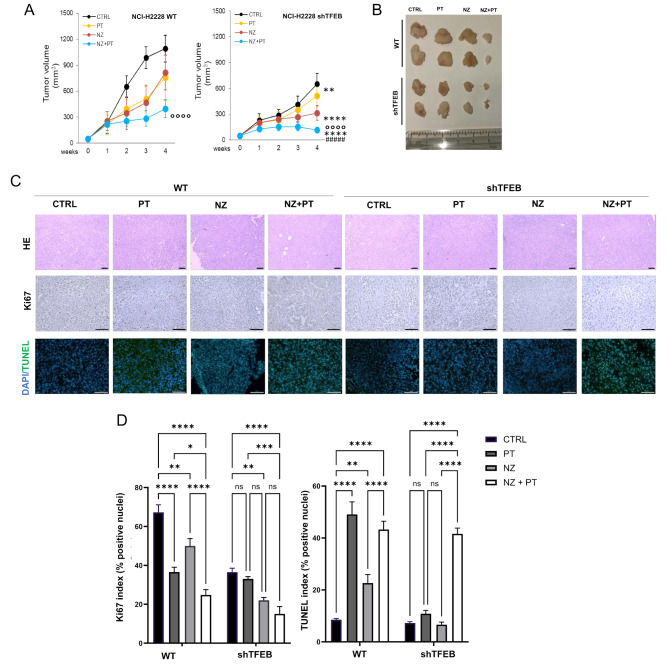
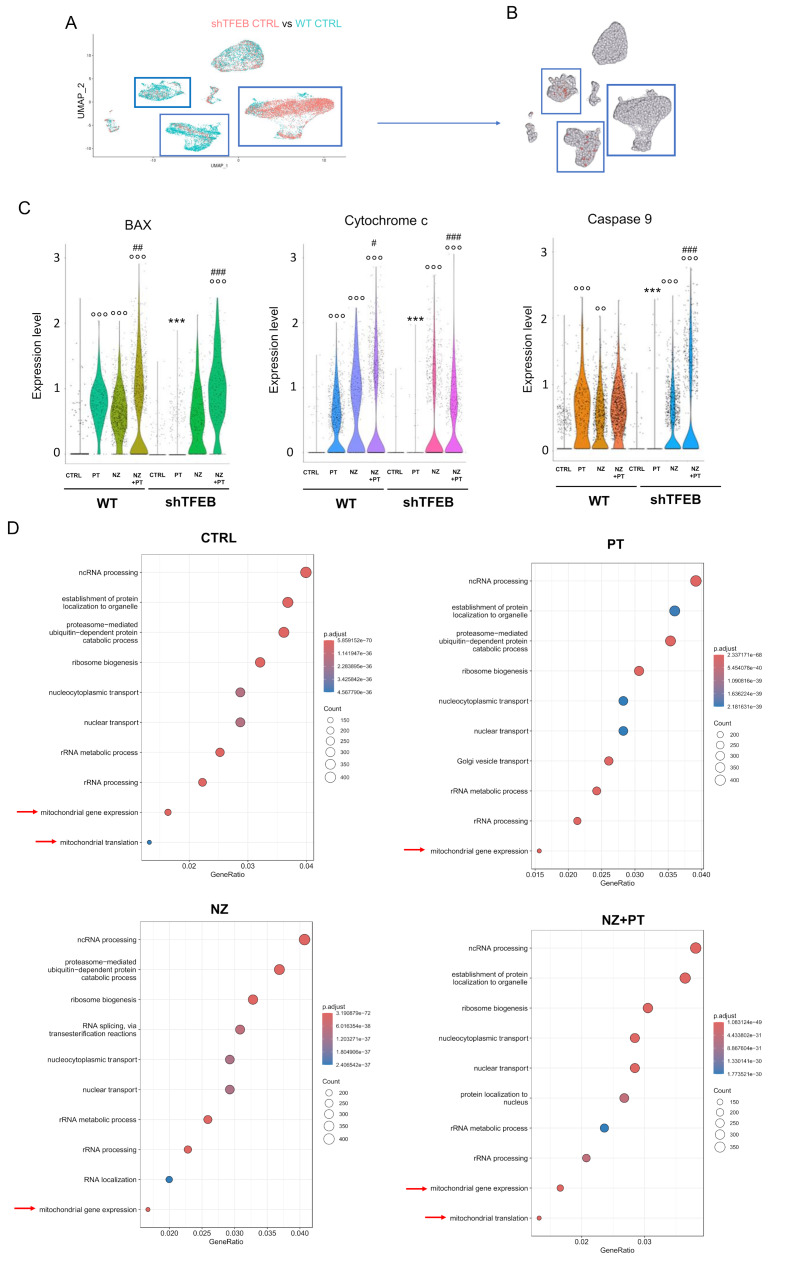
TFEBABCA1ABCC1 and TFEBABCA1ABCC1 NSCLC patients had the worst and the best prognosis, respectively, in the TCGA-LUAD cohort and in a retrospective cohort of patients receiving platinum-based chemotherapy or immunotherapy as first-line treatment. By silencing shTFEB in NSCLC cells, we demonstrated that TFEB was a transcriptional inducer of ABCA1 and a repressor of ABCC1. shTFEB cells had also a decreased activity of ERK1/2/SREBP2 axis, implying reduced synthesis and efflux via ABCA1 of cholesterol and its intermediate IPP. Moreover, TFEB silencing reduced cholesterol incorporation in mitochondria: this event increased the efficiency of OXPHOS and the fueling of ABCC1 by mitochondrial ATP. Accordingly, shTFEB cells were less immuno-killed by the Vγ9Vδ2 T-lymphocytes activated by IPP and more resistant to cisplatin. NZ, which increased IPP efflux but not OXPHOS and ATP production, sensitized shTFEB immuno-xenografts, by reducing intratumor proliferation and increasing apoptosis in response to cisplatin, and by increasing the variety of anti-tumor infiltrating cells (Vγ9Vδ2 T-lymphocytes, CD8T-lymphocytes, NK cells).
This work suggests that TFEB is a gatekeeper of the sensitivity to chemotherapy and immuno-killing in NSCLC, and that the TFEBABCA1ABCC1 phenotype can be predictive of poor response to chemotherapy and immunotherapy. By reshaping both cancer metabolism and tumor immune-microenvironment, zoledronic acid can re-sensitize TFEB NSCLCs, highly resistant to chemo- and immunotherapy.
在非小细胞肺癌(NSCLC)中,化疗免疫疗法的疗效受到药物外排转运蛋白高表达的影响,如 ABCC1,以及 ABCA1 表达降低的影响,ABCA1 介导异戊烯焦磷酸(IPP)依赖性抗 Vγ9Vδ2 T 淋巴细胞肿瘤激活。在血管内皮细胞中,ABCA1 是转录因子 EB(TFEB)的一个预测靶点,但尚无数据表明 TFEB 与 NSCLC 化疗免疫耐药相关的 ABC 转运蛋白之间存在相关性。
在 TCGA-LUAD 队列和我们机构的回顾性队列中,分析了 TFEB/ABCC1/ABCA1 表达对 NSCLC 患者生存的影响。用 TFEB 沉默的人非小细胞肺癌细胞(shTFEB)分析 ABC 转运蛋白表达、化疗敏感性和免疫杀伤。通过单细胞 RNA 测序评估载唑来膦酸(NZ)纳米颗粒对 shTFEB 肿瘤和肿瘤免疫微环境的化疗免疫增敏作用。
在 TCGA-LUAD 队列和接受铂类化疗或免疫治疗作为一线治疗的患者回顾性队列中,TFEBABCA1ABCC1 和 TFEBABCA1ABCC1 NSCLC 患者的预后最差和最好。通过在 NSCLC 细胞中沉默 shTFEB,我们证明 TFEB 是 ABCA1 的转录诱导因子,也是 ABCC1 的转录抑制因子。shTFEB 细胞还具有 ERK1/2/SREBP2 轴活性降低,意味着胆固醇及其中间物 IPP 通过 ABCA1 的合成和外排减少。此外,TFEB 沉默减少了线粒体中的胆固醇掺入:这一事件增加了 OXPHOS 的效率,并通过线粒体 ATP 为 ABCC1 提供燃料。因此,shTFEB 细胞被 Vγ9Vδ2 T 淋巴细胞激活的免疫杀伤减少,而对顺铂的耐药性增加。NZ 增加了 IPP 的外排,但没有增加 OXPHOS 和 ATP 的产生,通过减少顺铂引起的肿瘤内增殖和增加细胞凋亡,并通过增加抗肿瘤浸润细胞(Vγ9Vδ2 T 淋巴细胞、CD8T 淋巴细胞、NK 细胞)的多样性,使 shTFEB 免疫异种移植敏感化。
这项工作表明,TFEB 是 NSCLC 对化疗和免疫杀伤敏感性的调控因子,TFEBABCA1ABCC1 表型可预测对化疗和免疫治疗的反应不良。通过重塑癌症代谢和肿瘤免疫微环境,唑来膦酸可以重新增敏 TFEB NSCLC,使其对化疗和免疫治疗高度耐药。