State Key Laboratory of Ophthalmology, Zhongshan Ophthalmic Center, Sun Yat-sen University, Guangdong Provincial Key Laboratory of Ophthalmology and Visual Science, Guangdong Provincial Clinical Research Center for Ocular Diseases, Guangzhou, China.
Invest Ophthalmol Vis Sci. 2024 Aug 1;65(10):13. doi: 10.1167/iovs.65.10.13.
The purpose of this study was to identify potential drug targets for myopia and explore underlying mechanisms.
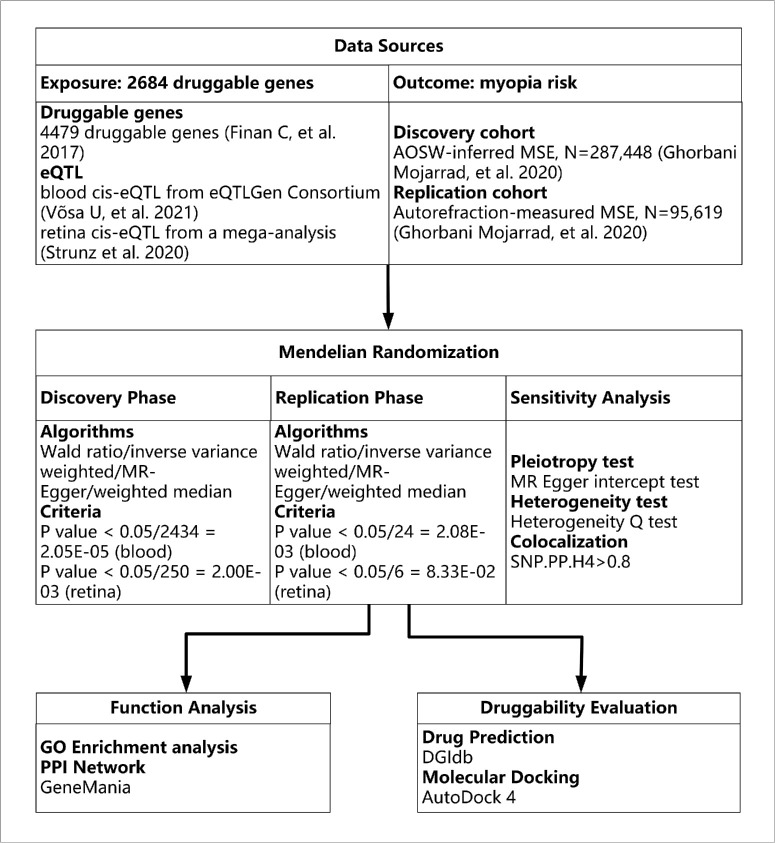
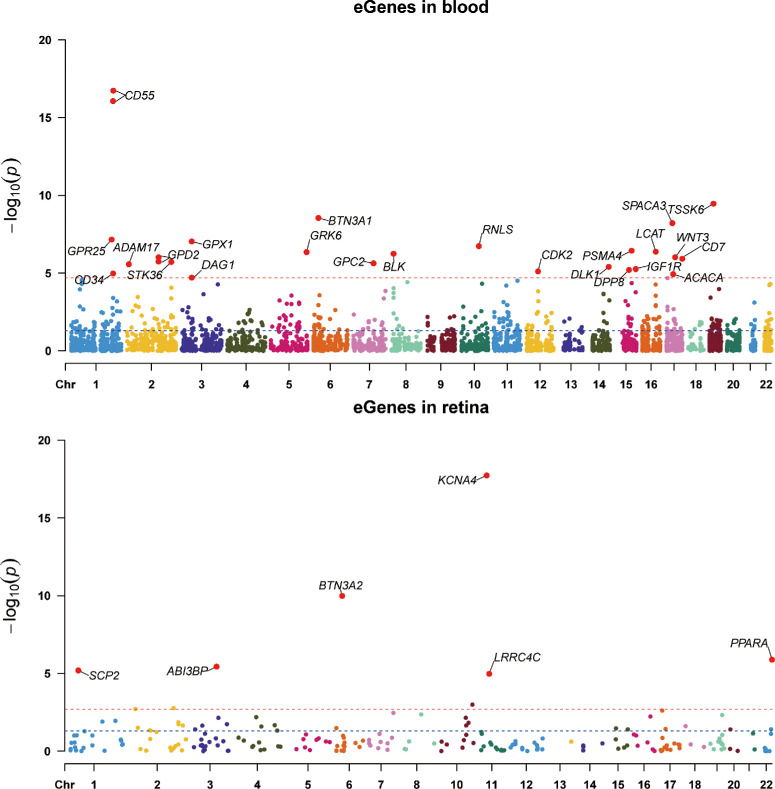
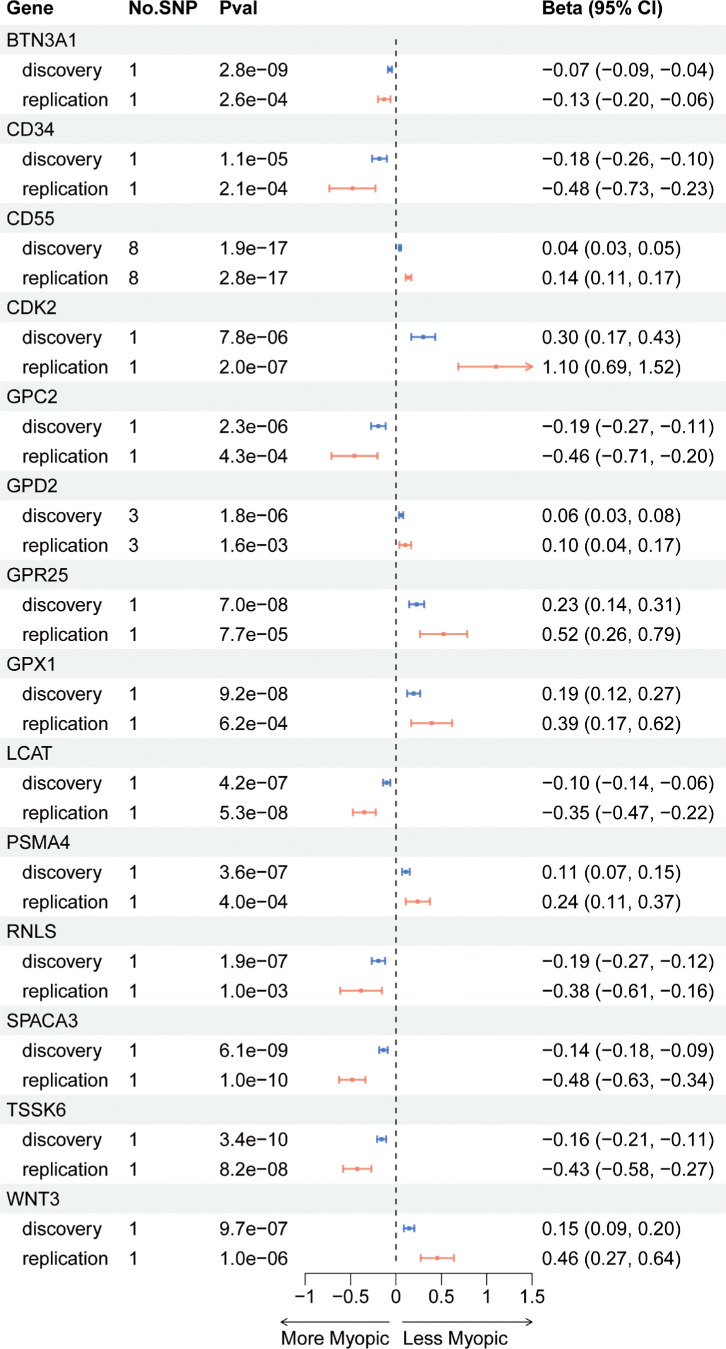
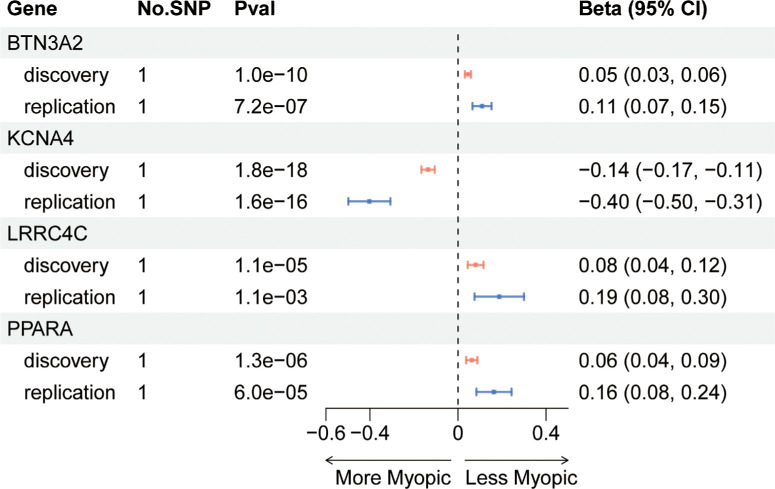
Mendelian randomization (MR) was implemented to assess the effect of 2684 pharmacologically targetable genes in the blood and retina on the risk of myopia from a genomewide association study (GWAS) for age-at-onset of spectacle wearing-inferred mean spherical equivalent (MSE; discovery cohort, N = 287,448, European), which was further validated in a GWAS for autorefraction-measured MSE (replication cohort, N = 95,619, European). The reliability of the identified significant potential targets was strengthened by colocalization analysis. Additionally, enrichment analysis, protein-protein interaction network, and molecular docking were performed to explore the functional roles and the druggability of these targets.
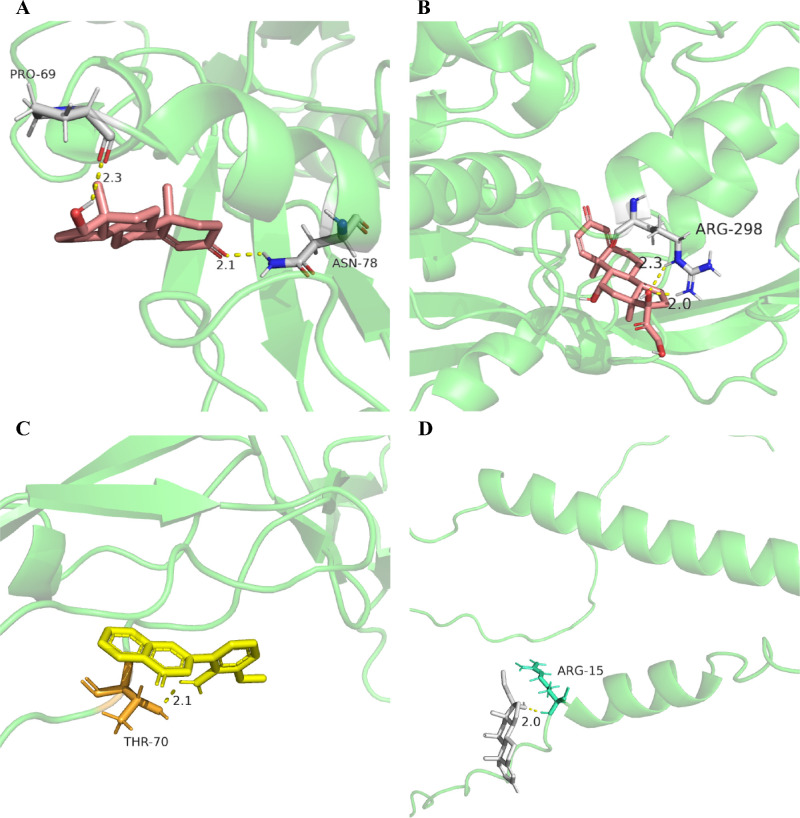
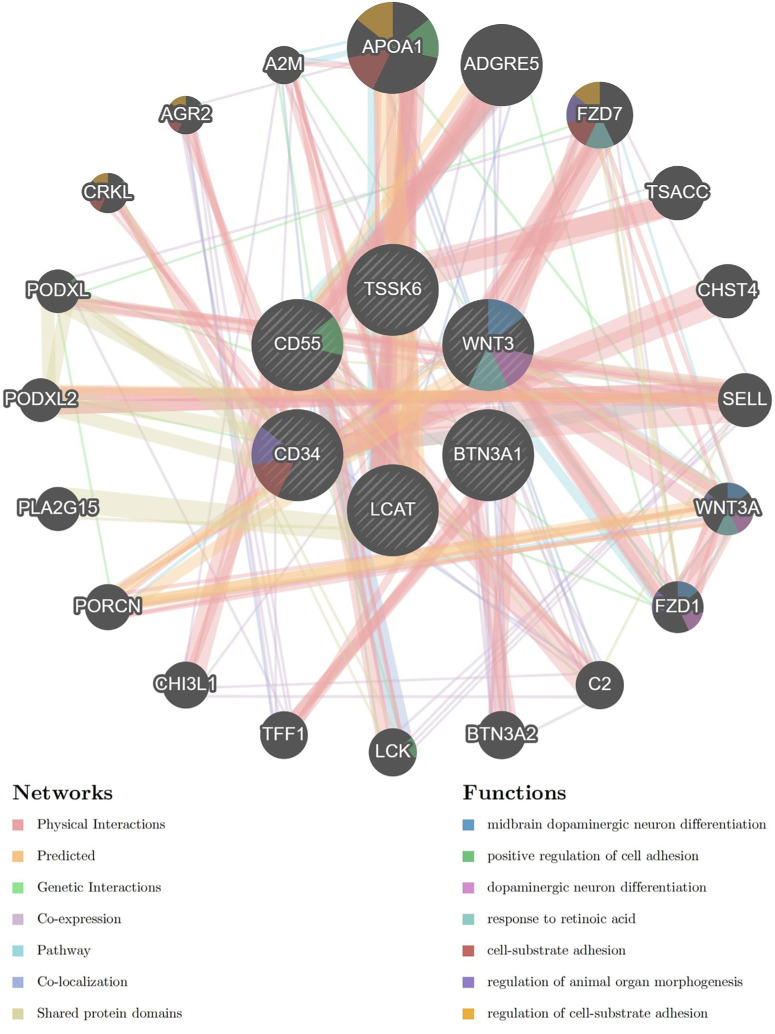
This systematic drug target identification has unveiled 6 putative genetically causal targets for myopia-CD34, CD55, Wnt3, LCAT, BTN3A1, and TSSK6-each backed by colocalization evidence in adult blood eQTL datasets. Functional analysis found that dopaminergic neuron differentiation, cell adhesion, Wnt signaling pathway, and plasma lipoprotein-associated pathways may be involved in myopia pathogenesis. Finally, drug prediction and molecular docking corroborated the pharmacological value of these targets with LCAT demonstrating the strongest binding affinity.
Our study not only opens new avenues for the development of therapeutic interventions for myopia but may also help to understand the underlying mechanisms of myopia.
本研究旨在确定近视的潜在药物靶点,并探讨其潜在机制。
采用孟德尔随机化(MR)方法,评估血液和视网膜中 2684 个可药物靶向的基因对从全基因组关联研究(GWAS)推断的戴镜年龄相关等效球镜(MSE;发现队列,N=287448,欧洲人)的近视风险的影响,该研究在针对自动折射测量的 MSE 的 GWAS 中得到了进一步验证(复制队列,N=95619,欧洲人)。通过共定位分析,加强了对鉴定出的显著潜在靶点的可靠性。此外,还进行了富集分析、蛋白质-蛋白质相互作用网络和分子对接,以探讨这些靶点的功能作用和可药性。
这项系统的药物靶点鉴定揭示了 6 个潜在的近视-CD34、CD55、Wnt3、LCAT、BTN3A1 和 TSSK6 的基因因果靶点,这些靶点在成人血液 eQTL 数据集中都有共定位证据支持。功能分析发现,多巴胺能神经元分化、细胞黏附、Wnt 信号通路和血浆脂蛋白相关通路可能与近视发病机制有关。最后,药物预测和分子对接证实了这些靶点的药理学价值,其中 LCAT 表现出最强的结合亲和力。
我们的研究不仅为近视的治疗干预措施的开发开辟了新的途径,而且可能有助于理解近视的潜在机制。