Liu Qiyuan Keith
MedStar Medical Group, MedStar Montgomery Medical Center, Olney, MD, United States.
Front Endocrinol (Lausanne). 2024 Jul 24;15:1431292. doi: 10.3389/fendo.2024.1431292. eCollection 2024.
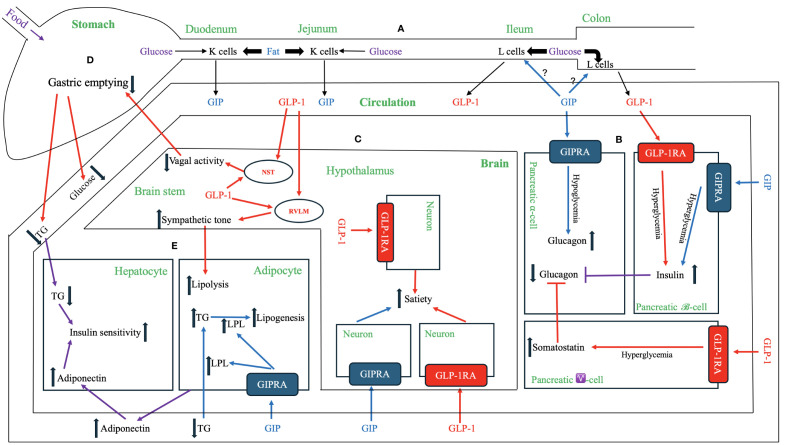
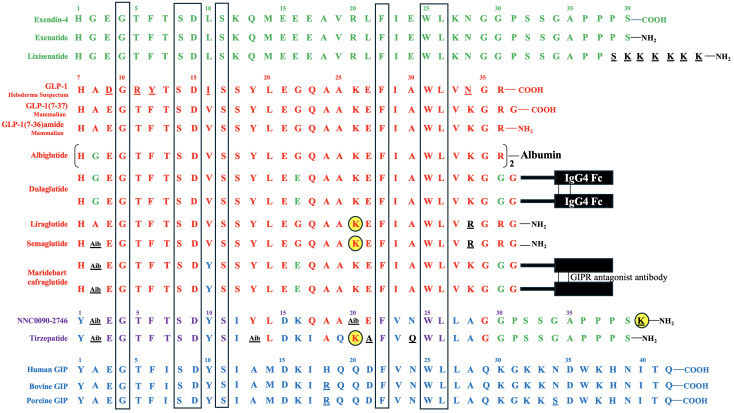
Glucose-dependent insulinotropic polypeptide (GIP) and glucagon-like peptide-1 (GLP-1) are two incretins that bind to their respective receptors and activate the downstream signaling in various tissues and organs. Both GIP and GLP-1 play roles in regulating food intake by stimulating neurons in the brain's satiety center. They also stimulate insulin secretion in pancreatic β-cells, but their effects on glucagon production in pancreatic α-cells differ, with GIP having a glucagonotropic effect during hypoglycemia and GLP-1 exhibiting glucagonostatic effect during hyperglycemia. Additionally, GIP directly stimulates lipogenesis, while GLP-1 indirectly promotes lipolysis, collectively maintaining healthy adipocytes, reducing ectopic fat distribution, and increasing the production and secretion of adiponectin from adipocytes. Together, these two incretins contribute to metabolic homeostasis, preventing both hyperglycemia and hypoglycemia, mitigating dyslipidemia, and reducing the risk of cardiovascular diseases in individuals with type 2 diabetes and obesity. Several GLP-1 and dual GIP/GLP-1 receptor agonists have been developed to harness these pharmacological effects in the treatment of type 2 diabetes, with some demonstrating robust effectiveness in weight management and prevention of cardiovascular diseases. Elucidating the underlying cellular and molecular mechanisms could potentially usher in the development of new generations of incretin mimetics with enhanced efficacy and fewer adverse effects. The treatment guidelines are evolving based on clinical trial outcomes, shaping the management of metabolic and cardiovascular diseases.
葡萄糖依赖性促胰岛素多肽(GIP)和胰高血糖素样肽-1(GLP-1)是两种肠促胰岛素,它们与其各自的受体结合并激活各种组织和器官中的下游信号传导。GIP和GLP-1都通过刺激大脑饱腹感中枢的神经元来调节食物摄入。它们还刺激胰腺β细胞分泌胰岛素,但它们对胰腺α细胞中胰高血糖素产生的影响不同,GIP在低血糖期间具有促胰高血糖素作用,而GLP-1在高血糖期间表现出抑制胰高血糖素作用。此外,GIP直接刺激脂肪生成,而GLP-1间接促进脂肪分解,共同维持健康的脂肪细胞,减少异位脂肪分布,并增加脂肪细胞中脂联素的产生和分泌。这两种肠促胰岛素共同有助于代谢稳态,预防高血糖和低血糖,减轻血脂异常,并降低2型糖尿病和肥胖症患者患心血管疾病的风险。已经开发了几种GLP-1和双GIP/GLP-1受体激动剂,以利用这些药理作用来治疗2型糖尿病,其中一些在体重管理和预防心血管疾病方面显示出强大的有效性。阐明潜在的细胞和分子机制可能会带来新一代疗效增强且副作用更少的肠促胰岛素类似物的开发。治疗指南正在根据临床试验结果不断发展,塑造代谢和心血管疾病的管理。