Wang Ruoyu, Chen Xiaomin, Gong Song, Wang Bo, Xu Weihua
Department of Orthopaedics, Union Hospital, Tongji Medical College, Huazhong University of Science and Technology, Wuhan, China.
Department of Nuclear Medicine, The Central Hospital of Wuhan, Tongji Medical College, Huazhong University of Science and Technology, Wuhan, China.
Ann Jt. 2024 Jul 12;9:23. doi: 10.21037/aoj-23-72. eCollection 2024.
Traditional Chinese medicine (TCM) offers the advantage of effectively relieving rheumatoid arthritis (RA) with minimal side effects. The Juanbi recipe is a commonly utilized TCM treatment for RA, yet its pharmacological mechanism remains unclear. Network pharmacology serves as an effective tool for identifying pharmaceutical ingredients and potential therapeutic targets of TCM, thereby uncovering its mechanisms. This study aimed to identify the core target genes and explore the mechanisms underlying the treatment of RA with the Juanbi recipe.
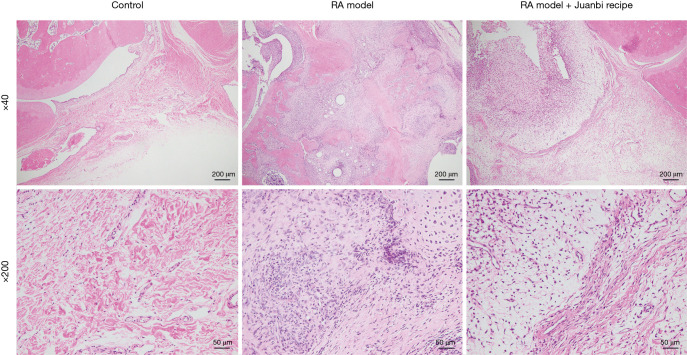
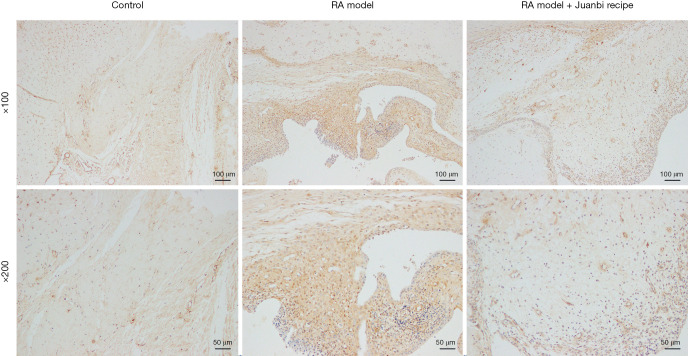
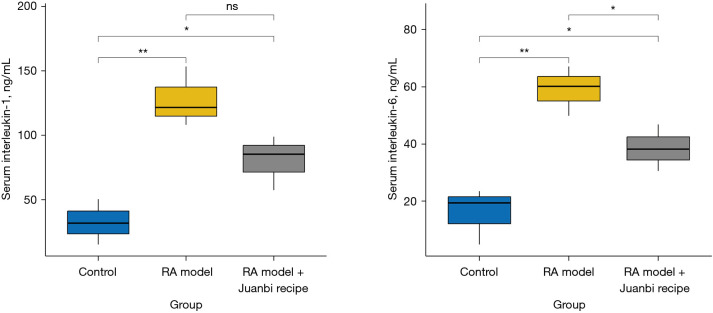
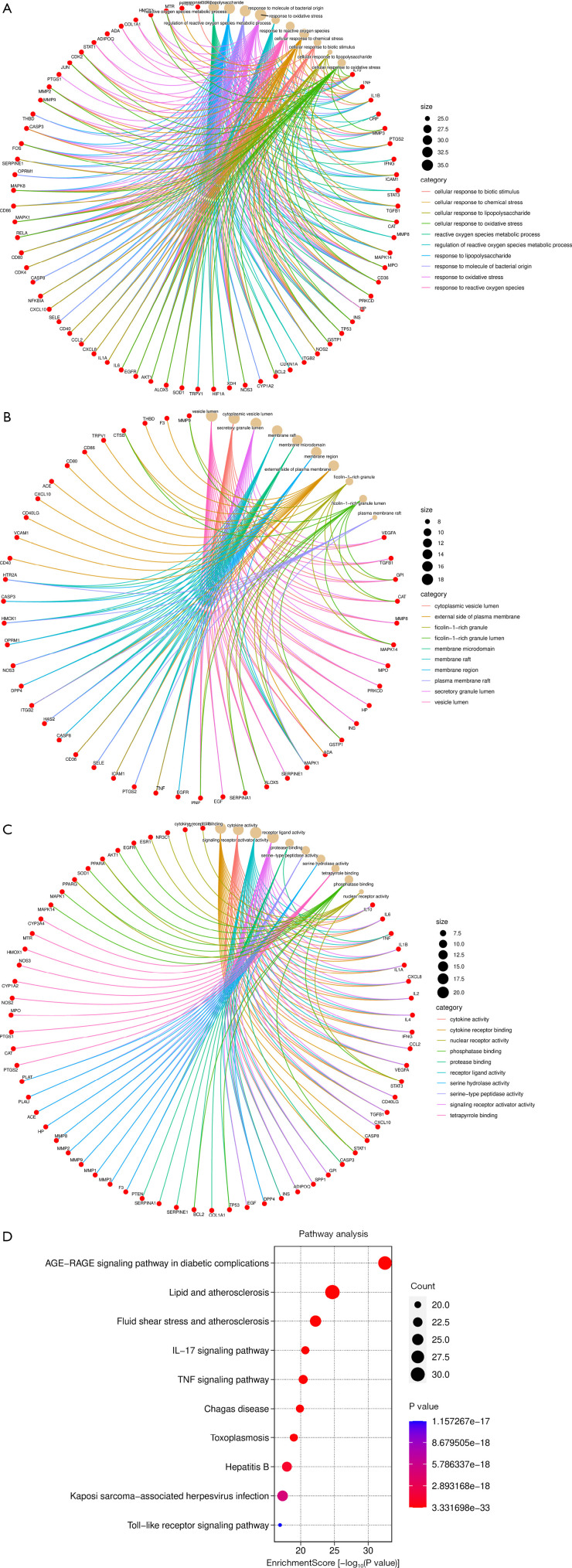
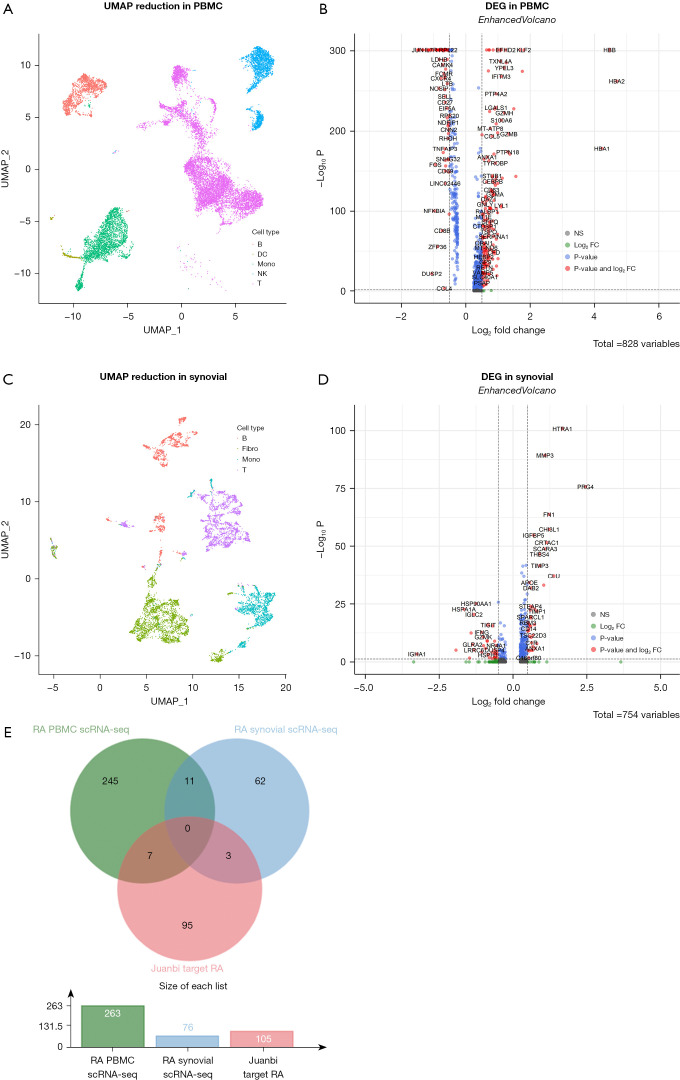
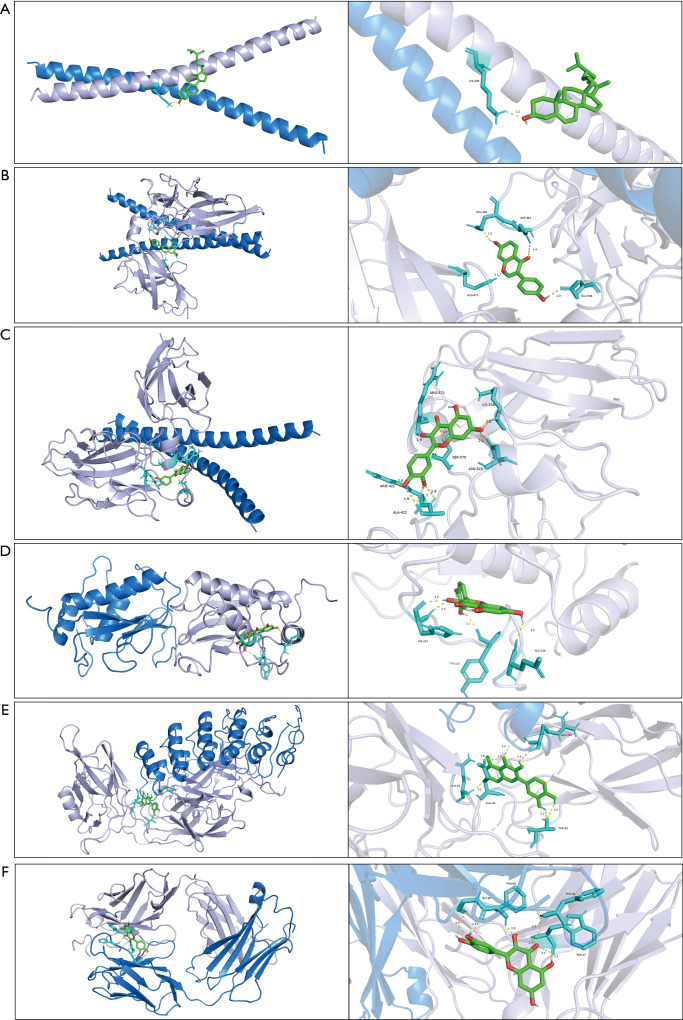
This study adopted the method of network pharmacology to filter key gene targets of Juanbi recipe in RA treatment. Single-cell ribonucleic acid (RNA) sequencing data was used to screen the key genes to form the core genes of Juanbi recipe in RA treatment. The molecular docking technique was used to verify the core target genes and explore the mechanisms of Juanbi recipe in RA treatment. The RA model of mice was induced by the collagen-induced arthritis and the effect of Juanbi recipe was evaluated by intragastric administrating of extraction of Juanbi recipe. Enzyme linked immunosorbent assay was used to analysis serum inflammatory factors. Hematoxylin and eosin staining was used to evaluate inflammation and immunohistochemical (IHC) staining was used to evaluate core target genes and pathways in synovium of ankle.
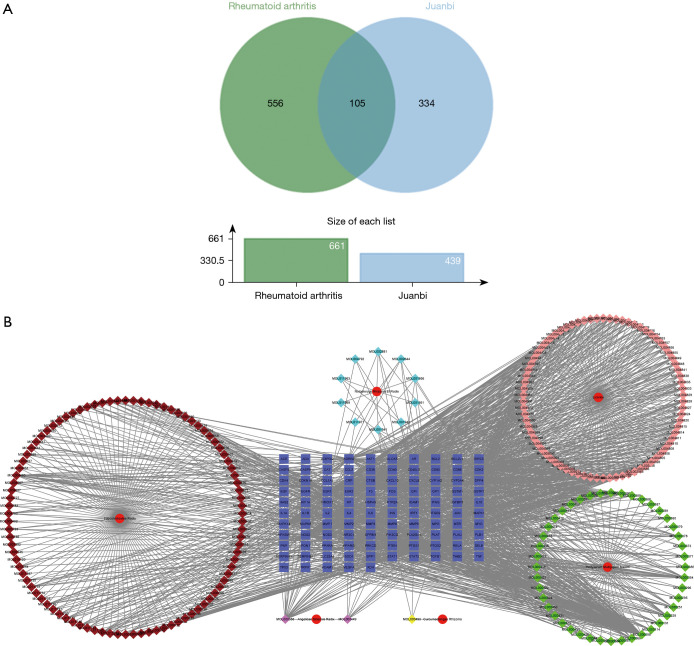
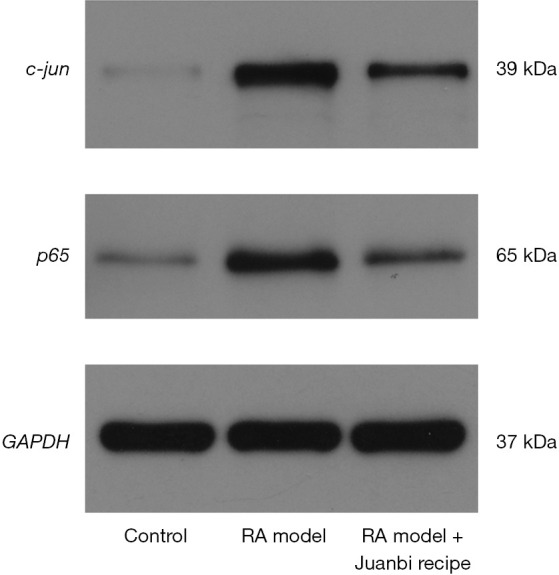
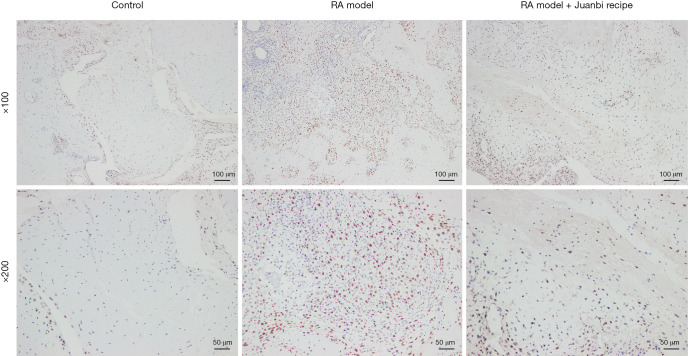
This study screened out 281 active molecules in Juanbi recipe, found 105 key target genes of Juanbi recipe in RA treatment, and drew an "ingredient - molecule - gene" diagram. Juanbi recipe reduced the levels of serum interleukin (IL)-1 and IL-6, the inflammatory infiltration in synovium, demonstration that Juanbi recipe reduced both systemic and synovial inflammatory response. Single cell RNA sequencing data were used to select six core target genes and six core active molecules of Juanbi recipe in RA treatment. The pathways of Juanbi recipe in RA treatment involved in activator protein-1 () and nuclear factor kappa B () pathway. Results of western blot and IHC staining showed that Juanbi recipe decreased the expressions of and , which demonstrated that Juanbi recipe inhibited the expression of and pathway in RA.
The core active molecules of Juanbi recipe could inhibit key factors of and pathway to inhibit the inflammation, which played a protective role in RA.
传统中医(TCM)具有有效缓解类风湿性关节炎(RA)且副作用最小的优势。蠲痹方是常用于治疗RA的一种中药方剂,但其药理机制尚不清楚。网络药理学是识别中药药用成分和潜在治疗靶点、从而揭示其作用机制的有效工具。本研究旨在确定核心靶基因,并探索蠲痹方治疗RA的潜在机制。
本研究采用网络药理学方法筛选蠲痹方治疗RA的关键基因靶点。利用单细胞核糖核酸(RNA)测序数据筛选关键基因,以形成蠲痹方治疗RA的核心基因。采用分子对接技术验证核心靶基因,并探索蠲痹方治疗RA的机制。通过胶原诱导的关节炎建立小鼠RA模型,通过灌胃给予蠲痹方提取物来评估蠲痹方的疗效。采用酶联免疫吸附测定法分析血清炎症因子。采用苏木精-伊红染色评估炎症情况,采用免疫组织化学(IHC)染色评估踝关节滑膜中的核心靶基因和信号通路。
本研究筛选出蠲痹方中的281种活性分子,发现蠲痹方治疗RA的105个关键靶基因,并绘制了“成分-分子-基因”图。蠲痹方降低了血清白细胞介素(IL)-1和IL-6水平以及滑膜中的炎症浸润,表明蠲痹方减轻了全身和滑膜的炎症反应。利用单细胞RNA测序数据选择了蠲痹方治疗RA的六个核心靶基因和六个核心活性分子。蠲痹方治疗RA的信号通路涉及激活蛋白-1(AP-1)和核因子κB(NF-κB)信号通路。蛋白质免疫印迹和IHC染色结果显示,蠲痹方降低了AP-1和NF-κB的表达,表明蠲痹方在RA中抑制了AP-1和NF-κB信号通路的表达。
蠲痹方的核心活性分子可抑制AP-1和NF-κB信号通路的关键因子以抑制炎症,这对RA起到了保护作用。