Hong Jun-Bin, Chen Yue-Xuan, Su Zhi-Ying, Chen Xin-Ying, Lai Yan-Ni, Yang Jing-Hua
Department of Pediatrics, The Second Affiliated Hospital, Guangzhou University of Chinese Medicine, Guangzhou, China.
Shenzhen Hospital of Guangzhou University of Chinese Medicine (Futian), Shenzhen, China.
Front Immunol. 2024 Jul 24;15:1356414. doi: 10.3389/fimmu.2024.1356414. eCollection 2024.
The gut microbiota significantly influences the onset and progression of juvenile idiopathic arthritis (JIA) and associated uveitis (JIAU); however, the causality remains unclear. This study aims to establish a causal link between gut microbiota and JIA or JIAU.
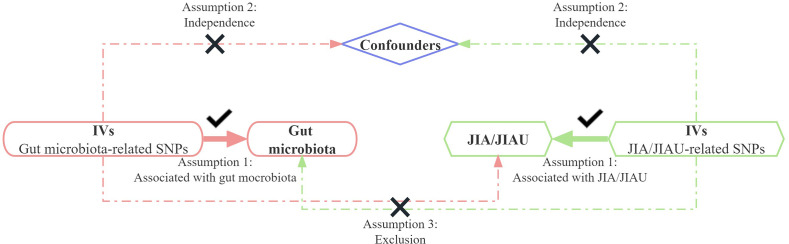
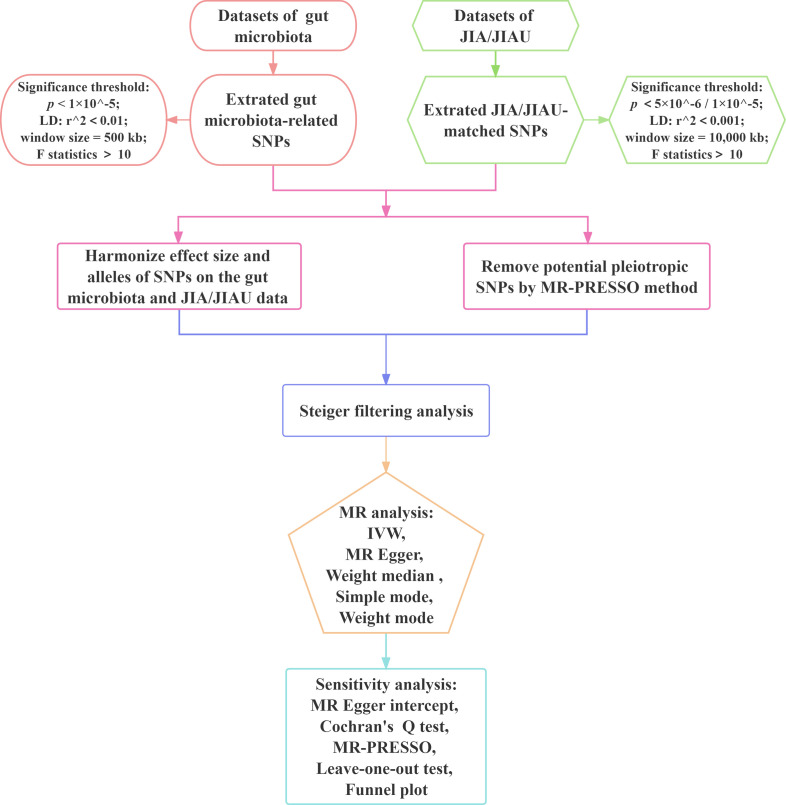
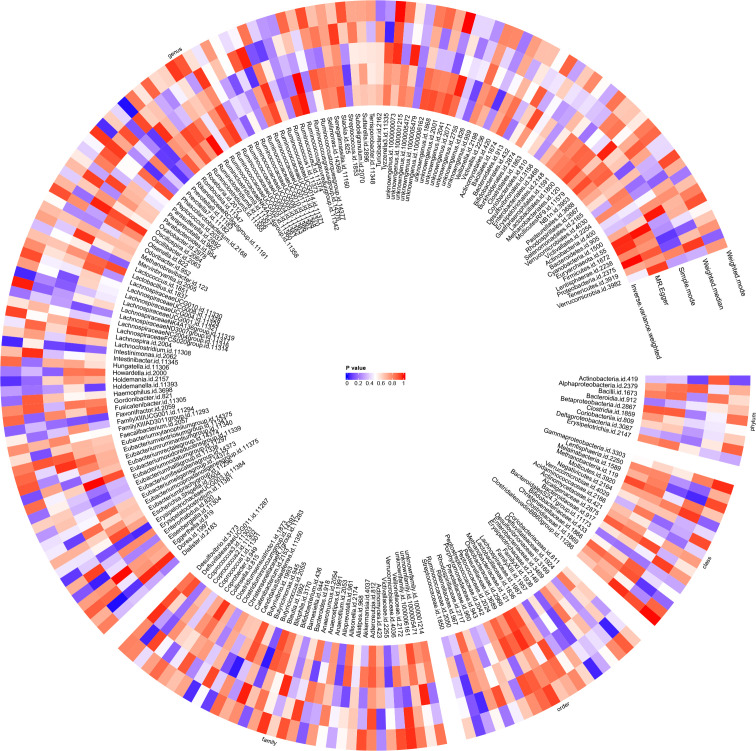
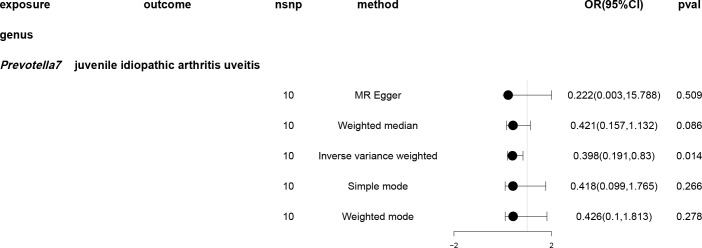
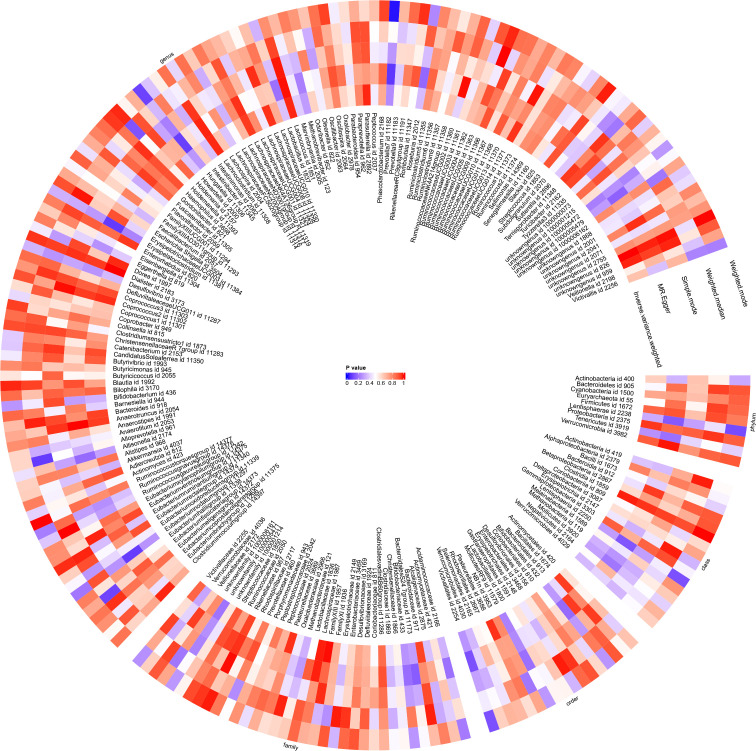
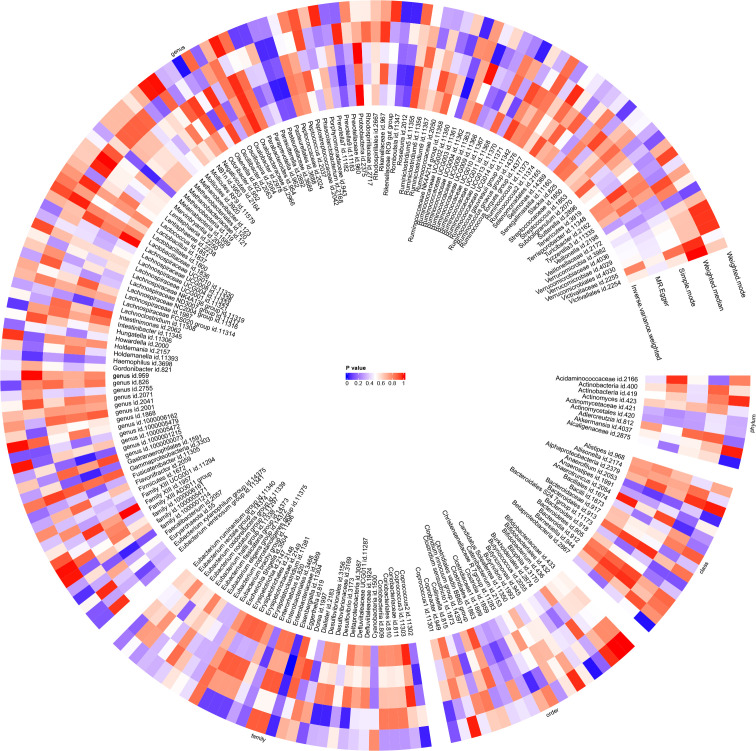
Using publicly available genome-wide association studies (GAWS) summary data, we conducted a two-sample Mendelian randomisation (MR) analysis employing various methods, namely inverse variance weighted (IVW), simple mode, weighted mode, weighted median and MR-Egger regression methods, to assess the causal association between JIA or JIAU and gut microbiota. Sensitivity analyses, including Cochrane's Q test, MR-Egger intercept test, leave-one-out analysis and MR-PRESSO, were performed to evaluate the robustness of the MR results. Subsequently, reverse MR analysis was conducted to determine causality between gene-predicted gut microbiota abundance and JIA or JIAU.
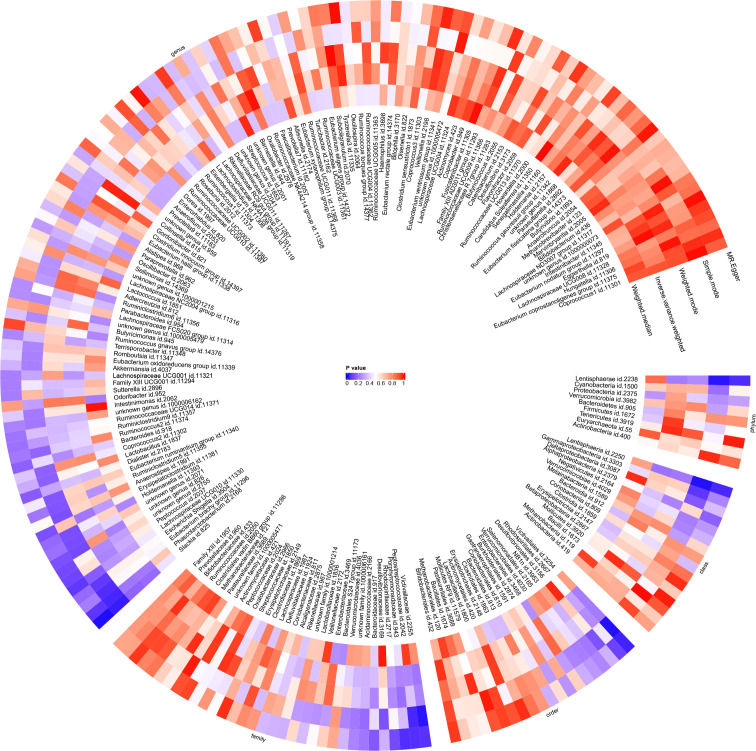
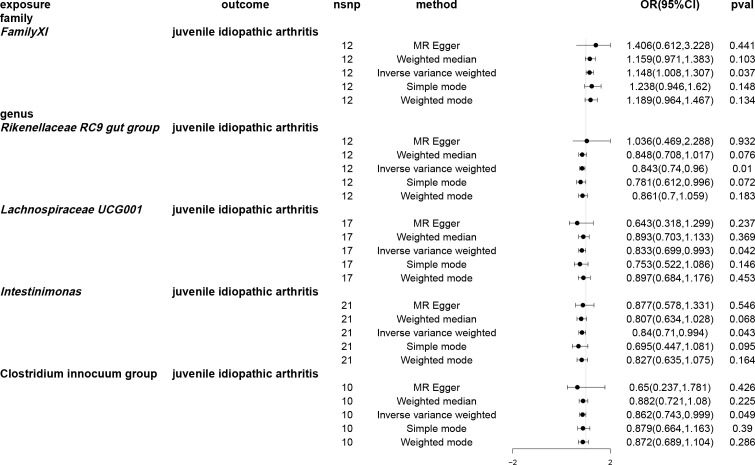
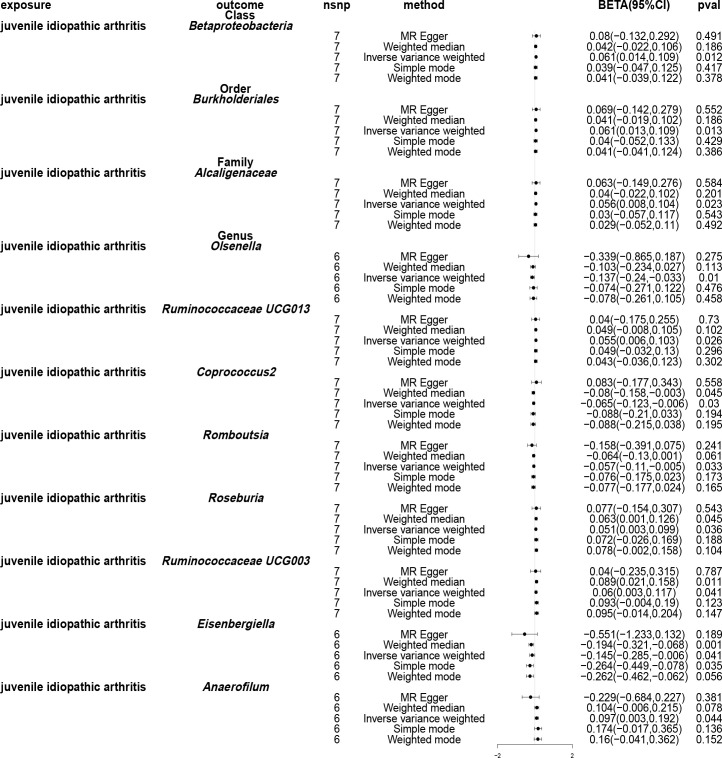
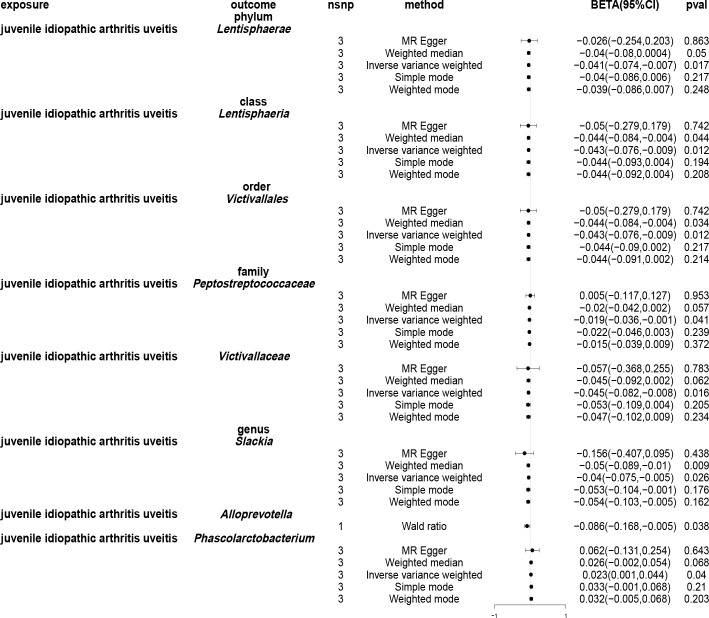
The MR analysis revealed a causal association between gut microbiota abundance variations and JIA or JIAU risk. Specifically, the increased abundance of genus (OR: 0.055, 95%CI: 0.006-0.103, = 0.026) and genus 3 (: 0.06, 95%CI: 0.003-0.117, = 0.041) correlated with an increased risk of JIA, while genus (OR: 0.833, 95%CI: 0.699~0.993, = 0.042) was associated with a reduced risk of JIA, among others. Sensitivity analysis confirmed MR analysis robustness.
This study provides substantial evidence supporting a causal association between genetically predicted gut microbiota and JIA or JIAU. It highlights the significant role of intestinal flora in JIA or JIAU development, suggesting their potential as novel biomarkers for diagnosis and prevention. These findings offer valuable insights to mitigate the impact of JIA or JIAU.
肠道微生物群显著影响幼年特发性关节炎(JIA)及相关葡萄膜炎(JIAU)的发病和进展;然而,因果关系仍不明确。本研究旨在建立肠道微生物群与JIA或JIAU之间的因果联系。
利用公开可用的全基因组关联研究(GWAS)汇总数据,我们采用多种方法进行了两样本孟德尔随机化(MR)分析,即逆方差加权(IVW)、简单模式、加权模式、加权中位数和MR-Egger回归方法,以评估JIA或JIAU与肠道微生物群之间的因果关联。进行了敏感性分析,包括Cochrane's Q检验、MR-Egger截距检验、留一法分析和MR-PRESSO,以评估MR结果的稳健性。随后,进行了反向MR分析,以确定基因预测的肠道微生物群丰度与JIA或JIAU之间的因果关系。
MR分析揭示了肠道微生物群丰度变化与JIA或JIAU风险之间的因果关联。具体而言,属(OR:0.055,95%CI:0.006-0.103,P = 0.026)和属3(OR:0.06,95%CI:0.003-0.117,P = 0.041)丰度增加与JIA风险增加相关,而属(OR:0.833,95%CI:0.699~0.993,P = 0.042)等与JIA风险降低相关。敏感性分析证实了MR分析的稳健性。
本研究提供了大量证据支持基因预测的肠道微生物群与JIA或JIAU之间的因果关联。它突出了肠道菌群在JIA或JIAU发展中的重要作用,表明它们作为诊断和预防新生物标志物的潜力。这些发现为减轻JIA或JIAU的影响提供了有价值的见解。