UK Centre for Ecology & Hydrology (UKCEH), Benson Lane, Crowmarsh Gifford, Wallingford OX10 8BB, UK.
UK Centre for Ecology & Hydrology (UKCEH), Benson Lane, Crowmarsh Gifford, Wallingford OX10 8BB, UK; School of Biological Sciences, University of Reading, Reading, UK.
Water Res. 2024 Oct 15;264:122204. doi: 10.1016/j.watres.2024.122204. Epub 2024 Aug 3.
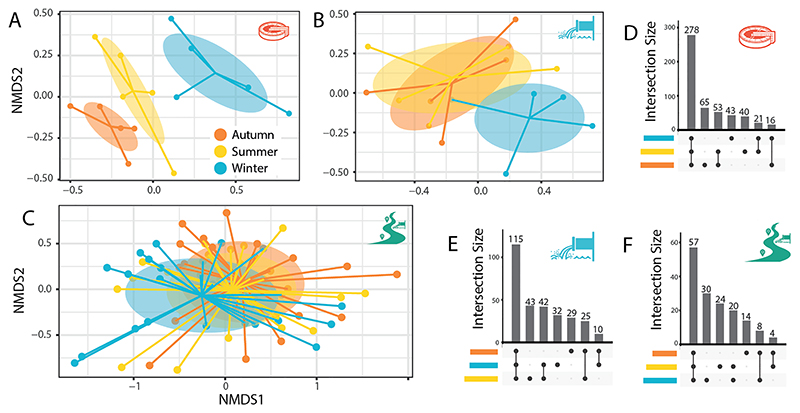
Antimicrobial resistance (AMR) is a global health hazard. Although clinical and agricultural environments are well-established contributors to the evolution and dissemination of AMR, research on wastewater treatment works (WwTWs) has highlighted their potential role as disseminators of AMR in freshwater environments. Using metagenomic sequencing and analysis, we investigated the changes in resistomes and associated mobile genetic elements within untreated wastewater influents and treated effluents of five WwTWs, and sediments collected from corresponding river environments in Oxfordshire, UK, across three seasonal periods within a year. Our analysis demonstrated a high diversity and abundance of antimicrobial resistance genes (ARGs) in untreated wastewater influents, reflecting the varied anthropogenic and environmental origins of wastewater. WwTWs effectively reduced AMR in the final effluent, with an average 87 % reduction in normalised ARG abundance and an average 63 % reduction in richness. However, wastewater effluents significantly impacted the antimicrobial resistome of the receiving rivers, with an average 543 % increase in ARG abundance and a 164 % increase in richness from upstream sediments to downstream sediments. The normalised abundance of the human gut-associated bacteriophage crAssphage was highly associated with both ARG abundance and richness. We observed seasonal variation in the resistome of raw influent which was not found in the effluent-receiving sediments. We illustrate the potential of WwTWs as focal points for disseminating ARGs and resistance-selecting chemicals, contributing to the elevation of environmental AMR. Our study emphasises the need for a comprehensive understanding of the anthropogenic impacts on AMR evolution and dissemination in wastewater and river environments, informing efforts to mitigate this growing public health crisis.
抗微生物药物耐药性(AMR)是一个全球性的健康危害。尽管临床和农业环境是 AMR 进化和传播的既定贡献者,但对废水处理厂(WwTWs)的研究强调了它们作为 AMR 在淡水环境中传播者的潜在作用。我们使用宏基因组测序和分析,研究了未经处理的废水进水和五个 WwTWs 的处理出水以及从英国牛津郡相应河流环境中收集的沉积物中的耐药组和相关移动遗传元件在一年三个季节期间的变化。我们的分析表明,未经处理的废水进水具有高多样性和丰富的抗微生物药物耐药性基因(ARGs),反映了废水的各种人为和环境来源。WwTWs 有效地降低了最终出水中的 AMR,正常化的 ARG 丰度平均降低了 87%,丰富度平均降低了 63%。然而,废水排放对接收河流的抗菌药物耐药组产生了重大影响,上游沉积物中 ARG 丰度平均增加了 543%,丰富度增加了 164%。与 ARG 丰度和丰富度高度相关的是人类肠道相关噬菌体 crAssphage 的正常化丰度。我们观察到原始进水的耐药组存在季节性变化,但在出水中未发现接收沉积物中的变化。我们说明了 WwTWs 作为传播 ARGs 和耐药性选择化学物质的焦点的潜力,这有助于提高环境 AMR。我们的研究强调了需要全面了解人为因素对抗微生物药物耐药性进化和传播的影响,为减轻这一日益严重的公共卫生危机提供信息。