Li Zhehuang, Yao Weitao, Wang Jiaqiang, Wang Xin, Luo Suxia, Zhang Peng
Department of Musculoskeletal Oncology, Affiliated Cancer Hospital of Zhengzhou University, Henan Cancer Hospital, Zhengzhou, China.
Department of Medical Oncology, Affiliated Cancer Hospital of Zhengzhou University, Henan Cancer Hospital, Zhengzhou, China.
BMC Musculoskelet Disord. 2024 Aug 8;25(1):632. doi: 10.1186/s12891-024-07748-9.
Patients with spinal metastases undergoing surgical treatment face challenges related to preoperative anemia, intraoperative blood loss, and frailty, emphasizing the significance of perioperative blood management. This retrospective analysis aimed to assess the correlation between hemoglobin-related parameters and outcomes, identifying key markers to aid in blood management.
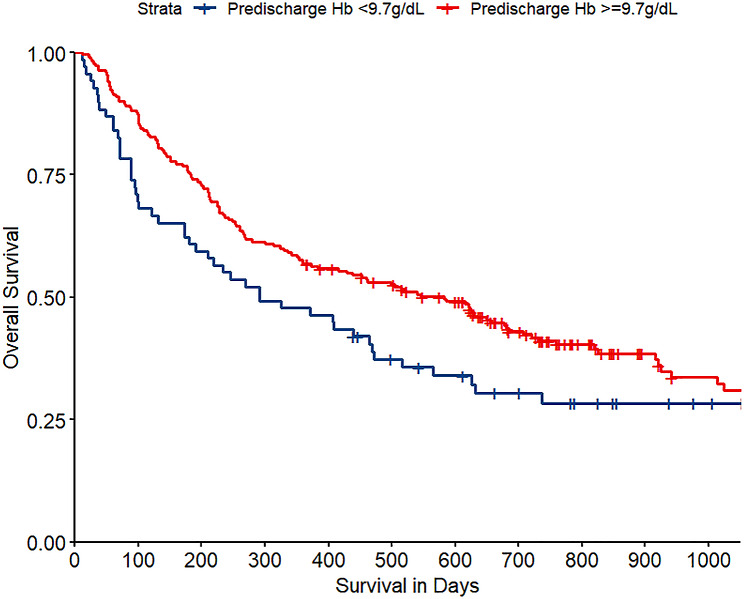
A retrospective review was performed to identify patients who underwent surgical treatment for spinal metastases. Hb-related parameters, including baseline Hb, postoperative nadir Hb, predischarge Hb, postoperative nadir Hb drift, and predischarge Hb drift (both in absolute values and percentages) were subjected to univariate and multivariate analyses. These analyses were conducted in conjunction with other established variables to identify independent markers predicting patient outcomes. The outcomes of interest were postoperative short-term (6-week) mortality, long-term (1-year) mortality, and postoperative 30-day morbidity.
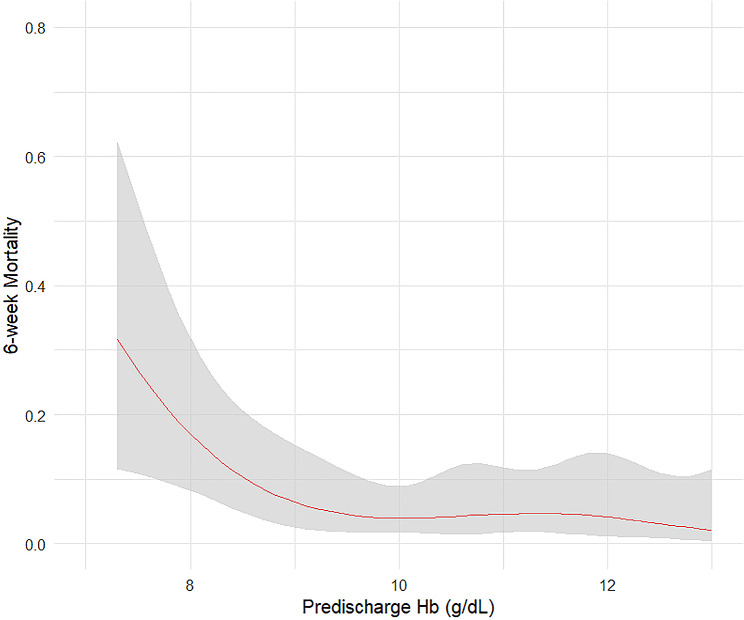
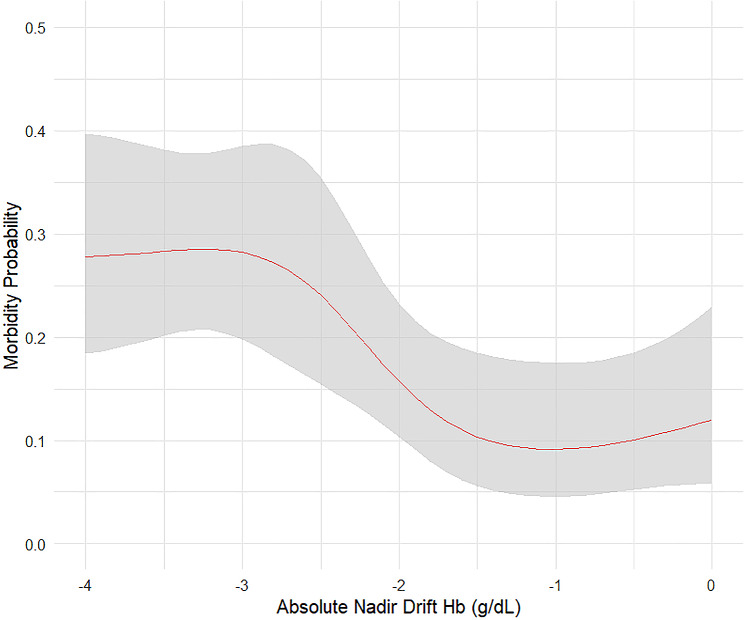
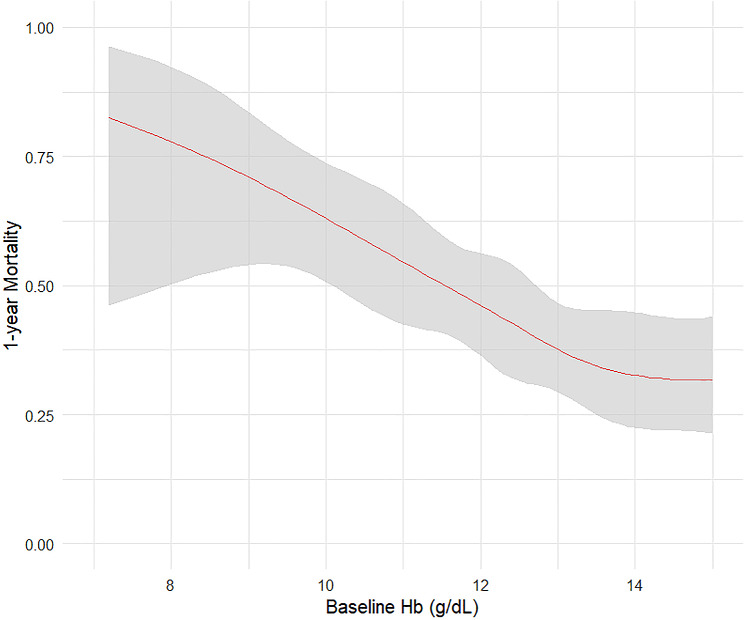
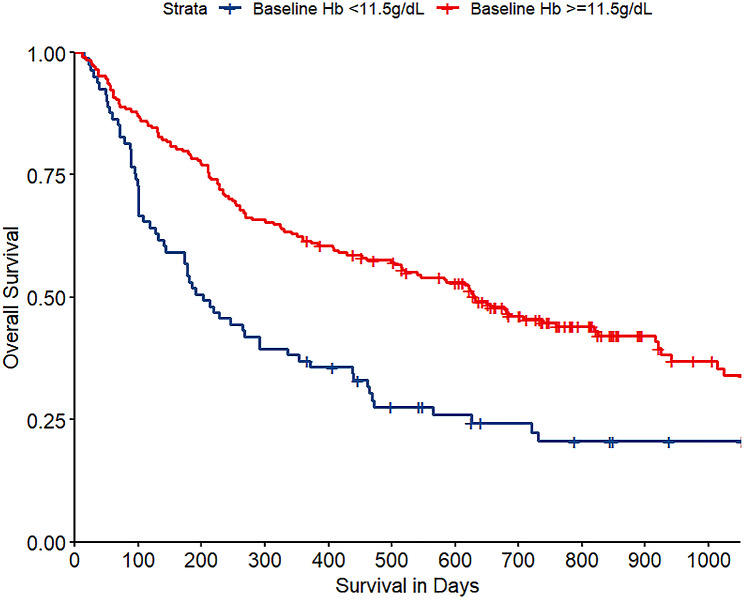
A total of 289 patients were included. Our study demonstrated that predischarge Hb (OR 0.62, 95% CI 0.44-0.88, P = 0.007) was an independent prognostic factor of short-term mortality, while baseline Hb (OR 0.76, 95% CI 0.66-0.88, P < 0.001) was identified as an independent prognostic factor of long-term mortality. Additionally, nadir Hb drift (OR 0.82, 95% CI 0.70-0.97, P = 0.023) was found to be an independent prognostic factor for postoperative 30-day morbidity.
This study demonstrated that predischarge Hb, baseline Hb, and nadir Hb drift are prognostic factors for outcomes. These findings provide a foundation for precise blood management strategies. It is crucial to consider Hb-related parameters appropriately, and prospective intervention studies addressing these markers should be conducted in the future.
接受手术治疗的脊柱转移瘤患者面临与术前贫血、术中失血和身体虚弱相关的挑战,这凸显了围手术期血液管理的重要性。本回顾性分析旨在评估血红蛋白相关参数与预后之间的相关性,确定有助于血液管理的关键指标。
进行回顾性研究以确定接受脊柱转移瘤手术治疗的患者。对血红蛋白相关参数,包括基线血红蛋白(Hb)、术后最低Hb、出院前Hb、术后最低Hb漂移以及出院前Hb漂移(绝对值和百分比)进行单因素和多因素分析。这些分析与其他既定变量一起进行,以确定预测患者预后的独立指标。感兴趣的结局指标为术后短期(6周)死亡率、长期(1年)死亡率和术后30天发病率。
共纳入289例患者。我们的研究表明,出院前Hb(比值比[OR]0.62,95%置信区间[CI]0.44 - 0.88,P = 0.007)是短期死亡率的独立预后因素,而基线Hb(OR 0.76,95% CI 0.66 - 0.88,P < 0.001)被确定为长期死亡率的独立预后因素。此外,最低Hb漂移(OR 0.82,95% CI 0.70 - 0.97,P = 0.023)被发现是术后30天发病率的独立预后因素。
本研究表明,出院前Hb、基线Hb和最低Hb漂移是预后的预测因素。这些发现为精确的血液管理策略奠定了基础。适当考虑血红蛋白相关参数至关重要,未来应开展针对这些指标的前瞻性干预研究。