Guan Hongling, Yang Xiaolong, Lin Yuxiang, Xie Baoxing, Zhang Xinyue, Ma Chongjian, Xia Rui, Chen Riyuan, Hao Yanwei
College of Horticulture, South China Agricultural University, Guangzhou, China.
Guangdong Provincial Key Laboratory of Utilization and Conservation of Food and Medicinal Resources in Northern Region, School of Biology and Agriculture, Shaoguan University, Shaoguan, China.
Front Plant Sci. 2024 Jul 25;15:1404980. doi: 10.3389/fpls.2024.1404980. eCollection 2024.
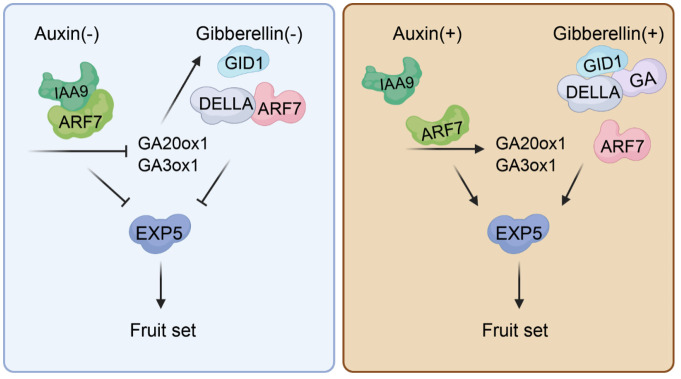
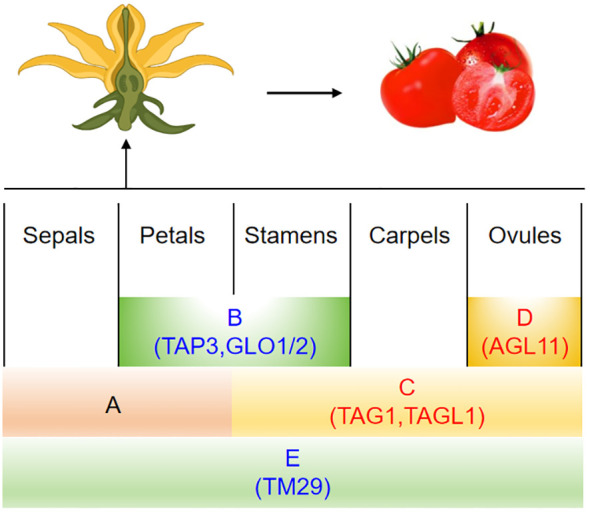
Parthenocarpic fruits, known for their superior taste and reliable yields in adverse conditions, develop without the need for fertilization or pollination. Exploring the physiological and molecular mechanisms behind parthenocarpic fruit development holds both theoretical and practical significance, making it a crucial area of study. This review examines how plant hormones and MADS-box transcription factors control parthenocarpic fruit formation. It delves into various aspects of plant hormones-including auxin, gibberellic acid, cytokinins, ethylene, and abscisic acid-ranging from external application to biosynthesis, metabolism, signaling pathways, and their interplay in influencing parthenocarpic fruit development. The review also explores the involvement of MADS family gene functions in these processes. Lastly, we highlight existing knowledge gaps and propose directions for future research on parthenocarpy.
单性结实果实以其在不利条件下的优良口感和稳定产量而闻名,其发育无需受精或授粉。探索单性结实果实发育背后的生理和分子机制具有理论和实际意义,使其成为一个关键的研究领域。本综述研究了植物激素和MADS-box转录因子如何控制单性结实果实的形成。它深入探讨了植物激素的各个方面,包括生长素、赤霉素、细胞分裂素、乙烯和脱落酸,从外部施用、生物合成、代谢、信号通路及其在影响单性结实果实发育中的相互作用。该综述还探讨了MADS家族基因功能在这些过程中的参与情况。最后,我们强调了现有的知识空白,并提出了未来单性结实研究的方向。