Institute of Urology, The Affiliated Luohu Hospital of Shenzhen University, Shenzhen University, Shenzhen, Guangdong, 518000, China.
Institute of Urology, Luohu Clinical College of Shantou University Medical College, Shantou University Medical College, Shantou, Guangdong, 515000, China.
J Exp Clin Cancer Res. 2024 Aug 12;43(1):223. doi: 10.1186/s13046-024-03146-0.
CRISPR-Cas13a is renowned for its precise and potent RNA editing capabilities in cancer therapy. While various material systems have demonstrated efficacy in supporting CRISPR-Cas13a to execute cellular functions in vitro efficiently and specifically, the development of CRISPR-Cas13a-based therapeutic agents for intravesical instillation in bladder cancer (BCa) remains unexplored.
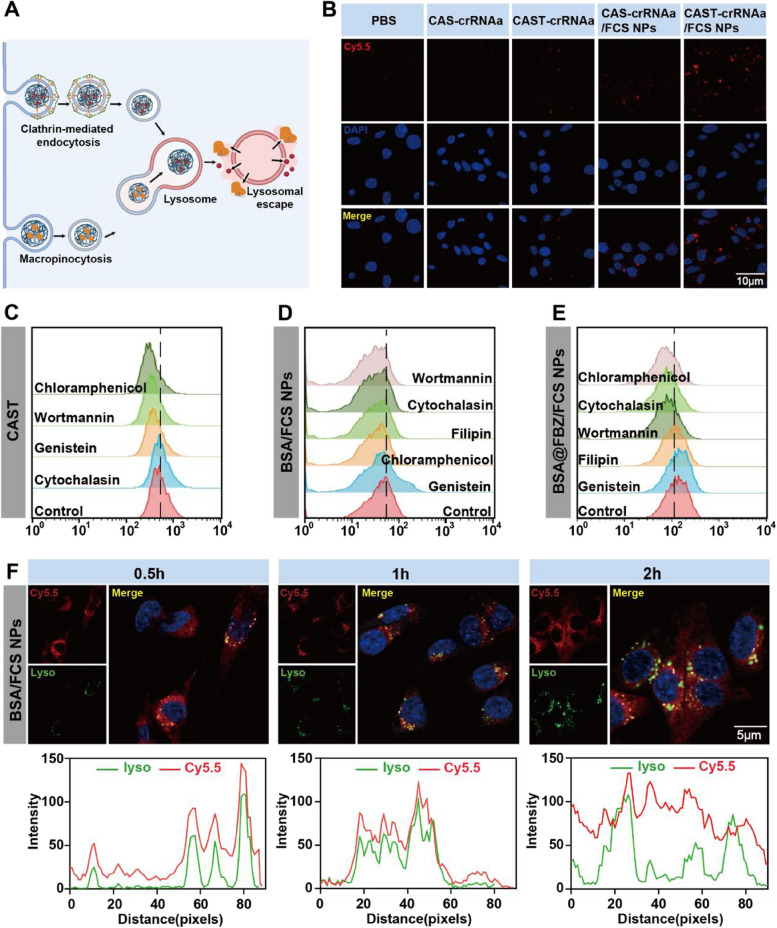
In this study, we introduce a CRISPR-Cas13a nanoplatform, which effectively inhibits PDL1 expression following intravesical instillation. This system utilizes a fusion protein CAST, created through the genetic fusion of CRISPR-Cas13 and the transmembrane peptide TAT. CAST acts as a potent transmembrane RNA editor and is assembled with the transepithelial delivery carrier fluorinated chitosan (FCS). Upon intravesical administration into the bladder, the CAST-crRNAa/FCS nanoparticles (NPs) exhibit remarkable transepithelial capabilities, significantly suppressing PDL1 expression in tumor tissues.To augment immune activation within the tumor microenvironment, we integrated a fenbendazole (FBZ) intravesical system (FBZ@BSA/FCS NPs). This system is formulated through BSA encapsulation followed by FCS coating, positioning FBZ as a powerful chemo-immunological agent.
In an orthotropic BCa model, the FBZ@BSA/FCS NPs demonstrated pronounced tumor cell apoptosis, synergistically reduced PDL1 expression, and restructured the immune microenvironment. This culminated in an enhanced synergistic intravesical instillation approach for BCa. Consequently, our study unveils a novel RNA editor nanoagent formulation and proposes a potential synergistic therapeutic strategy. This approach significantly bolsters therapeutic efficacy, holding promise for the clinical translation of CRISPR-Cas13-based cancer perfusion treatments.
CRISPR-Cas13a 以其在癌症治疗中的精确而强大的 RNA 编辑能力而闻名。虽然各种材料系统已经证明能够有效地支持 CRISPR-Cas13a 在体外高效且特异性地执行细胞功能,但用于膀胱癌(BCa)膀胱内灌注的基于 CRISPR-Cas13a 的治疗剂的开发仍未得到探索。
在这项研究中,我们引入了一种 CRISPR-Cas13a 纳米平台,该平台在膀胱内灌注后有效抑制了 PDL1 的表达。该系统利用通过 CRISPR-Cas13 和跨膜肽 TAT 的基因融合创建的融合蛋白 CAST。CAST 作为一种有效的跨膜 RNA 编辑器,与跨上皮递药载体氟化壳聚糖(FCS)组装在一起。在膀胱内给药后,CAST-crRNAa/FCS 纳米颗粒(NPs)表现出显著的跨上皮能力,显著抑制了肿瘤组织中的 PDL1 表达。为了增强肿瘤微环境中的免疫激活,我们整合了芬苯达唑(FBZ)膀胱内系统(FBZ@BSA/FCS NPs)。该系统通过 BSA 包封然后用 FCS 涂层形成,将 FBZ 定位为一种强大的化疗免疫药物。
在同基因 BCa 模型中,FBZ@BSA/FCS NPs 表现出明显的肿瘤细胞凋亡,协同降低 PDL1 表达,并重构免疫微环境。这导致了增强的协同膀胱内灌注治疗 BCa 的方法。因此,我们的研究揭示了一种新型的 RNA 编辑器纳米剂配方,并提出了一种潜在的协同治疗策略。这种方法显著增强了治疗效果,为基于 CRISPR-Cas13 的癌症灌注治疗的临床转化提供了前景。