Xu G X, Jin W M, Ye B D, Jiang S F, Hu C, Huang X, Xie B S, Jiang H F, Chen L L, Yao R X, Lu Y, Li L J, Zhang J, Ouyang G F, Hong Y W, Kong H W, Qiu Z J, Luo W J, Chu B B, Zhang H Q, Zeng H, Zhou X J, Shi P F, Xu Y, Jin J, Tong H Y
The First Affiliated Hospital of Zhejiang University, School of Medicine, Hangzhou 310003, China.
The First Affiliated Hospital of Zhejiang University, School of Medicine, Hangzhou 310003, China Lishui People's Hospital, Lishui 323050, China.
Zhonghua Xue Ye Xue Za Zhi. 2024 Jun 14;45(6):549-555. doi: 10.3760/cma.j.cn121090-20240127-00041.
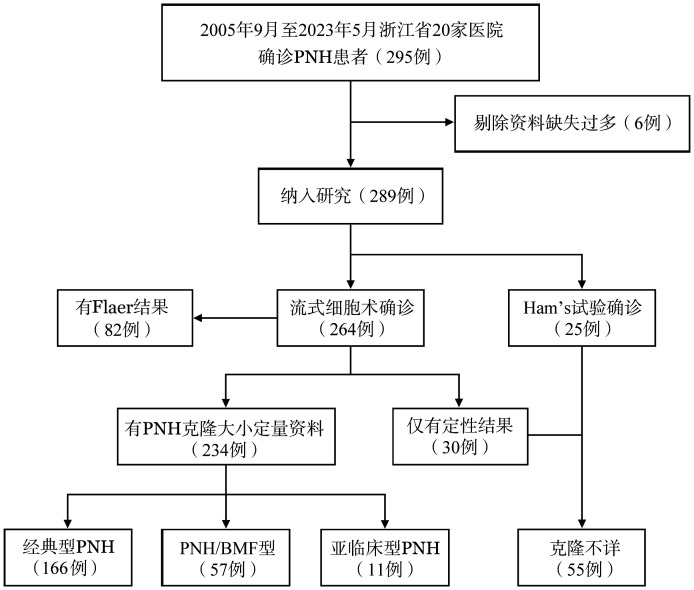
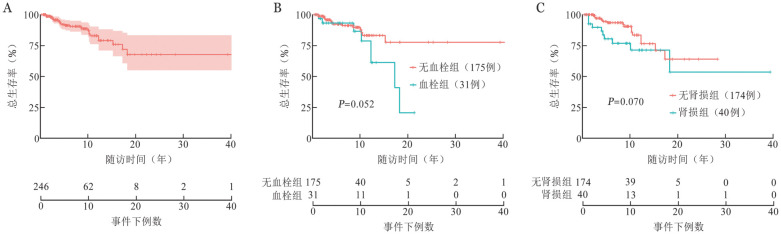
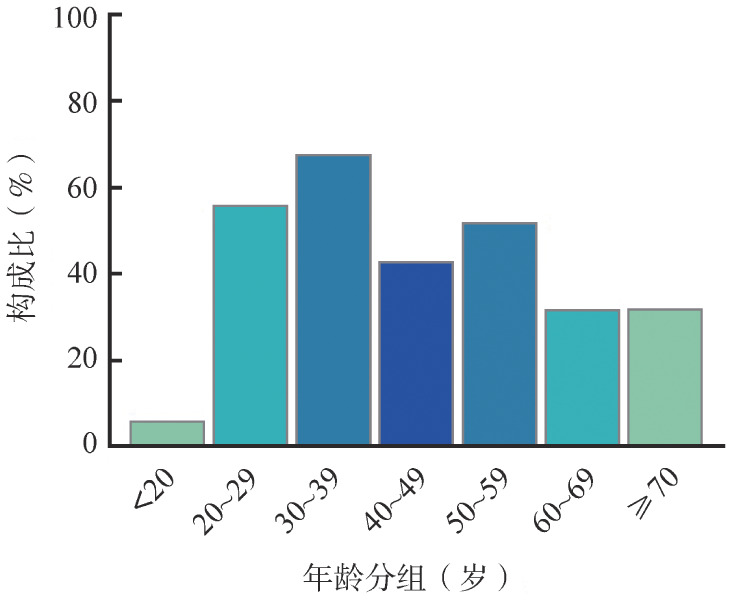
To further improve the understanding of paroxysmal nocturnal hemoglobinuria (PNH), we retrospectively analyzed and summarized the clinical characteristics, treatment status, and survival status of patients with PNH in Zhejiang Province. This study included 289 patients with PNH who visited 20 hospitals in Zhejiang Province. Their clinical characteristics, comorbidity, laboratory test results, and medications were analyzed and summarized. Among the 289 patients with PNH, 148 males and 141 females, with a median onset age of 45 (16-87) years and a peak onset age of 20-49 years (57.8% ). The median lactic dehydrogenase (LDH) level was 1 142 (604-1 925) U/L. Classified by type, 70.9% (166/234) were classical, 24.4% (57/234) were PNH/bone marrow failure (BMF), and 4.7% (11/234) were subclinical. The main clinical manifestations included fatigue or weakness (80.8%, 235/289), dizziness (73.4%, 212/289), darkened urine color (66.2%, 179/272), and jaundice (46.2%, 126/270). Common comorbidities were hemoglobinuria (58.7% ), renal dysfunction (17.6% ), and thrombosis (15.0% ). Moreover, 82.3% of the patients received glucocorticoid therapy, 70.9% required blood transfusion, 30.7% used immunosuppressive agents, 13.8% received anticoagulant therapy, and 6.3% received allogeneic hematopoietic stem cell transplantation. The 10-year overall survival (OS) rate was 84.4% (95% 78.0% -91.3% ) . Patients with PNH are more common in young and middle-aged people, with a similar incidence rate between men and women. Common clinical manifestations include fatigue, hemoglobinuria, jaundice, renal dysfunction, and recurrent thrombosis. The 10-year OS of this group is similar to reports from other centers in China.
为进一步提高对阵发性夜间血红蛋白尿(PNH)的认识,我们回顾性分析并总结了浙江省PNH患者的临床特征、治疗情况及生存状况。本研究纳入了289例在浙江省20家医院就诊的PNH患者。分析并总结了他们的临床特征、合并症、实验室检查结果及用药情况。在289例PNH患者中,男性148例,女性141例,中位发病年龄为45(16 - 87)岁,发病高峰年龄为20 - 49岁(57.8%)。乳酸脱氢酶(LDH)中位水平为1142(604 - 1925)U/L。按类型分类,经典型占70.9%(166/234),PNH/骨髓衰竭(BMF)型占24.4%(57/234),亚临床型占4.7%(11/234)。主要临床表现包括乏力或虚弱(80.8%,235/289)、头晕(73.4%,212/289)、尿色加深(66.2%,179/272)和黄疸(46.2%,126/270)。常见合并症有血红蛋白尿(58.7%)、肾功能不全(17.6%)和血栓形成(15.0%)。此外,82.3%的患者接受了糖皮质激素治疗,70.9%的患者需要输血,30.7%的患者使用了免疫抑制剂,13.8%的患者接受了抗凝治疗,6.3%的患者接受了异基因造血干细胞移植。10年总生存率(OS)为84.4%(95% 78.0% - 91.3%)。PNH患者在中青年中更为常见,男女发病率相似。常见临床表现包括乏力、血红蛋白尿、黄疸、肾功能不全和反复血栓形成。该组患者的10年总生存率与中国其他中心的报道相似。