Department of Pediatric Infectious Diseases, Columbia University, New York, NY, USA.
Department of Pharmacology, Columbia University, New York, NY, USA.
Nat Microbiol. 2024 Oct;9(10):2506-2521. doi: 10.1038/s41564-024-01769-9. Epub 2024 Aug 12.
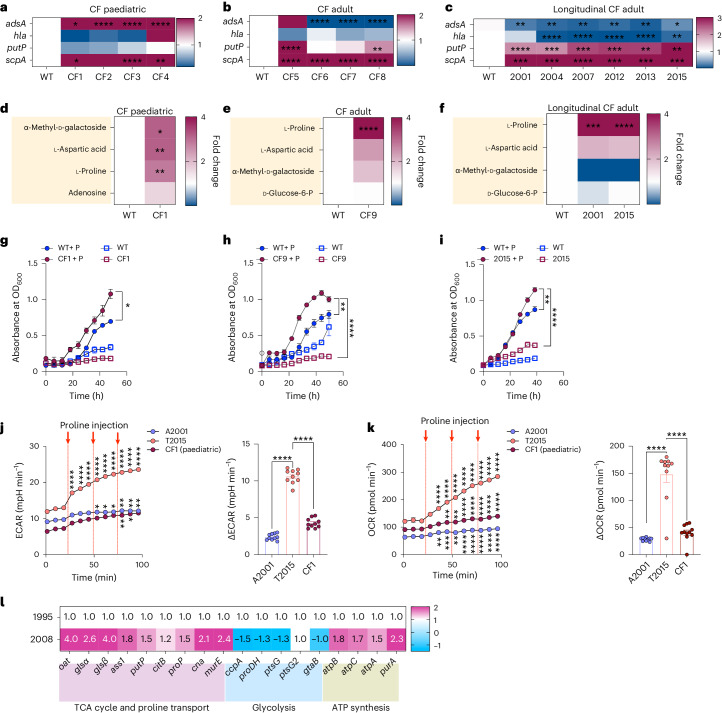
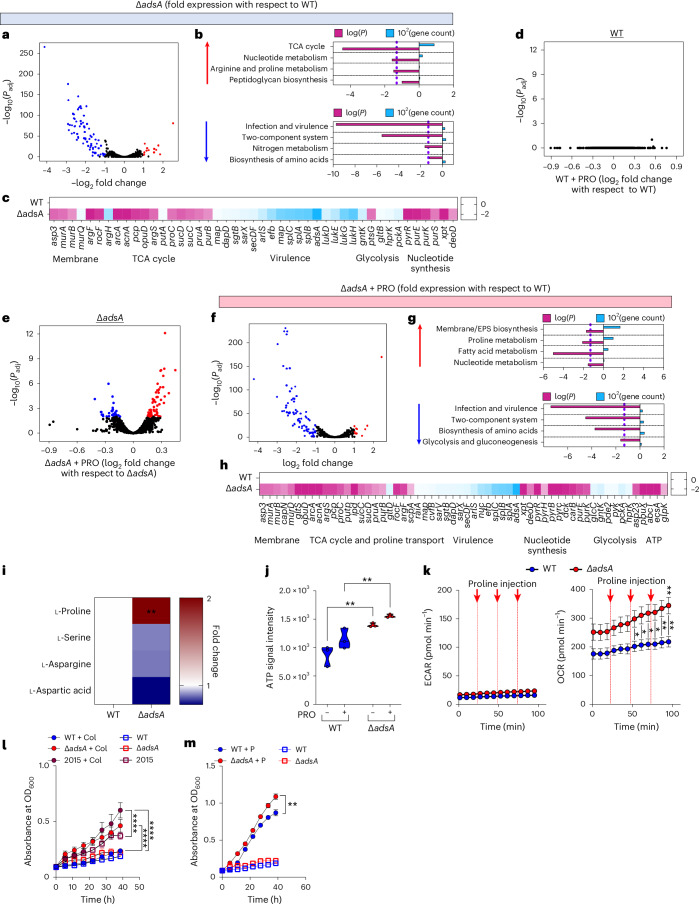
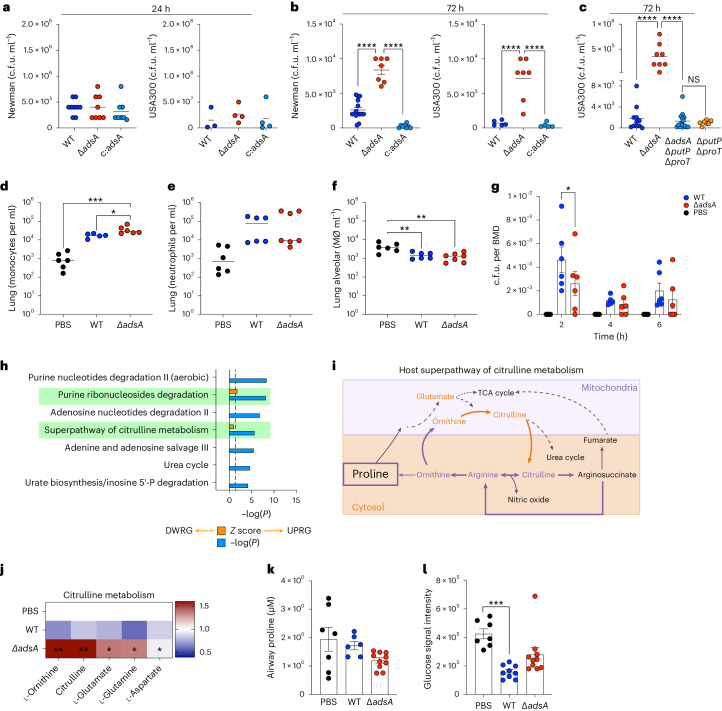
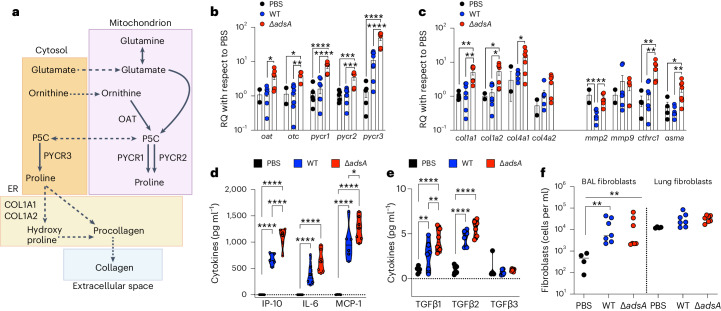
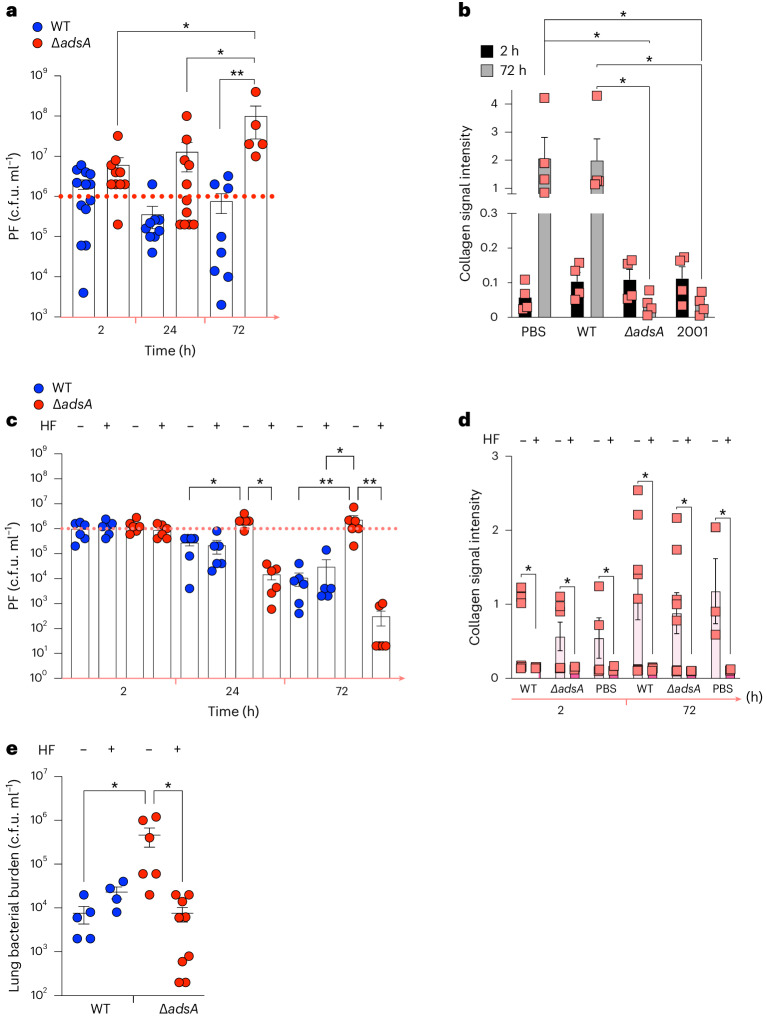
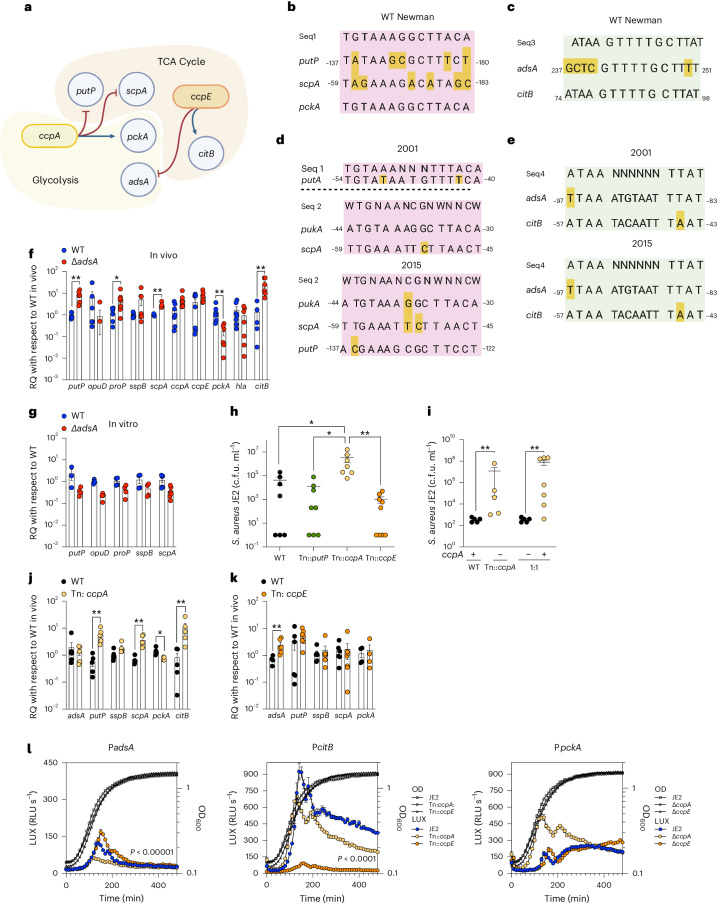
Staphylococcus aureus is a pulmonary pathogen associated with substantial human morbidity and mortality. As vaccines targeting virulence determinants have failed to be protective in humans, other factors are likely involved in pathogenesis. Here we analysed transcriptomic responses of human clinical isolates of S. aureus from initial and chronic infections. We observed upregulated collagenase and proline transporter gene expression in chronic infection isolates. Metabolomics of bronchiolar lavage fluid and fibroblast infection, growth assays and analysis of bacterial mutant strains showed that airway fibroblasts produce collagen during S. aureus infection. Host-adapted bacteria upregulate collagenase, which degrades collagen and releases proline. S. aureus then imports proline, which fuels oxidative metabolism via the tricarboxylic acid cycle. Proline metabolism provides host-adapted S. aureus with a metabolic benefit enabling out-competition of non-adapted strains. These data suggest that clinical settings characterized by airway repair processes and fibrosis provide a milieu that promotes S. aureus adaptation and supports infection.
金黄色葡萄球菌是一种与人类发病率和死亡率密切相关的肺部病原体。由于针对毒力决定因素的疫苗在人类中未能起到保护作用,因此其他因素可能参与了发病机制。在这里,我们分析了来自初始和慢性感染的人类临床金黄色葡萄球菌分离株的转录组反应。我们观察到慢性感染分离株中胶原酶和脯氨酸转运蛋白基因表达上调。对细支气管灌洗液和成纤维细胞感染的代谢组学、生长测定以及细菌突变株的分析表明,气道成纤维细胞在金黄色葡萄球菌感染过程中产生胶原蛋白。宿主适应细菌上调胶原酶,胶原酶降解胶原蛋白并释放脯氨酸。然后,金黄色葡萄球菌导入脯氨酸,通过三羧酸循环为氧化代谢提供燃料。脯氨酸代谢为宿主适应的金黄色葡萄球菌提供了代谢优势,使其能够与非适应菌株竞争。这些数据表明,以气道修复过程和纤维化为特征的临床环境提供了促进金黄色葡萄球菌适应和支持感染的环境。