First Department of Medicine, Wakayama Medical University, Wakayama, Japan.
Department of Internal Medicine, Kuma Hospital, Hyogo, Japan.
BMC Endocr Disord. 2024 Aug 12;24(1):150. doi: 10.1186/s12902-024-01680-8.
Thyroid storm (TS), a life-threatening condition that can damage multiple organs, has limited therapeutic options. Hypercytokinemia is a suggested background, but the pathological condition is unclear and there are no appropriate animal models. We aimed to develop a TS mouse model by administration of triiodothyronine and lipopolysaccharide, and then to examine the effects of ghrelin on this model.
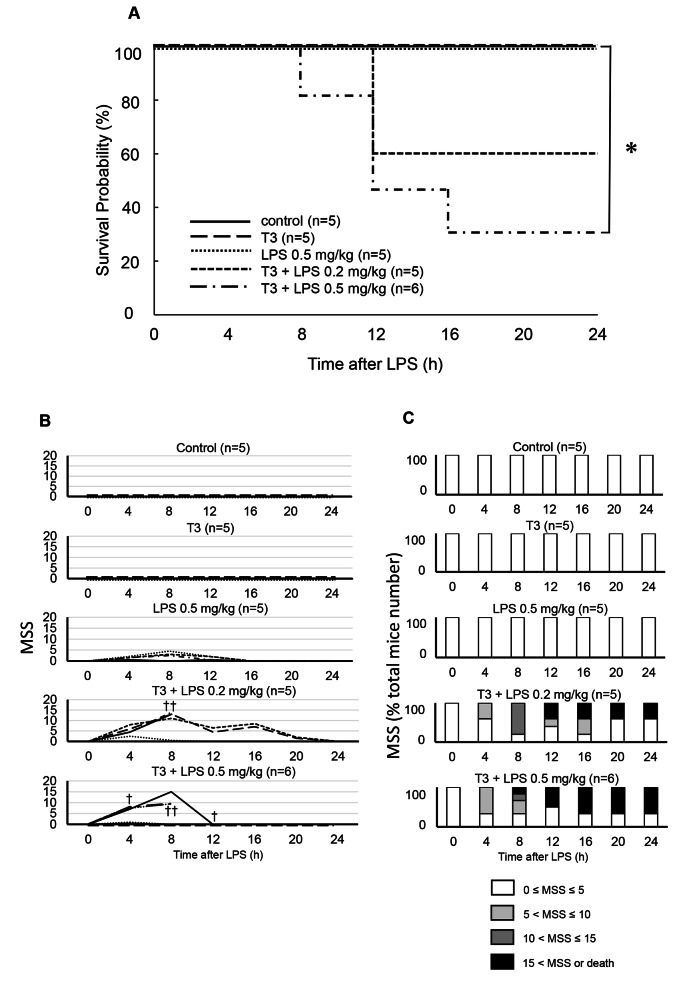
We evaluated the use of serum IL-6 levels as a representative marker of hypercytokinemia in patients with TS. To establish the mouse model, preliminary experiments were conducted to determine the non-lethal doses of triiodothyronine and lipopolysaccharide when administered individually. As a TS model, C57BL/6 mice were administered with triiodothyronine 1.0 mg/kg (subcutaneously, once daily for seven consecutive days) and lipopolysaccharide 0.5 mg/kg (intraperitoneally, on day 7) to develop a lethal model with approximately 30% survival on day 8. We assessed the survival ratio, mouse sepsis scores and blood biomarkers (IL-6, metanephrine, alanine aminotransferase) and evaluated the effects of ghrelin 300 µg/kg on these parameters in TS model.
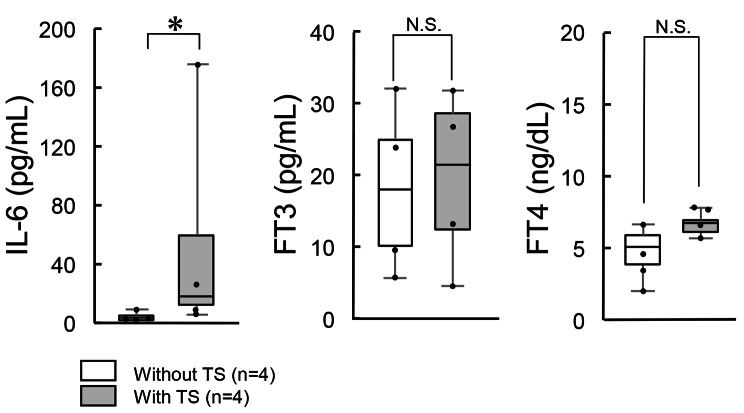
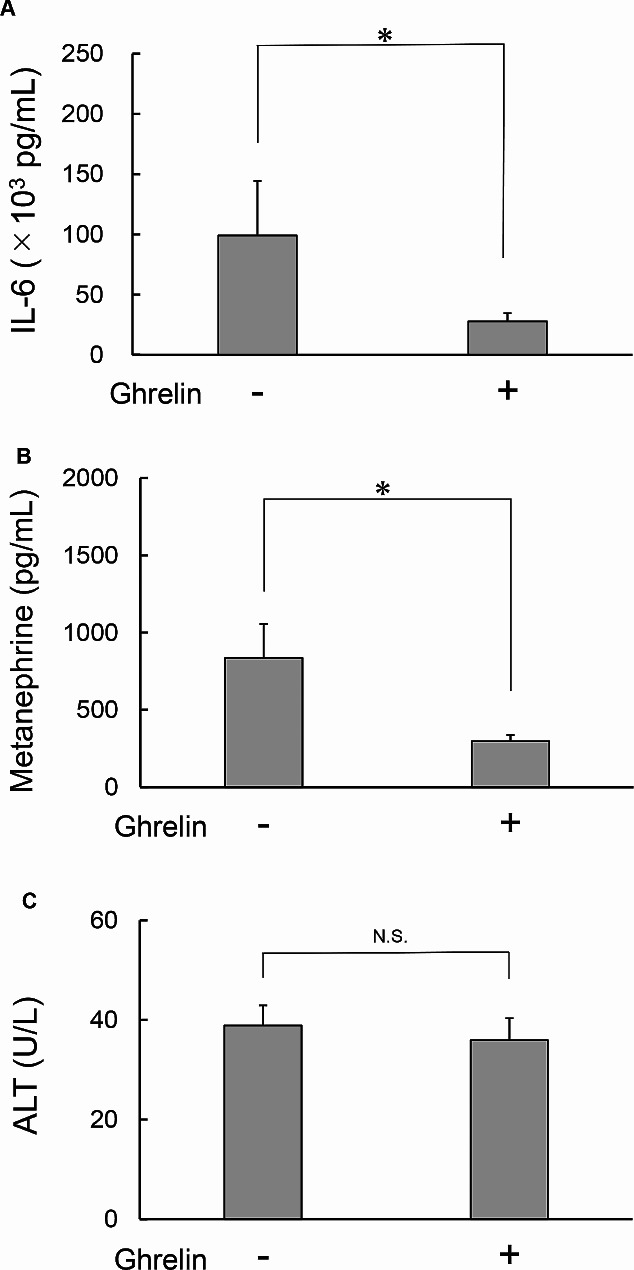
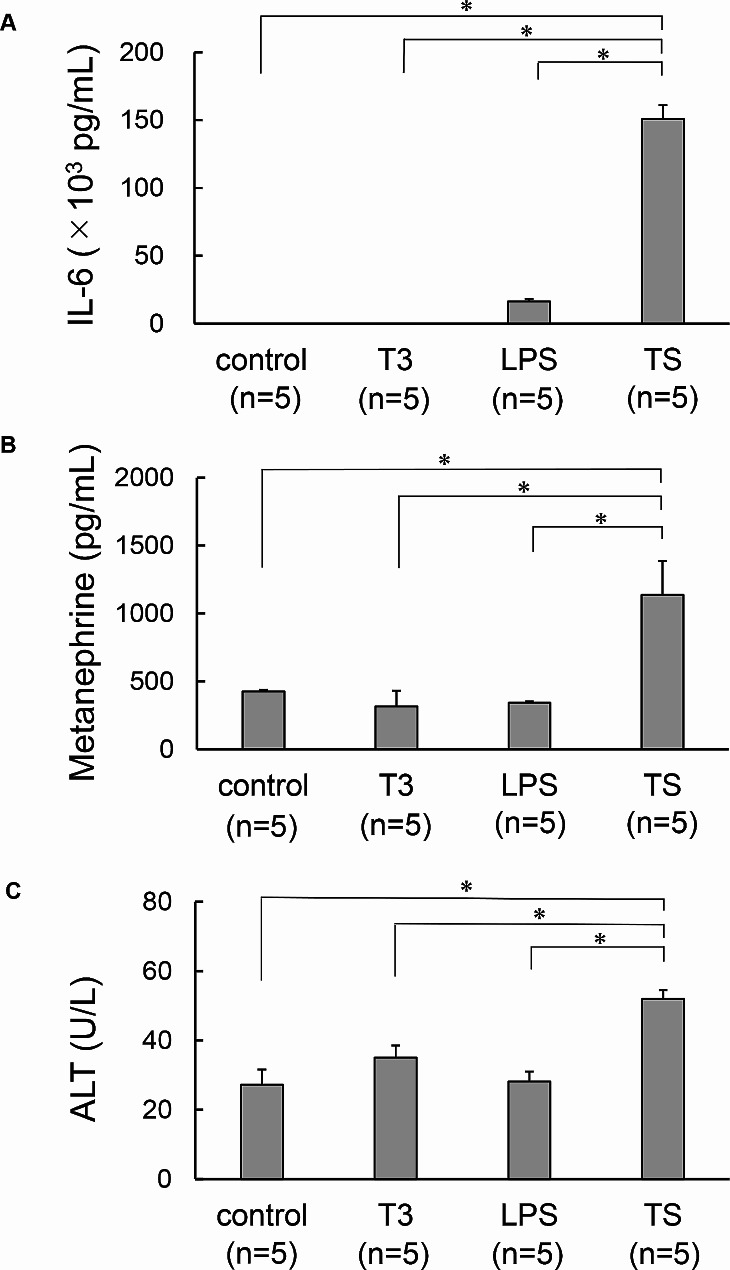
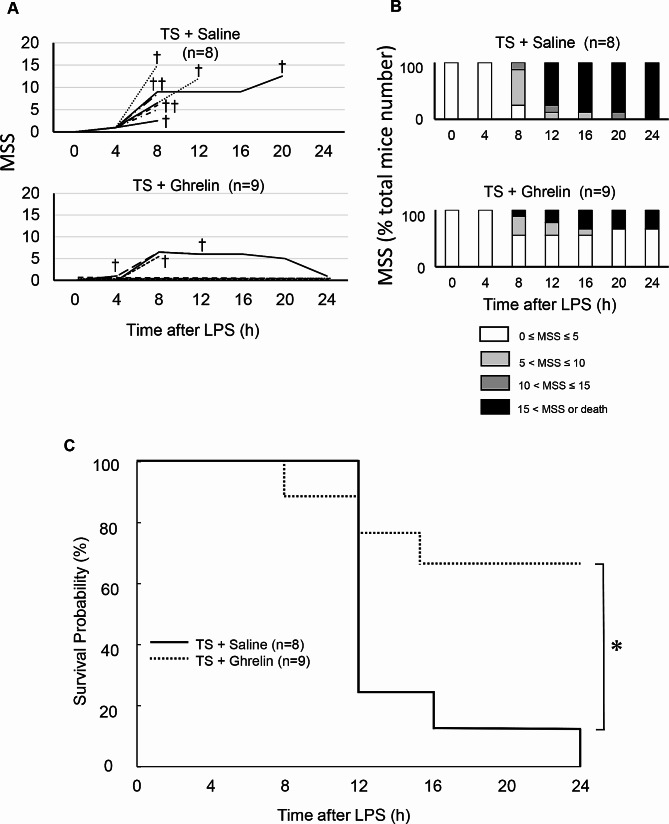
Serum IL-6 was increased in patients with TS compared with those with Graves' disease as the diseased control (18.2 vs. 2.85 pg/mL, P < .05, n = 4 each). The dosage for the murine TS model was triiodothyronine 1.0 mg/kg and lipopolysaccharide 0.5 mg/kg. The TS model group had increased mouse sepsis score, serum IL-6, metanephrine and alanine aminotransferase. In this model, the ghrelin improved the survival rate to 66.7% (P < .01, vs. 0% [saline-treated group]) as well as the mouse sepsis score, and it decreased the serum IL-6 and metanephrine.
We established an animal model of TS that exhibits pathophysiological states similar to human TS with induction of serum IL-6 and other biomarkers by administration of T3 and LPS. The results suggest the potential effectiveness of ghrelin for TS in humans.
甲状腺风暴(TS)是一种危及生命的疾病,可导致多个器官受损,其治疗方法有限。细胞因子血症被认为是其发病机制之一,但具体的病理状态尚不清楚,也没有合适的动物模型。本研究旨在通过给予三碘甲状腺原氨酸和脂多糖来建立 TS 小鼠模型,并进一步研究生长激素释放肽(ghrelin)对该模型的影响。
我们评估了血清白细胞介素 6(IL-6)水平作为 TS 患者细胞因子血症的代表性标志物。为了建立该小鼠模型,我们首先进行了初步实验,以确定单独给予三碘甲状腺原氨酸和脂多糖的非致死剂量。我们采用三碘甲状腺原氨酸 1.0 mg/kg(皮下注射,连续 7 天,每天 1 次)和脂多糖 0.5 mg/kg(腹腔内注射,第 7 天)处理 C57BL/6 小鼠,以建立约 30%的小鼠在第 8 天存活的致死性模型。我们评估了存活率、小鼠脓毒症评分以及血液生物标志物(IL-6、间甲肾上腺素、丙氨酸氨基转移酶),并评估了 ghrelin 300 µg/kg 对 TS 模型中这些参数的影响。
与作为疾病对照的格雷夫斯病患者相比,TS 患者的血清 IL-6 水平升高(18.2 比 2.85 pg/ml,P <.05,n = 4 例)。该模型中三碘甲状腺原氨酸的剂量为 1.0 mg/kg,脂多糖的剂量为 0.5 mg/kg。TS 模型组的小鼠脓毒症评分、血清 IL-6、间甲肾上腺素和丙氨酸氨基转移酶均升高。在该模型中,ghrelin 可将存活率提高至 66.7%(P <.01,与 0%[盐水处理组]相比),同时降低小鼠脓毒症评分、血清 IL-6 和间甲肾上腺素水平。
我们通过给予三碘甲状腺原氨酸和脂多糖成功建立了一种类似人类 TS 的动物模型,该模型可诱导血清 IL-6 和其他生物标志物的产生。这些结果提示生长激素释放肽可能对人类甲状腺风暴具有潜在的治疗效果。