Department of Population Health Sciences, Duke University School of Medicine, Durham, North Carolina, United States of America.
Duke-Margolis Center for Health Policy, Duke University, Durham, North Carolina, United States of America.
PLoS One. 2024 Aug 13;19(8):e0297374. doi: 10.1371/journal.pone.0297374. eCollection 2024.
Extracorporeal membrane oxygenation (ECMO) represents an important but limited treatment for patients with severe COVID-19. We assessed the effects of an educational intervention on a person's ECMO care preference and examined whether patients and providers had similar ECMO preferences.
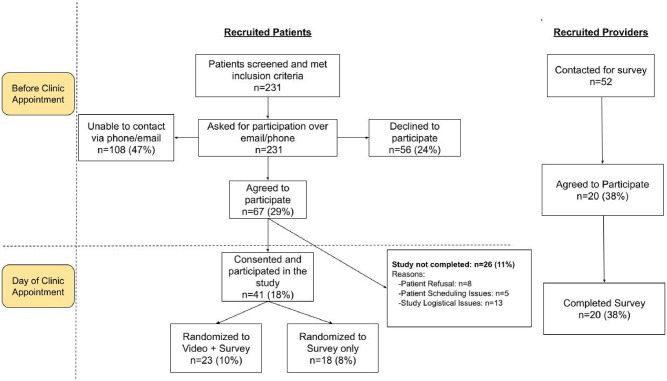
In the Video+Survey group, patients watched an educational video about ECMO's purpose, benefits, and risks followed by an assessment of ECMO knowledge and care preferences in seven scenarios varying by hypothetical patient age, function, and comorbidities. Patients in the Survey Only group and providers didn't watch the video. Logistic regression was used to estimate the probability of agreement for each ECMO scenario between the two patient groups and then between all patients and providers.
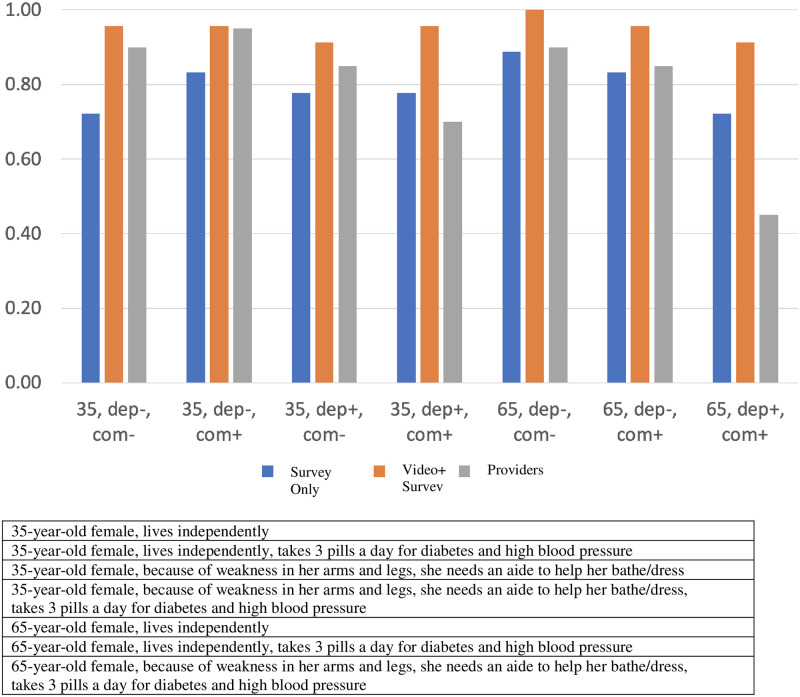
Video+Survey patients were more likely (64% vs. 17%; p = 0.02) to correctly answer all ECMO knowledge questions than Survey Only patients. Patients in both groups agreed that ECMO should be considered across all hypothetical scenarios, with predicted agreement above 65%. In adjusted analyses, patients and providers had similar predicted agreement for ECMO consideration across six of the seven scenarios, but patients showed greater preference (84% vs. 41%, p = 0.003) for the scenario of a functionally dependent 65-year-old with comorbidities than providers.
An educational video increased a person's ECMO knowledge but did not change their ECMO preferences. Clinicians were less likely than patients to recommend ECMO for older adults, so advanced care planning discussion between patients and providers about treatment options in critically ill patients with COVID-19 is critical.
体外膜肺氧合(ECMO)是治疗严重 COVID-19 患者的重要但有限的治疗方法。我们评估了一项教育干预对一个人 ECMO 护理偏好的影响,并研究了患者和提供者是否具有相似的 ECMO 偏好。
在视频+调查组中,患者观看了一段关于 ECMO 的目的、益处和风险的教育视频,然后在七个场景中评估了 ECMO 知识和护理偏好,这些场景根据假设患者的年龄、功能和合并症而有所不同。调查仅组的患者和提供者没有观看视频。逻辑回归用于估计两组患者之间以及所有患者和提供者之间每个 ECMO 场景的协议概率。
与调查仅组患者(64%对 17%;p = 0.02)相比,观看视频+调查组患者更有可能正确回答所有 ECMO 知识问题。两组患者都认为应该在所有假设场景中考虑 ECMO,预测的协议率均高于 65%。在调整后的分析中,患者和提供者在七个场景中的六个场景中对 ECMO 考虑的预测协议相似,但患者对有合并症的 65 岁功能依赖患者的场景表现出更大的偏好(84%对 41%,p = 0.003)比提供者。
教育视频增加了一个人的 ECMO 知识,但没有改变他们的 ECMO 偏好。临床医生不太可能建议对老年人使用 ECMO,因此,在 COVID-19 重症患者中,患者和提供者之间需要进行关于治疗选择的高级护理计划讨论,这一点至关重要。