UCD Conway Institute, School of Medicine, University College Dublin, Dublin, Ireland; Diabetes Division, Department of Medicine, University of Texas Health San Antonio, San Antonio, TX, USA.
Diabetes Division, Department of Medicine, University of Texas Health San Antonio, San Antonio, TX, USA.
Mol Metab. 2024 Oct;88:102005. doi: 10.1016/j.molmet.2024.102005. Epub 2024 Aug 11.
The mitochondrial pyruvate carrier (MPC) occupies a critical node in intermediary metabolism, prompting interest in its utility as a therapeutic target for the treatment of obesity and cardiometabolic disease. Dysregulated nutrient metabolism in adipose tissue is a prominent feature of obesity pathophysiology, yet the functional role of adipose MPC has not been explored. We investigated whether the MPC shapes the adaptation of adipose tissue to dietary stress in female and male mice.
The impact of pharmacological and genetic disruption of the MPC on mitochondrial pathways of triglyceride assembly (lipogenesis and glyceroneogenesis) was assessed in 3T3L1 adipocytes and murine adipose explants, combined with analyses of adipose MPC expression in metabolically compromised humans. Whole-body and adipose-specific glucose metabolism were subsequently investigated in male and female mice lacking adipocyte MPC1 (Mpc1) and fed either standard chow, high-fat western style, or high-sucrose lipid restricted diets for 24 weeks, using a combination of radiolabeled tracers and GC/MS metabolomics.
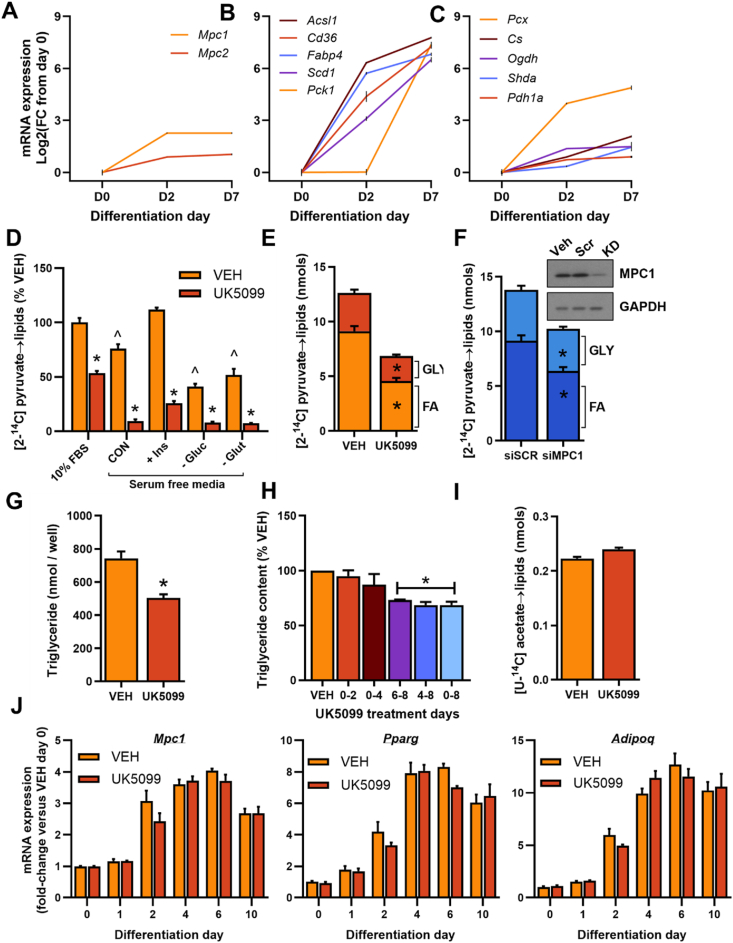
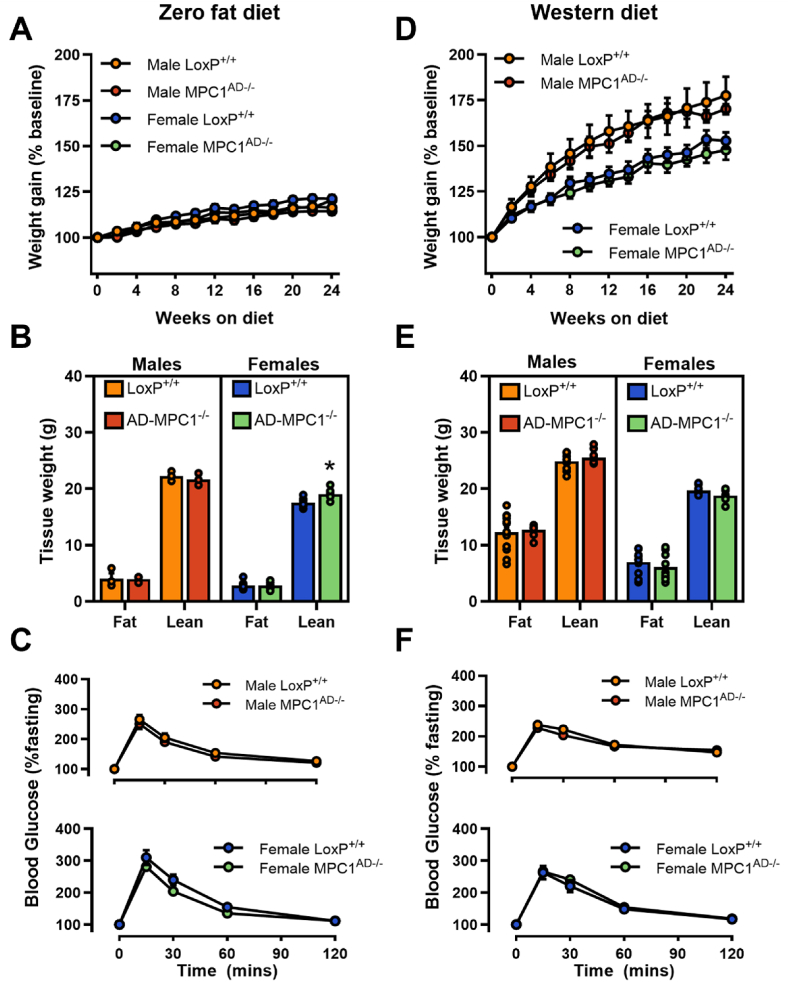
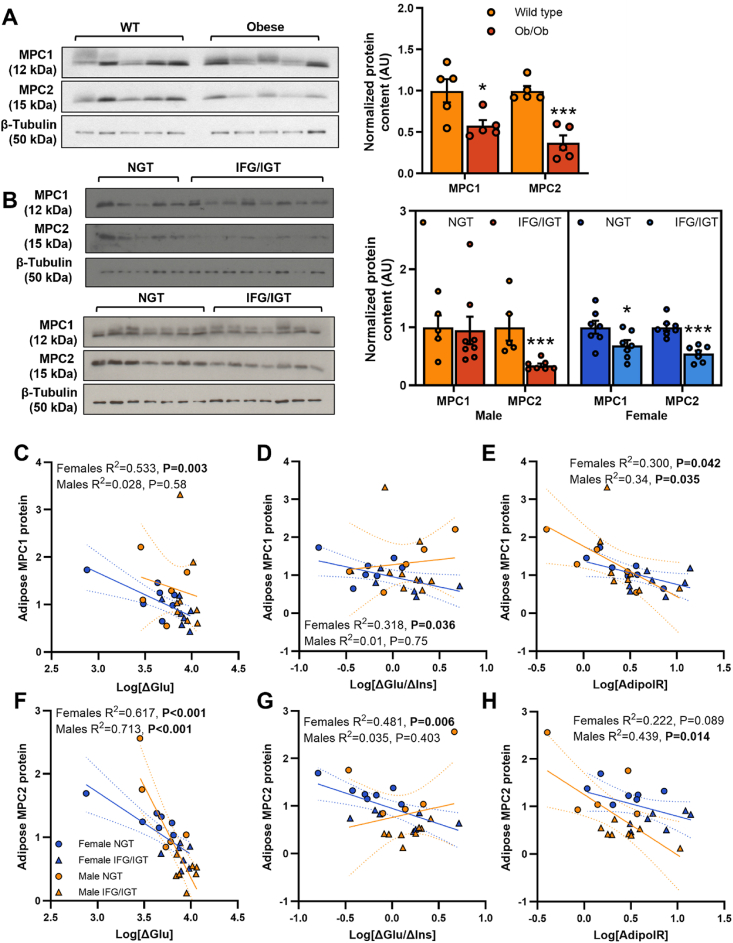
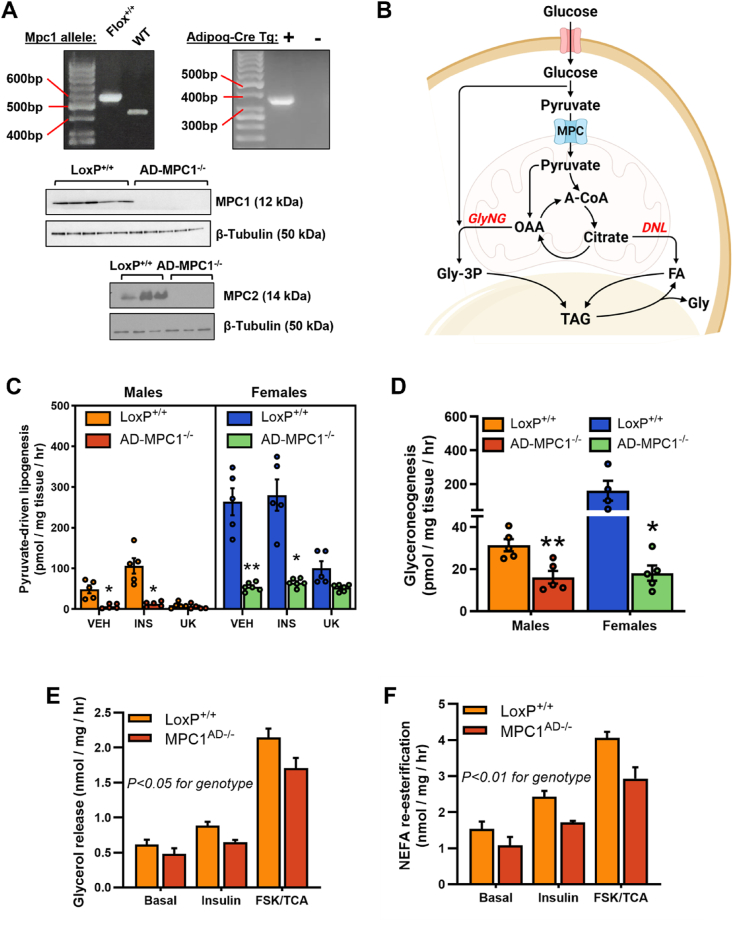
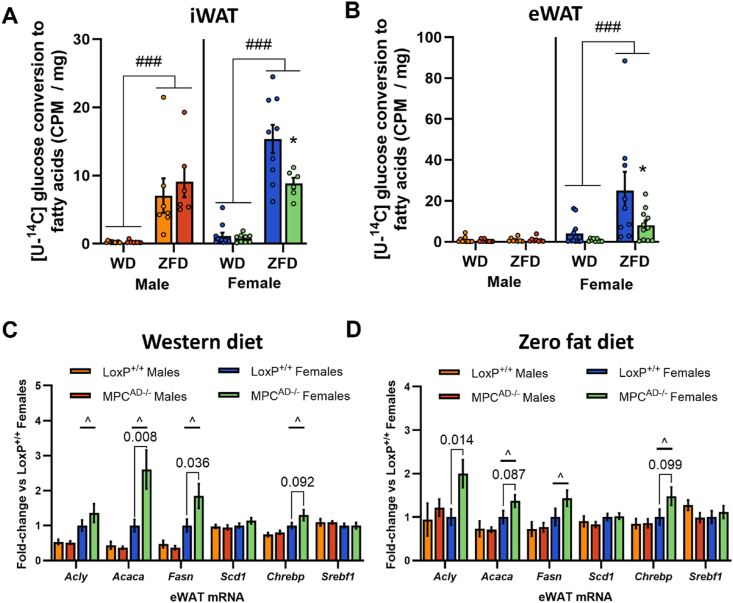
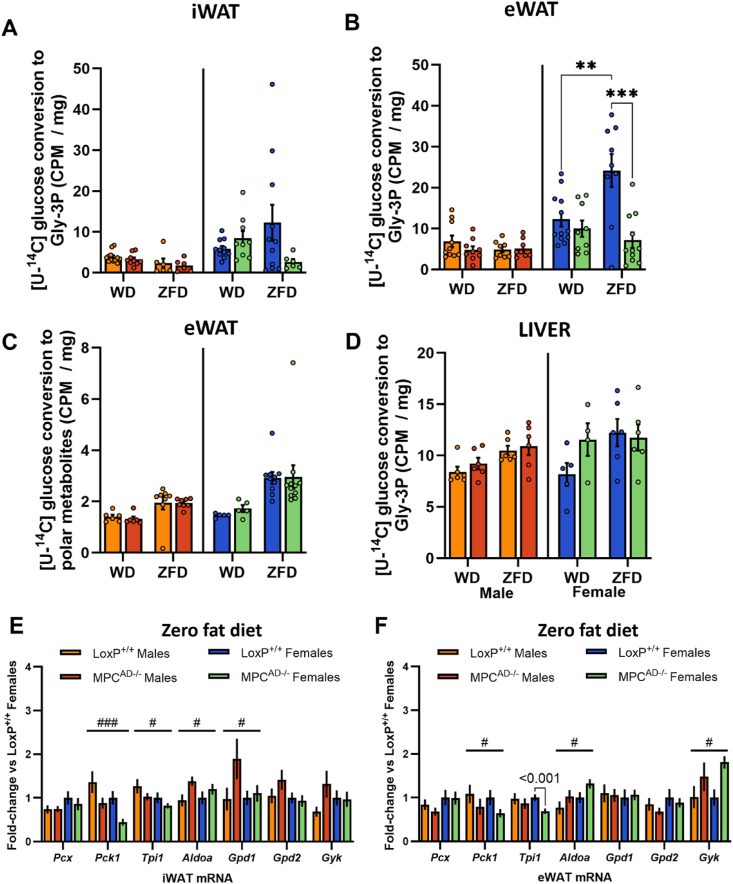
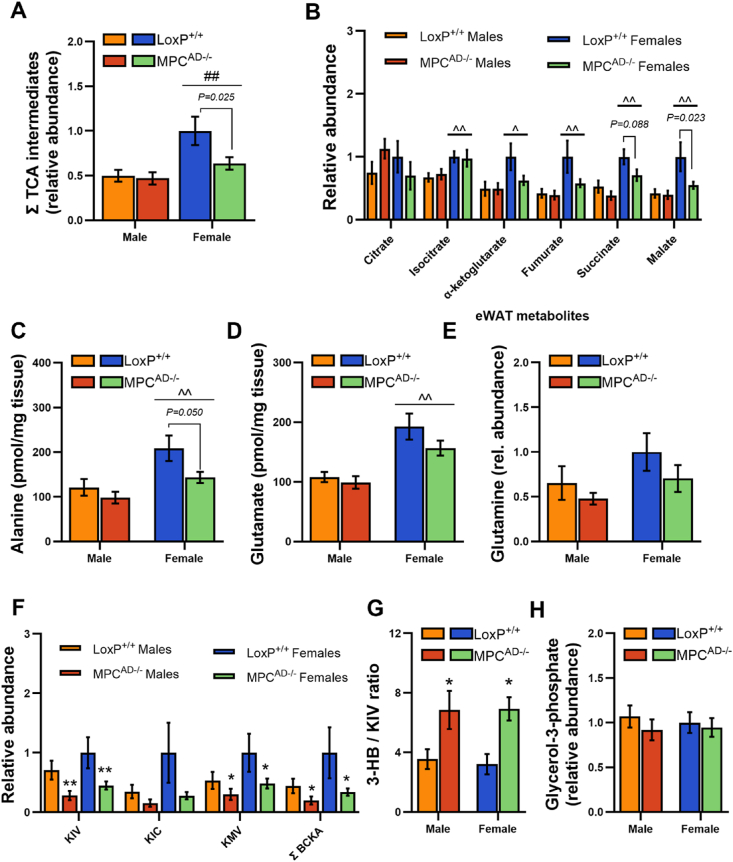
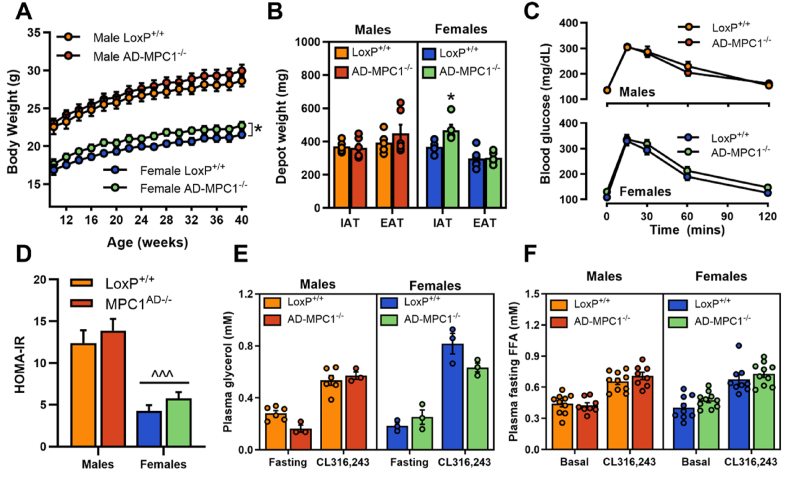
Treatment with UK5099 or siMPC1 impaired the synthesis of lipids and glycerol-3-phosphate from pyruvate and blunted triglyceride accumulation in 3T3L1 adipocytes, whilst MPC expression in human adipose tissue was negatively correlated with indices of whole-body and adipose tissue metabolic dysfunction. Mature adipose explants from Mpc1 mice were intrinsically incapable of incorporating pyruvate into triglycerides. In vivo, MPC deletion restricted the incorporation of circulating glucose into adipose triglycerides, but only in female mice fed a zero fat diet, and this associated with sex-specific reductions in tricarboxylic acid cycle pool sizes and compensatory transcriptional changes in lipogenic and glycerol metabolism pathways. However, whole-body adiposity and metabolic health were preserved in Mpc1 mice regardless of sex, even under conditions of zero dietary fat.
These findings highlight the greater capacity for mitochondrially driven triglyceride assembly in adipose from female versus male mice and expose a reliance upon MPC-gated metabolism for glucose partitioning in female adipose under conditions of dietary lipid restriction.
线粒体丙酮酸载体 (MPC) 在中间代谢中占据关键节点,因此人们对其作为治疗肥胖和代谢性心血管疾病的靶点的应用产生了兴趣。脂肪组织中营养代谢的失调是肥胖病理生理学的一个突出特征,但脂肪 MPC 的功能作用尚未得到探索。我们研究了 MPC 是否塑造了雌性和雄性小鼠脂肪组织对饮食压力的适应。
在 3T3L1 脂肪细胞和鼠脂肪外植体中评估了 MPC 的药理学和遗传破坏对甘油三酯组装(脂肪生成和甘油酮生成)的线粒体途径的影响,结合对代谢受损人类脂肪 MPC 表达的分析。随后,在缺乏脂肪细胞 MPC1 (Mpc1) 的雄性和雌性小鼠中,使用放射性示踪剂和 GC/MS 代谢组学的组合,研究了它们在 24 周内接受标准饮食、高脂肪西式饮食或高蔗糖低脂饮食的全身和脂肪特异性葡萄糖代谢。
用 UK5099 或 siMPC1 处理会损害 3T3L1 脂肪细胞中丙酮酸合成脂肪和甘油-3-磷酸的能力,并使甘油三酯积累减少,而人类脂肪组织中 MPC 的表达与全身和脂肪组织代谢功能障碍的指标呈负相关。来自 Mpc1 小鼠的成熟脂肪外植体从本质上无法将丙酮酸掺入甘油三酯中。在体内,MPC 缺失限制了循环葡萄糖掺入脂肪中的甘油三酯,但仅在接受零脂饮食的雌性小鼠中,这与特定于性别的三羧酸循环池大小减少和脂肪生成和甘油代谢途径的代偿性转录变化相关。然而,无论性别如何,Mpc1 小鼠的全身肥胖和代谢健康都得到了保留,即使在没有膳食脂肪的情况下也是如此。
这些发现强调了雌性小鼠而非雄性小鼠脂肪中由线粒体驱动的甘油三酯组装的更大能力,并揭示了在饮食脂质限制的情况下,雌性脂肪中对 MPC 门控代谢的葡萄糖分配的依赖性。