Bejan Adrian
Duke University, Department of Mechanical Engineering and Materials Science, Durham, NC, 27708-0300, USA.
Sci Rep. 2024 Aug 13;14(1):18832. doi: 10.1038/s41598-024-68525-1.
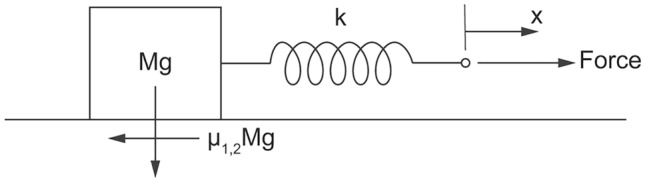
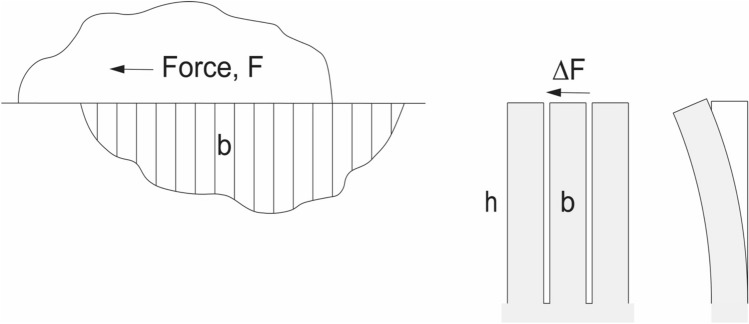
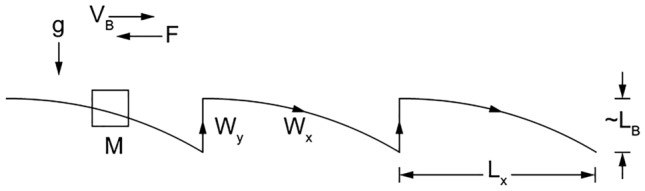
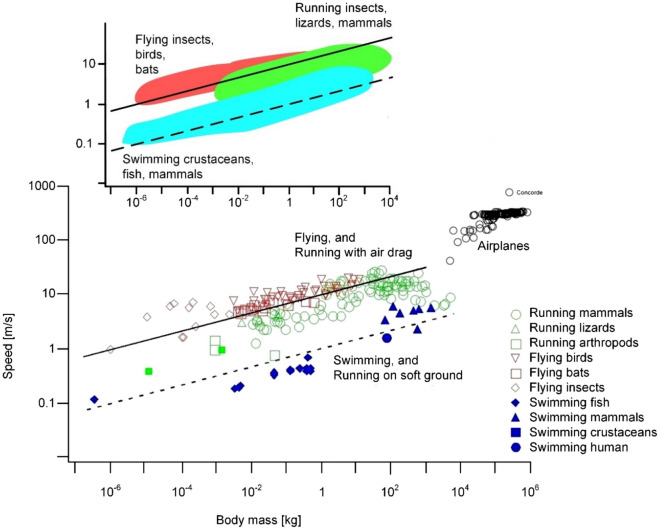
Nature abounds in examples of evolutionary designs (bio and non-bio) that evolve freely into configurations that provide easier and greater access for movement. The present article considers three seemingly unrelated phenomena that appear to obstruct flow: stick-slip friction, animal jump, and earthquake. The analysis is based on simple models of rhythmic energy store & release motion. In each case, the rhythm is the sole degree of freedom. The analyses show that stick-slip friction facilitates movement because the coefficient of static friction is greater than the coefficient of sliding friction. Next, all forms of animal locomotion under gravity consist of cycles of energy storage (jump to a height) and energy release (forward fall). The rhythm of the cycle is natural such that the forward advance of the animal is economical. Finally, the onset of the earthquake is modeled the same way, as shear stresses at the rock-on-rock interface, which are matched by bending stresses in the bent 'blades' of rock contained between fissures perpendicular to the interface. In sum, naturally evolved store & release rhythm facilitates the movement, contrary to the commonly held impression.
自然界中充满了进化设计(生物和非生物的)的例子,这些设计自由地演变成能为运动提供更便捷、更广阔通道的形态。本文探讨了三种看似不相关但似乎会阻碍流动的现象:粘滑摩擦、动物跳跃和地震。分析基于有节奏的能量存储与释放运动的简单模型。在每种情况下,节奏是唯一的自由度。分析表明,粘滑摩擦有助于运动,因为静摩擦系数大于滑动摩擦系数。其次,重力作用下所有形式的动物运动都由能量存储(跳到一定高度)和能量释放(向前下落)的循环组成。循环的节奏是自然的,这样动物的向前推进就很经济。最后,地震的发生也以同样的方式建模,即岩石与岩石界面处的剪应力,与垂直于界面的裂缝间弯曲岩石“叶片”中的弯曲应力相匹配。总之,自然进化的存储与释放节奏促进了运动,这与通常的看法相反。