R Arthi, V Soundharya, Haran A Hari, I Suresh K, James Sahayaraj
Transfusion Medicine, Saveetha Medical College and Hospital, Saveetha Institute of Medical and Technical Sciences, Chennai, IND.
Cureus. 2024 Jul 13;16(7):e64501. doi: 10.7759/cureus.64501. eCollection 2024 Jul.
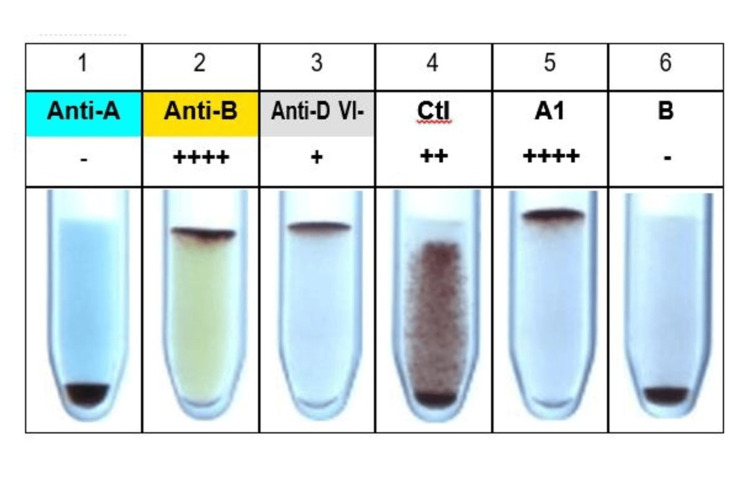
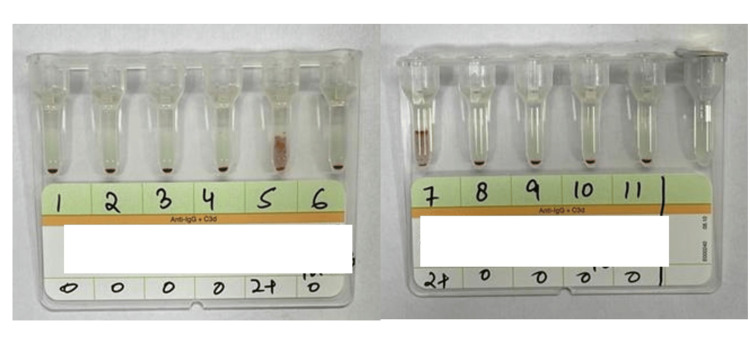
Anti-Lewis antibodies are often not clinically significant since they do not react at 37°C. These antibodies have, however, occasionally been linked to hemolytic transfusion reactions (HTR). We report a case of naturally occurring anti-Lewis-a (Le-a) in a 58-year-old patient found during routine blood grouping. As Lewis antigen is a low-prevalence antigen, compatible units were found after crossmatching two units of packed red cells. Lewis blood group antigen antibodies frequently react at lower temperatures and remain clinically insignificant, but in rare cases, they may react at a higher temperature of 37°C and cause a hemolytic episode or impair the lifespan of incompatible red blood cells in the recipient. Hence, antigen-negative crossmatch compatible units should be used for transfusion. In an emergency, the donor's register, with its comprehensive phenotypic profile, can be quite helpful in supplying blood for transfusions.
抗Lewis抗体通常在临床上无显著意义,因为它们在37°C时不发生反应。然而,这些抗体偶尔也与溶血性输血反应(HTR)有关。我们报告了一例在常规血型鉴定中发现的58岁患者自然产生的抗Lewis-a(Le-a)抗体。由于Lewis抗原是一种低频率抗原,在交叉配血两单位浓缩红细胞后找到了相容的血源。Lewis血型抗原抗体常在较低温度下发生反应,临床上仍无显著意义,但在罕见情况下,它们可能在37°C的较高温度下发生反应,导致溶血发作或缩短受血者体内不相容红细胞的寿命。因此,应使用抗原阴性且交叉配血相容的血源进行输血。在紧急情况下,具有全面表型特征的献血者登记册在提供输血用血方面可能会很有帮助。