Hwang Jongmin, Han Seongwook, Park Hyoung-Seob, Chung Tae-Wan, Jung Minsu, Park Seung-Jung, Lee Chan-Hee, Ahn Jin Hee, Choi Eue-Keun, Bae Myung Hwan, Lee Young Soo, Park Sang Won, Lee Dae In, Kim Yoo-Ri, Ahn Min-Soo, Shim Jaemin
Division of Cardiology, Department of Internal Medicine Keimyung University Dongsan Hospital Daegu Republic of Korea.
Division of Cardiology, Department of Internal Medicine Heart Vascular and Stroke Institute, Samsung Medical Center, Sungkyunkwan University School of Medicine Seoul Republic of Korea.
J Arrhythm. 2024 Jul 16;40(4):965-974. doi: 10.1002/joa3.13117. eCollection 2024 Aug.
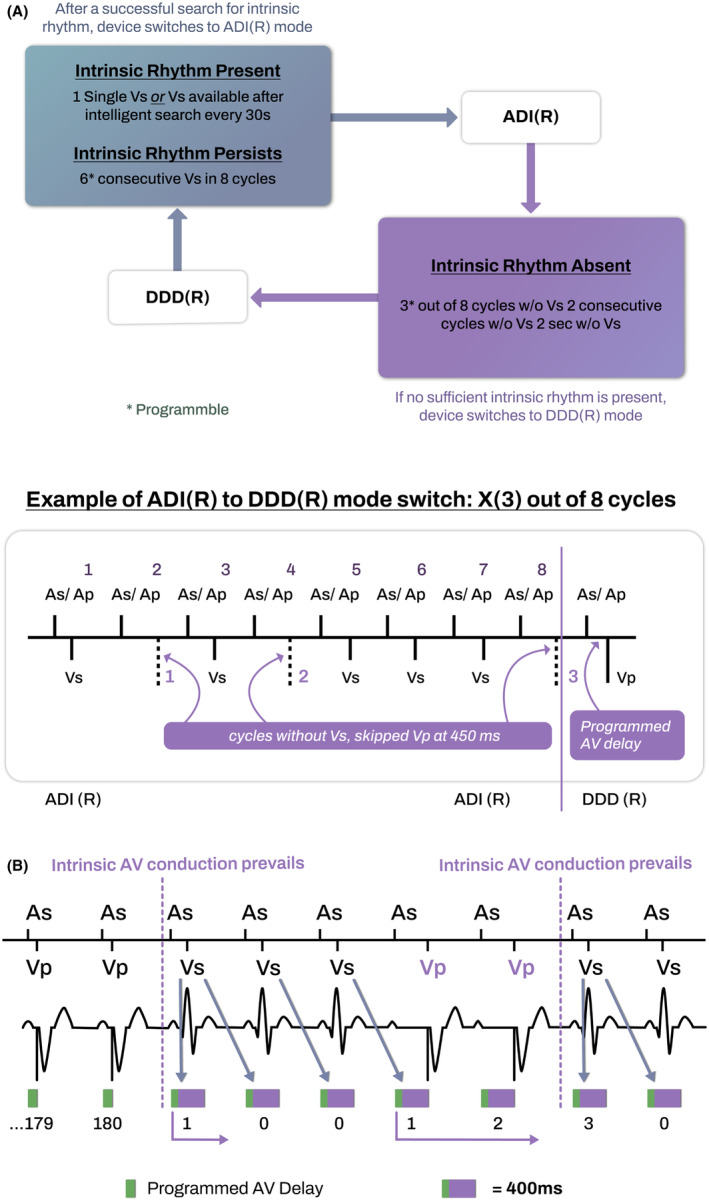
There is limited research on the intra-individual efficacy of ventricular pacing minimization algorithms developed by Biotronik-the Ventricular Pace Suppression algorithm (VpS) and the Intrinsic Rhythm Support plus algorithm (IRSplus) (BIOTRONIK SE & Co. KG, Berlin, Germany). We performed a randomized pilot trial that evaluated the efficacy of two algorithms in patients with symptomatic sinus node dysfunction (SND) who received a dual-chamber pacemaker.
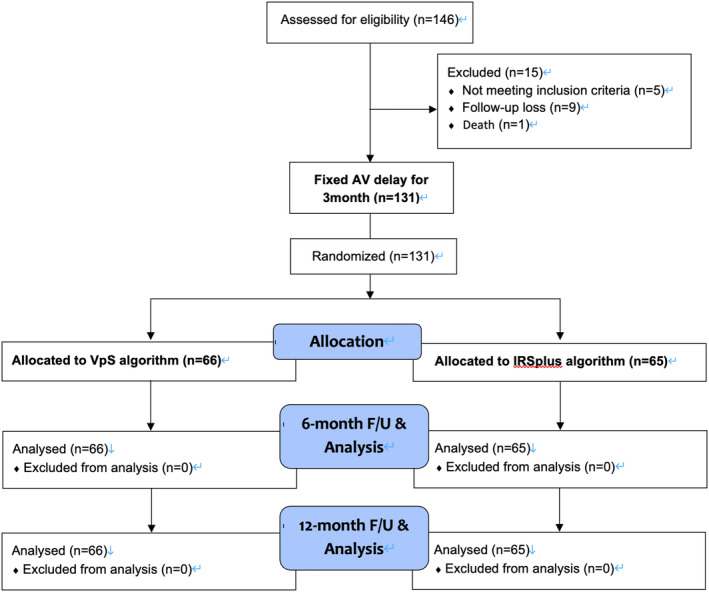
The trial was conducted in 11 tertiary hospitals in South Korea. The patients were randomized to either the VpS or IRSplus algorithm group after a 3-month period of fixed atrioventricular (AV) delay. The primary outcome was the ventricular pacing percentage (Vp%) at each follow-up visit. The secondary outcomes were the occurrence of heart failure (HF) and atrial fibrillation (AF) during the study period.
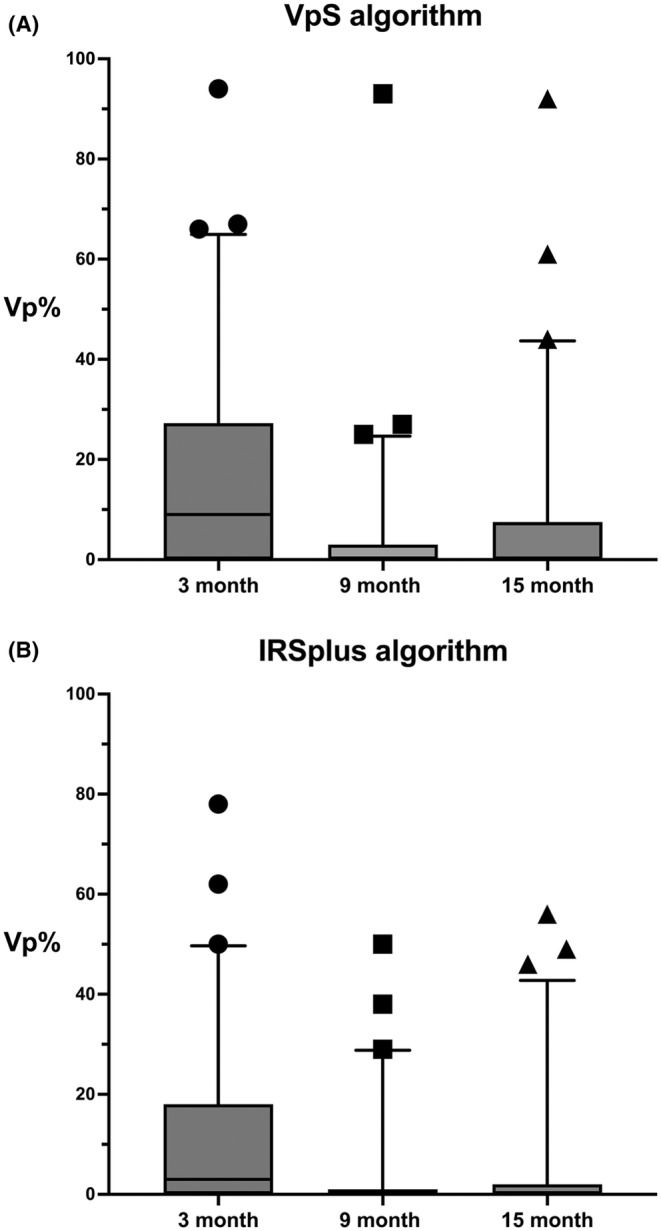
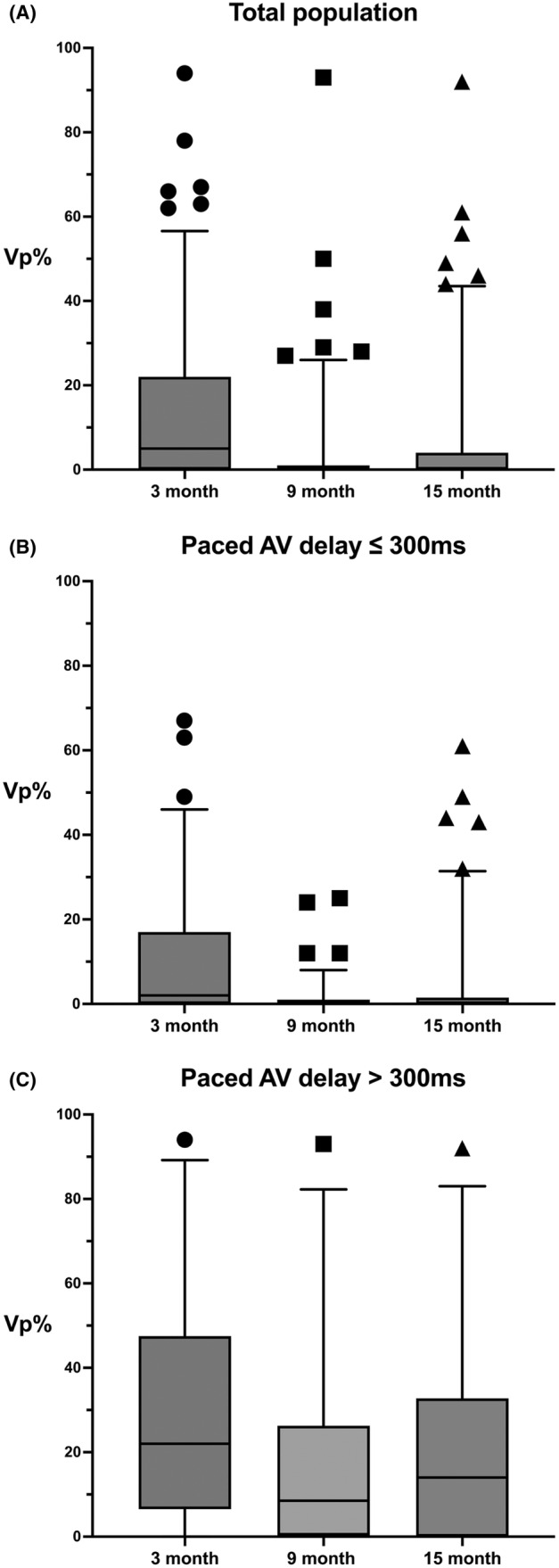
Data from 131 patients were analyzed. Initially, their average Vp% over 3 months with a fixed AV interval was 14.1 ± 19.4%. Patients were randomly assigned to VpS and IRSplus groups, with 66 and 65 in each. Algorithms reduced average Vp% to 4.0 ± 11.3% at 9 months and 6.7 ± 14.9% at 15 months. These algorithms were more effective for patients with paced AV delay (PAVD) ≤300 ms compared to those with PAVD >300 ms. Both algorithms were equally effective in reducing Vp%. Clinical AF or HF hospitalization was not observed during the study period.
The VpS and IRSplus algorithms are effective and safe in minimizing unnecessary ventricular pacing in patients with SND.
对于百多力公司研发的心室起搏最小化算法——心室起搏抑制算法(VpS)和固有节律支持增强算法(IRSplus)(百多力有限公司,德国柏林)的个体内疗效研究有限。我们进行了一项随机试验,评估这两种算法在接受双腔起搏器治疗的症状性窦房结功能障碍(SND)患者中的疗效。
该试验在韩国的11家三级医院进行。在固定房室(AV)延迟3个月后,将患者随机分为VpS或IRSplus算法组。主要结局是每次随访时的心室起搏百分比(Vp%)。次要结局是研究期间心力衰竭(HF)和心房颤动(AF)的发生情况。
分析了131例患者的数据。最初,他们在固定AV间期的3个月内平均Vp%为14.1±19.4%。患者被随机分配到VpS组和IRSplus组,每组66例和65例。算法在9个月时将平均Vp%降至4.0±11.3%,在15个月时降至6.7±14.9%。与房室起搏延迟(PAVD)>300毫秒的患者相比,这些算法对PAVD≤300毫秒的患者更有效。两种算法在降低Vp%方面同样有效。研究期间未观察到临床房颤或HF住院情况。
VpS和IRSplus算法在减少SND患者不必要的心室起搏方面有效且安全。