Arkansas Spinal Cord Commission, Department of Health, Little Rock, AR, USA.
J Med Life. 2024 May;17(5):492-499. doi: 10.25122/jml-2024-0072.
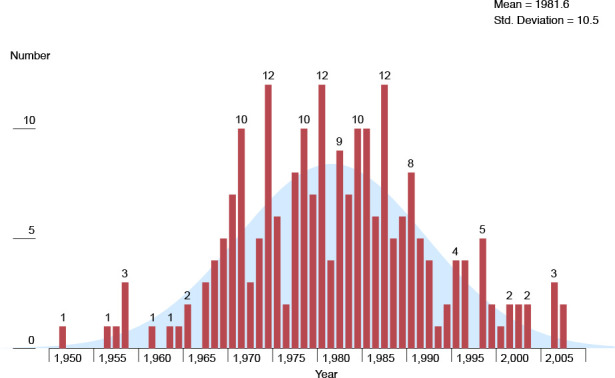
The etiology of spina bifida, a neural tube birth defect, is largely unknown, but a majority of cases are thought to be genetic in origin. Although maternal blood type was found not to be associated with the occurrence of spina bifida, the analysis was never extended to other aspects of the disorder. The purpose of this descriptive study was to determine if maternal blood type was related to characteristics of children with spina bifida. The blood type of 221 mothers of children with spina bifida enrolled on the Arkansas Spinal Cord Disability Registry from 1995 to 2008 was obtained by mailed questionnaire. All children were community-dwelling and from singleton pregnancies. As expected, analysis of mother-child data showed that the distribution of mothers' blood type was not statistically different from the general population (chi-squared, = 0.9203). However, the blood type of these mothers was associated with their child's lesion level (chi-squared, = 0.011). Mothers with blood type A more frequently had children with thoracic lesions; mothers with non-A blood types more frequently had children with lumbar and sacral lesions. In addition, mean birthweight differed by mothers' blood type (analysis of variance, = 0.025). Children of mothers with blood type A had the highest mean birthweight, while those of mothers with blood type AB had the lowest. Also, hydrocephalus was present more frequently in children with thoracic lesions compared to those with lumbar and sacral lesions (chi-squared, = 0.001). Interestingly, these results were significant for female children but not for male children. In conclusion, maternal blood type was associated with lesion level and birthweight of children with spina bifida.
神经管缺陷性脊柱裂的病因在很大程度上是未知的,但大多数病例被认为是遗传起源。尽管已经发现母亲的血型与脊柱裂的发生无关,但分析从未扩展到该疾病的其他方面。本描述性研究的目的是确定母亲的血型是否与脊柱裂患儿的特征有关。通过邮寄问卷获得了 1995 年至 2008 年期间在阿肯色州脊髓残疾登记处登记的 221 名脊柱裂患儿的母亲的血型。所有儿童均为社区居住者,且均为单胎妊娠。正如预期的那样,对母婴数据的分析表明,母亲血型的分布与总人口无统计学差异(卡方检验, = 0.9203)。然而,这些母亲的血型与她们孩子的病变水平有关(卡方检验, = 0.011)。血型为 A 的母亲更频繁地生育有胸段病变的孩子;非 A 血型的母亲更频繁地生育有腰段和骶段病变的孩子。此外,母亲的血型也与孩子的平均出生体重有关(方差分析, = 0.025)。血型为 A 的母亲所生孩子的平均出生体重最高,而血型为 AB 的母亲所生孩子的平均出生体重最低。此外,与腰段和骶段病变的患儿相比,胸段病变患儿更常出现脑积水(卡方检验, = 0.001)。有趣的是,这些结果对女性患儿有意义,但对男性患儿无意义。总之,母亲的血型与脊柱裂患儿的病变水平和出生体重有关。