Caspi Yaron
UMC Utrecht Brain Center, Department of Psychiatry, University Medical Center, Utrecht, The Netherlands.
Schizophr Bull Open. 2022 Sep 8;3(1):sgac055. doi: 10.1093/schizbullopen/sgac055. eCollection 2022 Jan.
An existing model suggests that some brain features of relatives of people affected by psychosis can be distinguished from both the probands and a control group. Such findings can be interpreted as representing a compensating mechanism.
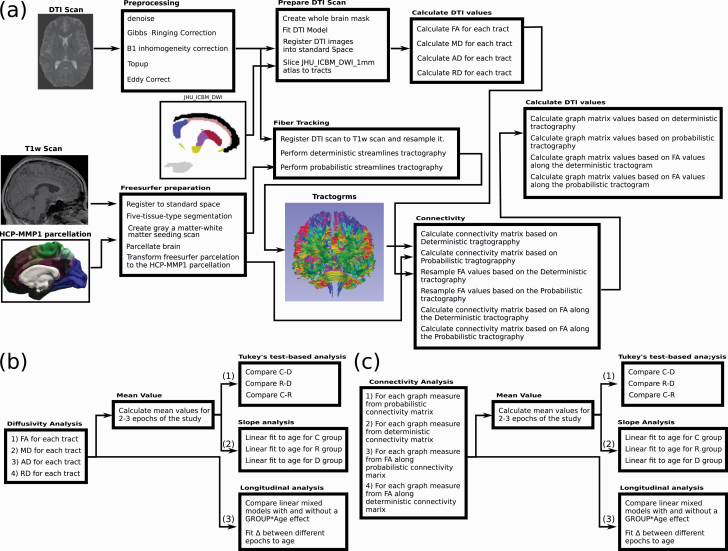
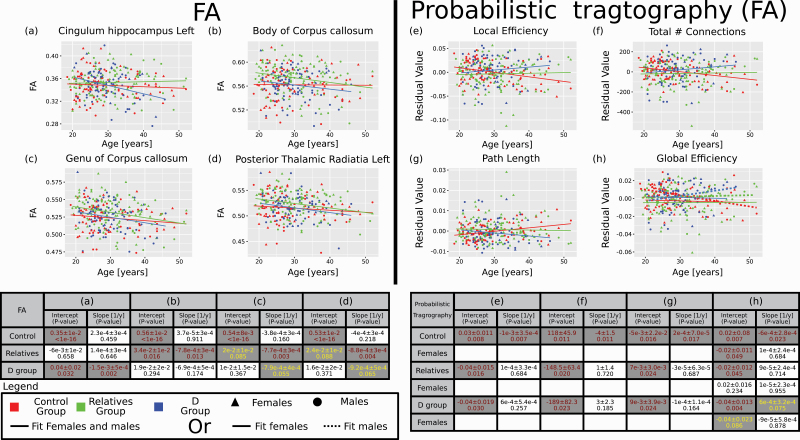
We studied white matter features using diffusion tensor imaging in a cohort of 82 people affected by psychosis, 122 of their first-degree relatives, and 89 control subjects that were scanned between two to three times with an interval of approximately 3 years between consecutive scans. We measured both fractional anisotropy and other standard diffusivity measures such as axial diffusivity. Additionally, we calculated standard connectivity measures such as path length based on probabilistic or deterministic tractography. Finally, by averaging the values of the different measures over the two or three consecutive scans, we studied epoch-averagely the difference between these three groups.
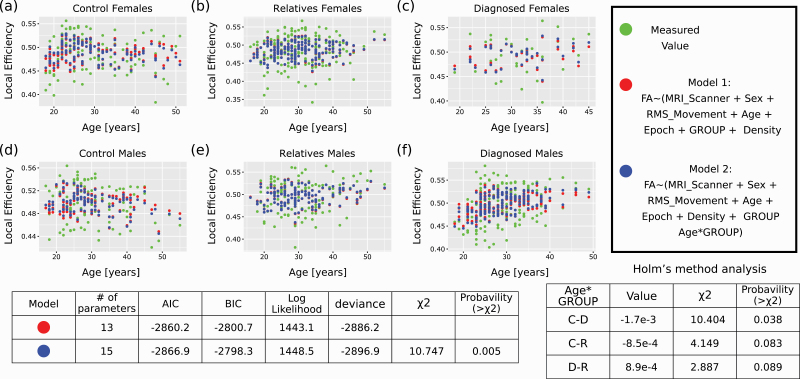
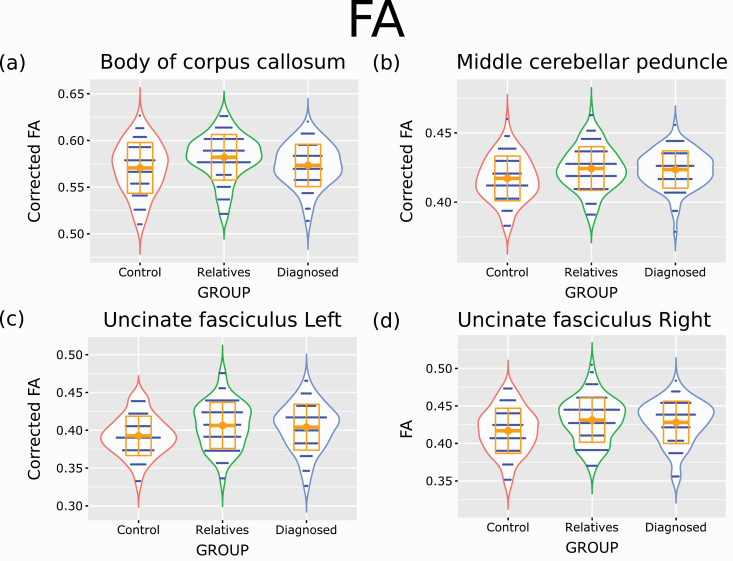
For several tracts and several connectivity measures, the relatives showed distinct features from both the probands and the control groups. In those cases, the relatives did not necessarily score between the probands and the control group. An aggregate analysis in the form of a group-dependent score for the different modes of the analysis (e.g., for fractional anisotropy) supported this observation.
We interpret these results as evidence supporting a compensation mechanism in the brain of relatives that may be related to resilience that some of them exhibit in the face of the genetic risk they have for being affected by psychosis.
现有模型表明,受精神病影响者的亲属的某些大脑特征可与先证者及对照组相区分。此类发现可被解释为代表一种补偿机制。
我们使用扩散张量成像技术,对82名精神病患者、122名他们的一级亲属以及89名对照对象的白质特征进行了研究。这些对象接受了两到三次扫描,连续扫描之间的间隔约为3年。我们测量了分数各向异性以及其他标准扩散率指标,如轴向扩散率。此外,我们基于概率性或确定性纤维束成像计算了标准连接性指标,如路径长度。最后,通过对连续两到三次扫描中不同指标的值进行平均,我们对这三组之间的差异进行了时期平均研究。
对于几条纤维束和几种连接性指标,亲属们表现出与先证者和对照组都不同的特征。在这些情况下,亲属的得分不一定介于先证者和对照组之间。以不同分析模式(如分数各向异性)的组依赖性得分形式进行的综合分析支持了这一观察结果。
我们将这些结果解释为支持亲属大脑中存在补偿机制的证据,这种机制可能与他们中的一些人面对患精神病的遗传风险时所表现出的恢复力有关。