Fischer Kady, Grob Leonard, Setz Louis, Jung Bernd, Neuenschwander Mario D, Utz Christoph D, von Tengg-Kobligk Hendrik, Huber Adrian T, Friess Jan O, Guensch Dominik P
Department of Anaesthesiology and Pain Medicine, Inselspital, Bern University Hospital, University of Bern, Bern, Switzerland.
Department of Diagnostic, Interventional and Paediatric Radiology, Inselspital, Bern University Hospital, University of Bern, Bern, Switzerland.
Front Cardiovasc Med. 2024 Jul 31;11:1411752. doi: 10.3389/fcvm.2024.1411752. eCollection 2024.
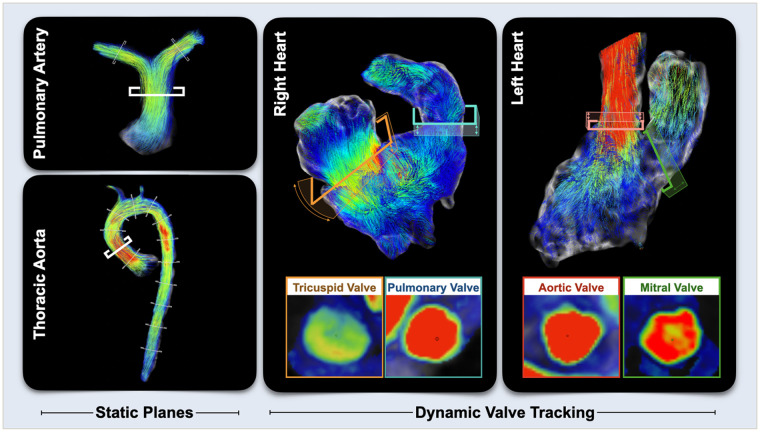
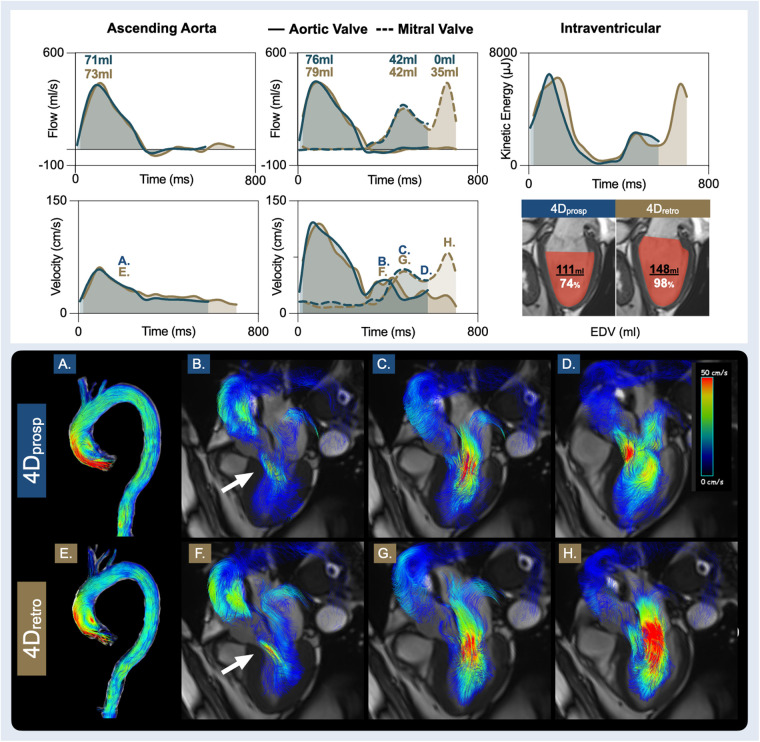
4D flow cardiovascular magnetic resonance (CMR) is a versatile technique to non-invasively assess cardiovascular hemodynamics. With developing technology, choice in sequences and acquisition parameters is expanding and it is important to assess if data acquired with these different variants can be directly compared, especially when combining datasets within research studies. For example, sequences may allow a choice in gating techniques or be limited to one method, yet there is not a direct comparison investigating how gating selection impacts quantifications of the great vessels, semilunar and atrioventricular valves and ventricles. Thus, this study investigated if quantifications across the heart from contemporary 4D flow sequences are comparable between two commonly used 4D flow sequences reliant on different ECG gating techniques.
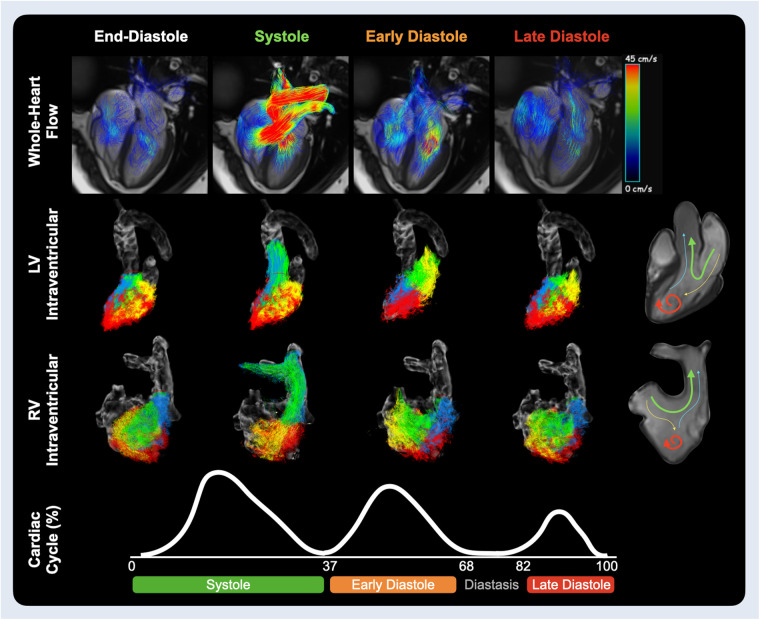
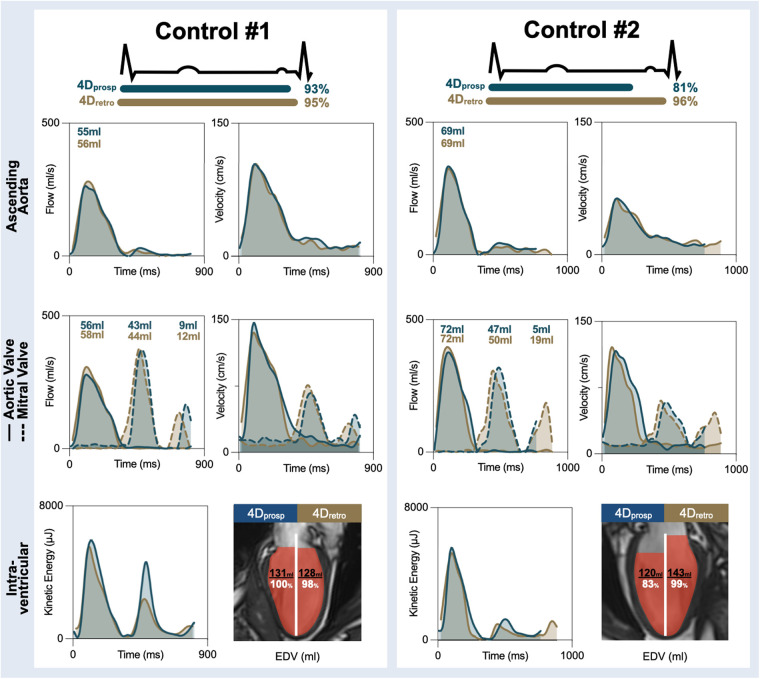
Forty participants (33 healthy controls, seven patients with coronary artery disease and abnormal diastolic function) were prospectively recruited into a single-centre observational study to undergo a 3T-CMR exam. Two acquisitions, a k-t GRAPPA 4D flow with prospective gating (4D) and a modern compressed sensing 4D flow with retrospective gating (4D), were acquired in each participant. Images were analyzed for volumes, flow rates and velocities in the vessels and four valves, and for biventricular kinetic energy and flow components. Data was compared for group differences with paired -tests and for agreement with Bland-Altman and intraclass correlation (ICC).
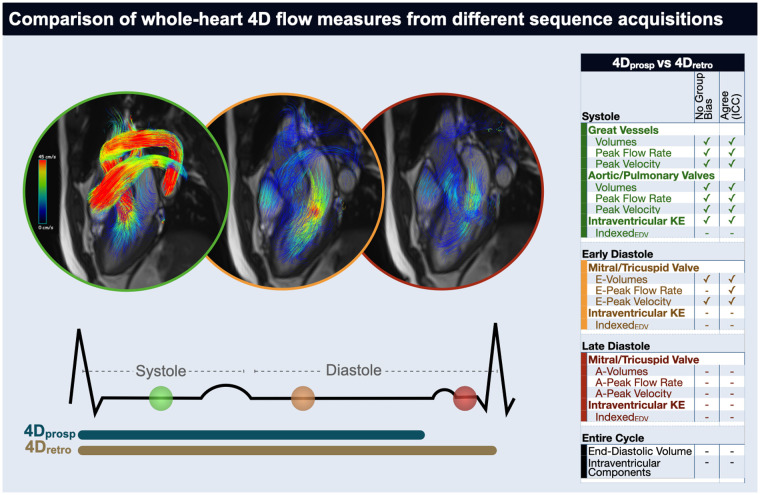
Measurements primarily occurring during systole of the great vessels, semilunar valves and both left and right ventricles did not differ between acquisition types ( > 0.05 from -test) and yielded good to excellent agreement (ICC: 0.75-0.99). Similar findings were observed for the majority of parameters dependent on early diastole. However, measurements occurring in late diastole or those reliant on the entire-cardiac cycle such as flow component volumes along with diastolic kinetic energy values were not similar between 4D and 4D acquisitions resulting in poor agreement (ICC < 0.50).
Direct comparison of measurements between two different 4D flow acquisitions reliant on different gating methods demonstrated systolic and early diastolic markers across the heart should be compatible when comparing these two 4D flow sequences. On the other hand, late diastolic and intraventricular parameters should be compared with caution.
四维血流心血管磁共振成像(CMR)是一种用于无创评估心血管血流动力学的多功能技术。随着技术的发展,序列和采集参数的选择不断增加,评估使用这些不同变体采集的数据是否可以直接比较非常重要,特别是在研究中将数据集合并时。例如,序列可能允许选择门控技术或仅限于一种方法,但目前尚无直接比较研究门控选择如何影响大血管、半月瓣和房室瓣以及心室的量化。因此,本研究调查了依赖于不同心电图门控技术的两种常用四维血流序列在整个心脏的量化结果是否具有可比性。
前瞻性招募了40名参与者(33名健康对照者、7名患有冠状动脉疾病和舒张功能异常的患者)进入一项单中心观察性研究,接受3T-CMR检查。每位参与者均进行两次采集,一次是采用前瞻性门控的k-t GRAPPA四维血流采集(4D),另一次是采用回顾性门控的现代压缩感知四维血流采集(4D)。分析图像以获取血管和四个瓣膜的容积、流速和速度,以及双心室动能和血流成分。通过配对检验比较组间差异,并使用布兰德-奥特曼分析和组内相关系数(ICC)评估一致性。
在大血管、半月瓣以及左、右心室收缩期主要进行的测量在采集类型之间没有差异(配对检验P>0.05),一致性良好至极佳(ICC:0.75 - 0.99)。对于大多数依赖于舒张早期的参数也观察到了类似的结果。然而,在舒张末期进行的测量或那些依赖于整个心动周期的测量,如血流成分容积以及舒张动能值,在4D和4D采集之间并不相似,一致性较差(ICC<0.50)。
对依赖于不同门控方法的两种不同四维血流采集的测量结果进行直接比较表明,在比较这两种四维血流序列时,整个心脏的收缩期和舒张早期标记物应该是兼容的。另一方面,舒张末期和心室内参数的比较应谨慎进行。