Chalhoub Reda M, Testen Anze, Hopkins Jordan, Carthy Camille, Kalivas Peter W
Department of Neuroscience, Medical University of South Carolina, Charleston, South Carolina, USA.
Medical Scientist Training Program, Medical University of South Carolina, Charleston, South Carolina, USA.
bioRxiv. 2024 Aug 7:2024.08.05.606522. doi: 10.1101/2024.08.05.606522.
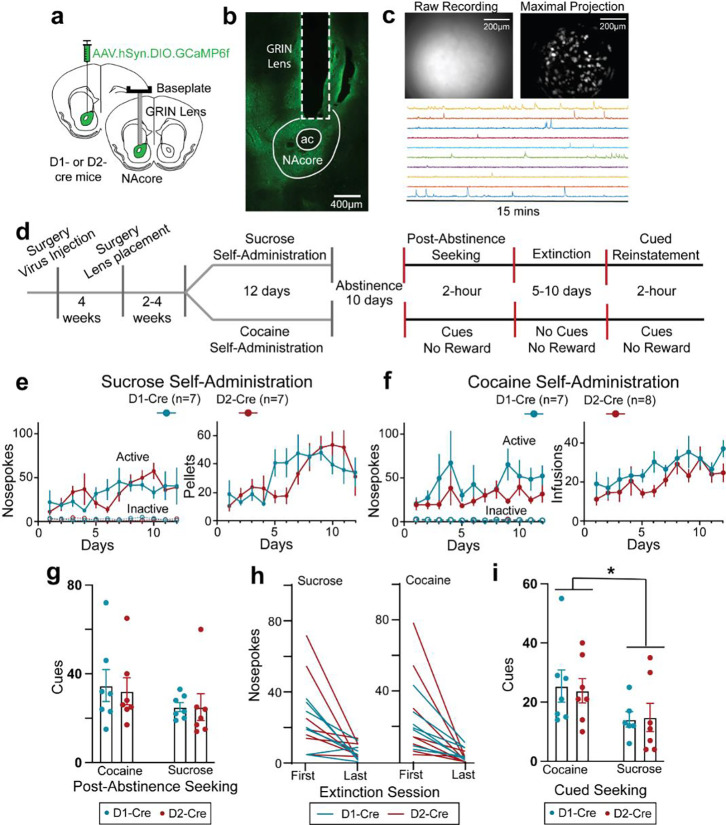
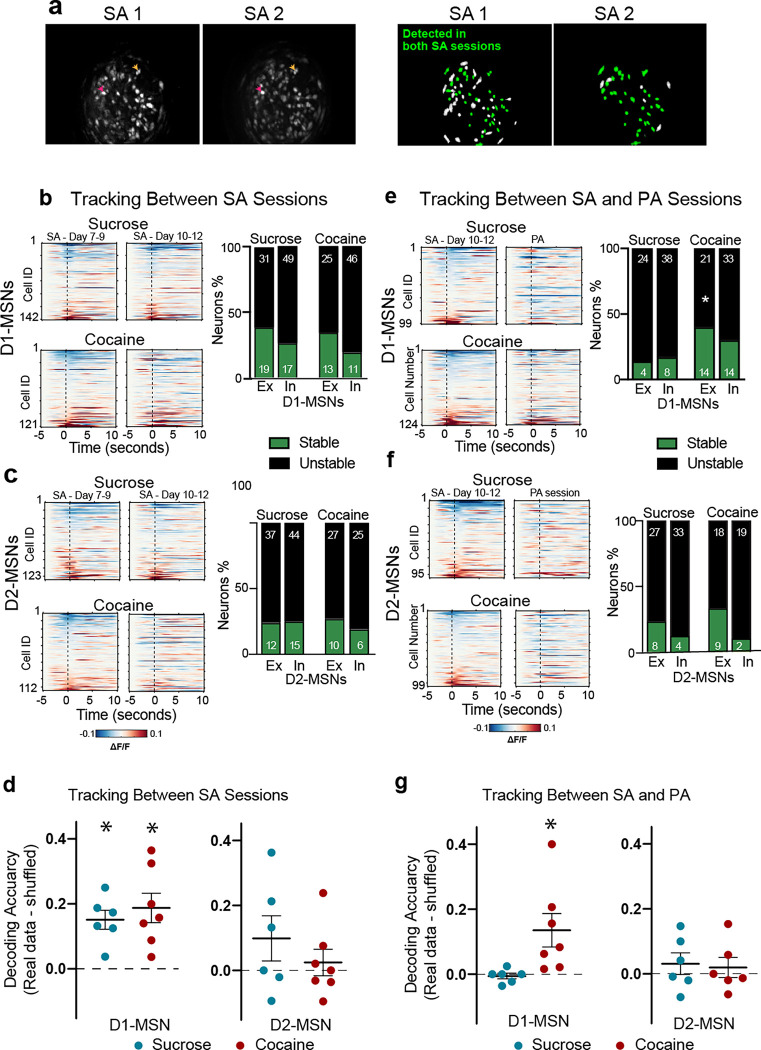
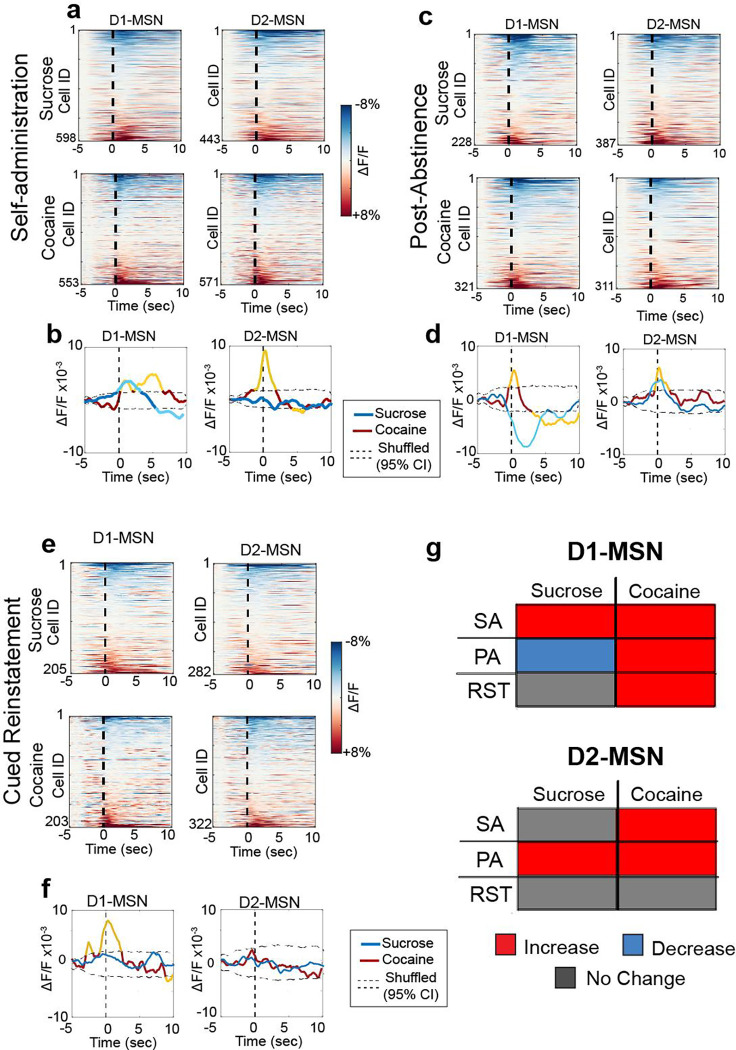
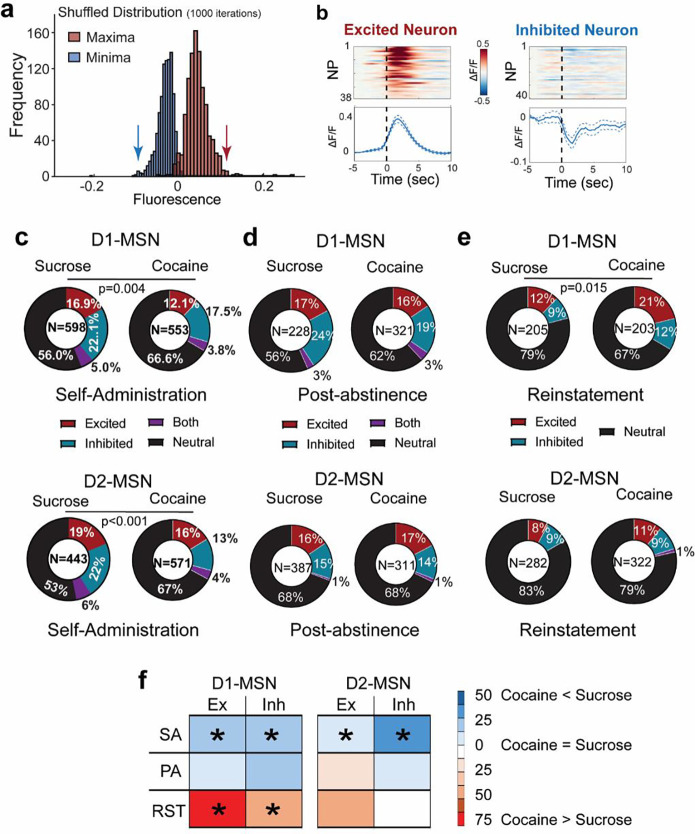
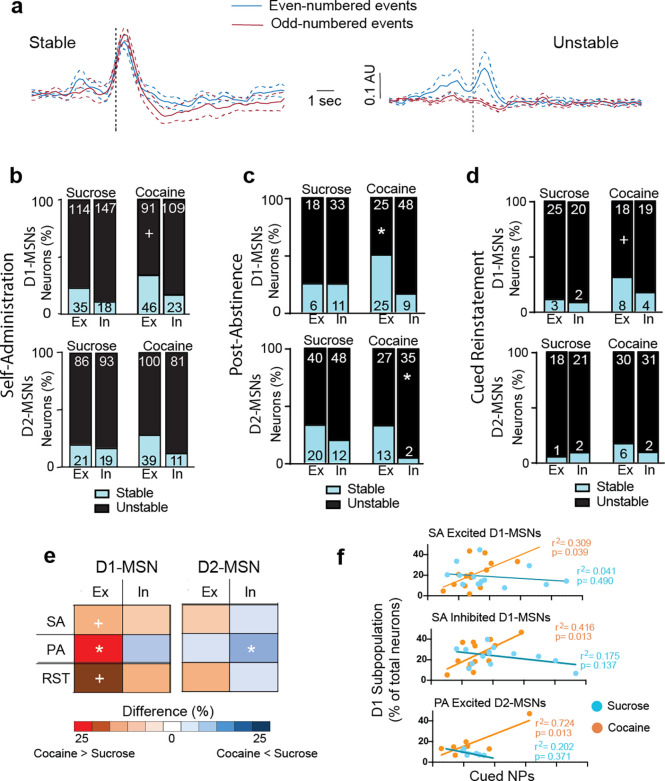
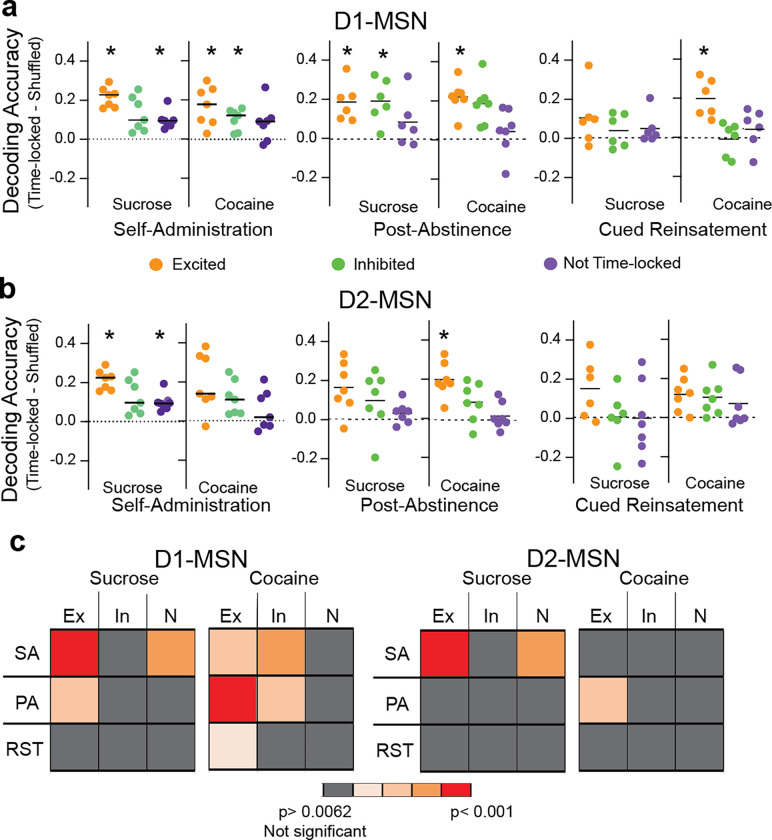
Neuronal activity in the nucleus accumbens core (NAcore) is necessary for reward-seeking behaviors. We hypothesized that the differential encoding of natural and drug rewards in the NAcore contributes to substance use disorder. We leveraged single-cell calcium imaging of dopamine D1- and D2-receptor-expressing medium spiny neurons (MSNs) in the NAcore of mice to examine differences between sucrose and cocaine rewarded (self-administration) and unrewarded (abstinent and cue-induced) seeking. Activity was time-locked to nose-poking for reward, clustered, and compared between sucrose and cocaine. Only in cocaine-trained mice were excited D1-MSNs securely stable, capable of decoding nose-poking in all rewarded and unrewarded sessions and correlated with the intensity of nose-poking for unrewarded seeking. Furthermore, D1-MSNs formed a stable ensemble predictive of seeking behavior after extended cocaine, but not sucrose abstinence. The excited D1-MSN ensemble uniquely drives cue-induced cocaine seeking and may contribute to why drug seeking is prepotent over natural reward seeking in cocaine use disorder.
伏隔核核心区(NAcore)的神经元活动对于奖赏寻求行为是必要的。我们假设,NAcore中对自然奖赏和药物奖赏的差异编码促成了物质使用障碍。我们利用小鼠NAcore中表达多巴胺D1和D2受体的中等多棘神经元(MSNs)的单细胞钙成像,来研究蔗糖和可卡因奖赏(自我给药)与未奖赏(戒断和线索诱导)寻求之间的差异。活动与为获取奖赏的戳鼻动作进行时间锁定、聚类,并在蔗糖和可卡因之间进行比较。只有在接受可卡因训练的小鼠中,被激活的D1-MSNs才稳定可靠,能够在所有奖赏和未奖赏的实验环节中解码戳鼻动作,并与未奖赏寻求时的戳鼻强度相关。此外,在长期戒断可卡因而非蔗糖后,D1-MSNs形成了一个预测寻求行为的稳定整体。被激活的D1-MSN整体独特地驱动线索诱导的可卡因寻求,这可能解释了为什么在可卡因使用障碍中,药物寻求比自然奖赏寻求更具优势。