Katsuki Shunsuke, Jha Prabhash Kumar, Aikawa Elena, Aikawa Masanori
Department of Cardiovascular Medicine, Kyushu University Hospital, Fukuoka, Japan.
Center for Excellence in Vascular Biology, Cardiovascular Division, Department of Medicine, Brigham and Women's Hospital, Harvard Medical School, Boston, MA, United States.
Front Cardiovasc Med. 2024 Aug 1;11:1431398. doi: 10.3389/fcvm.2024.1431398. eCollection 2024.
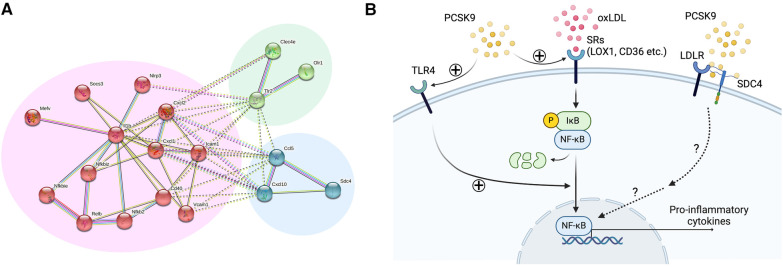
Recent clinical trials demonstrated that proprotein convertase subtilisin/kexin 9 (PCSK9) inhibitors reduce cardiovascular events without affecting systemic inflammation in the patients with coronary artery disease, as determined by high sensitivity C-reactive protein (CRP) levels. However, its pro-inflammatory effects in cardiovascular disease in humans and experimental animals beyond the traditional cholesterol receptor-dependent lipid metabolism have also called attention of the scientific community. PCSK9 may target receptors associated with inflammation other than the low-density lipoprotein receptor (LDLR) and members of the LDLR family. Accumulating evidence suggests that PCSK9 promotes macrophage activation not only via lipid-dependent mechanisms, but also lipid-independent and LDLR-dependent or -independent mechanisms. In addition to dyslipidemia, PCSK9 may thus be a potential therapeutic target for various pro-inflammatory diseases.
近期临床试验表明,前蛋白转化酶枯草溶菌素/克新9(PCSK9)抑制剂可降低心血管事件的发生风险,且不会影响冠状动脉疾病患者的全身炎症反应,这是通过高敏C反应蛋白(CRP)水平来确定的。然而,在人类和实验动物的心血管疾病中,PCSK9除了传统的胆固醇受体依赖性脂质代谢外,还具有促炎作用,这也引起了科学界的关注。PCSK9可能靶向除低密度脂蛋白受体(LDLR)及其家族成员以外的与炎症相关的受体。越来越多的证据表明,PCSK9不仅通过脂质依赖性机制促进巨噬细胞活化,还通过脂质非依赖性以及LDLR依赖性或非依赖性机制来实现。因此,除了血脂异常外,PCSK9可能是各种促炎疾病的潜在治疗靶点。