Division of Hematology and Oncology and Institute for Clinical Research and Health Policy Studies, Tufts Medical Center, Boston, MA, USA.
Institute for Clinical Research and Health Policy Studies, Tufts Medical Center, Boston, MA, USA.
JNCI Cancer Spectr. 2024 Sep 2;8(5). doi: 10.1093/jncics/pkae071.
The long-term financial impact of cancer care has not been adequately addressed in young adults. As part of a remote intervention study, we describe medical financial distress and hardship among young adult survivors of blood cancer at study entry.
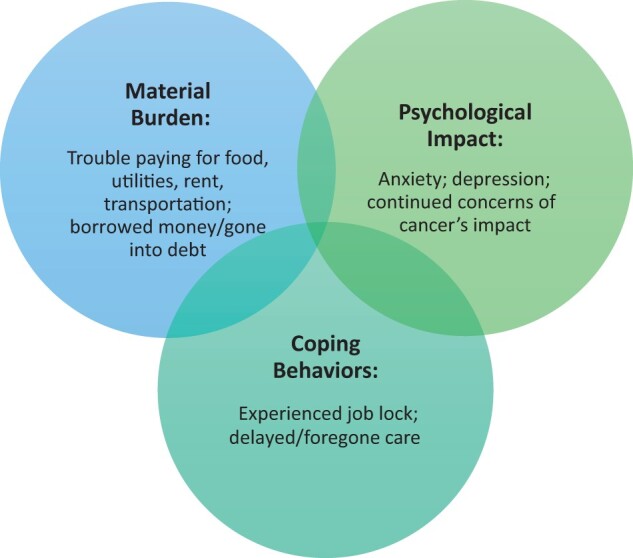
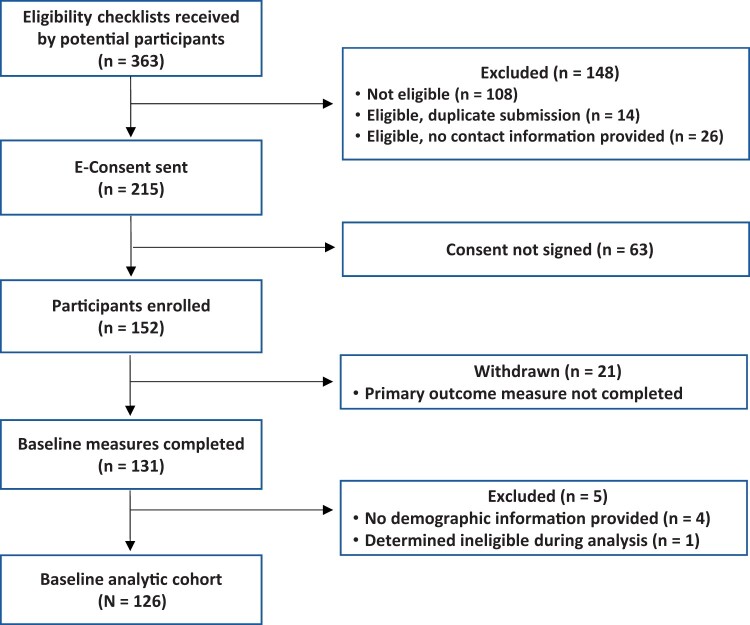
Young adults were recruited from 6 US hospitals. Using a Research Electronic Data Capture link, young adults confirmed their eligibility-namely, currently 18 to 39 years of age, blood cancer diagnosis 3 or more years ago, off active treatment, and not on parent's insurance. Following consent, the baseline assessment was sent. The primary outcome measure, the Personal Financial Wellness Scale, measured financial distress (scored as severe, 1-2; high, 3-4; average, 5-6; and low to no, 7-10). Medical financial hardship encompassed material hardship, psychological impact, and coping behaviors. Descriptive summary statistics and linear regression were used.
Among the 126 participants, 54.5% came from minority racial or ethnic groups. Median time since diagnosis was 10 years (interquartile range = 6-16 years), with 56% having received a diagnosis when they were between 18 and 39 years of age. The overall mean (standard deviation) Personal Financial Wellness Scale score was 5.1 (2.4), but 49% reported severe or high distress. In multivariable analysis, female sex, Hispanic ethnicity, and lower income were strongly associated with worse Personal Financial Wellness Scale scores. Among participants with severe financial distress (n = 26), 72% reported 2 or more household material hardships, had worse scores across all psychological domains, and altered survivorship care because of cost (68%).
Nearly half of long-term young adult cancer survivors reported severe or high levels of financial distress. Individuals with severe or high distress also reported more medical financial hardship than other participants. This finding highlights the need for ongoing financial intervention in this vulnerable population.
CLINICALTRIALS.GOV: NCT05620979.
癌症治疗的长期经济影响在年轻人中尚未得到充分解决。作为一项远程干预研究的一部分,我们描述了血液癌年轻幸存者在研究入组时的医疗财务困境和困难。
从美国 6 家医院招募年轻人。年轻人通过 Research Electronic Data Capture 链接确认其资格,即目前年龄在 18 至 39 岁之间,3 年多前被诊断出患有血液癌,已停止积极治疗,且不在父母的保险范围内。同意后,发送基线评估。主要结局测量指标是个人财务健康量表,衡量财务困境(评分严重为 1-2 分;高为 3-4 分;平均为 5-6 分;低或无为 7-10 分)。医疗财务困难包括物质困难、心理影响和应对行为。使用描述性汇总统计数据和线性回归。
在 126 名参与者中,54.5%来自少数族裔或种族群体。中位诊断后时间为 10 年(四分位间距为 6-16 年),56%在 18 至 39 岁之间被诊断出患有该疾病。总体个人财务健康量表评分的平均值(标准差)为 5.1(2.4),但 49%报告严重或高压力。在多变量分析中,女性、西班牙裔和较低的收入与个人财务健康量表评分较差有很强的相关性。在严重财务困境的参与者(n=26)中,72%报告了 2 个或更多家庭物质困难,所有心理领域的评分都更差,并因费用而改变了生存护理(68%)。
近一半的长期年轻癌症幸存者报告严重或高度的财务困境。有严重或高压力的个体也比其他参与者报告了更多的医疗财务困难。这一发现突出表明,需要为这一脆弱群体提供持续的财务干预。
临床试验.gov:NCT05620979。