Hawayek Bradley, Hartman Gabrielle, Bauer Jordan A, Feng Lin, Duquin Thomas R
Department of Orthopedics and Sports Medicine, Jacobs School of Medicine and Biomedical Sciences, University at Buffalo, SUNY, Buffalo, NY, USA.
JSES Rev Rep Tech. 2024 Mar 20;4(3):464-471. doi: 10.1016/j.xrrt.2024.02.010. eCollection 2024 Aug.
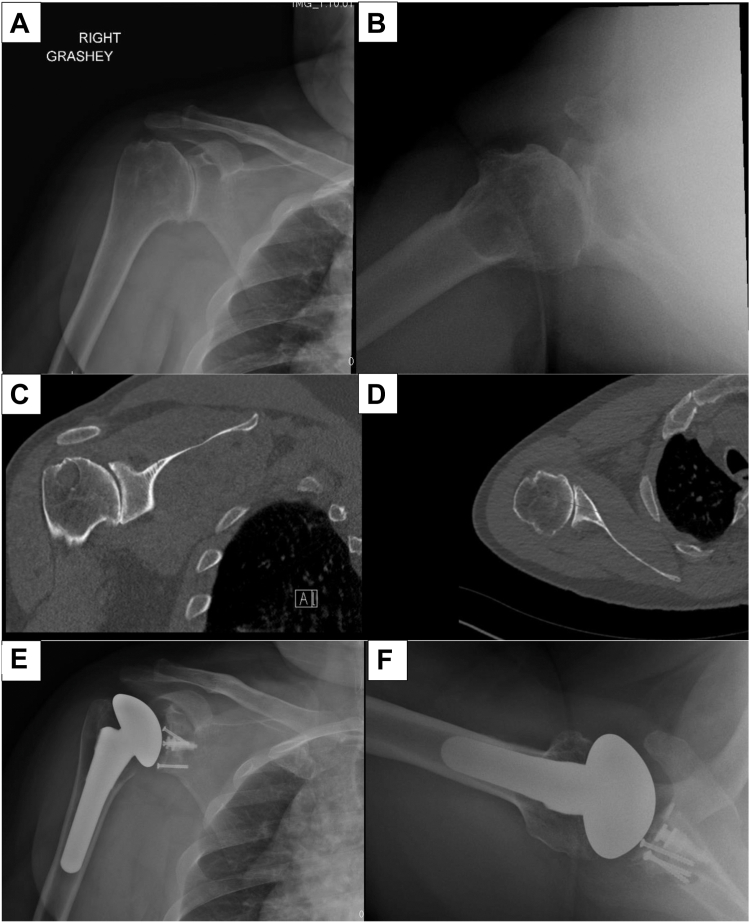
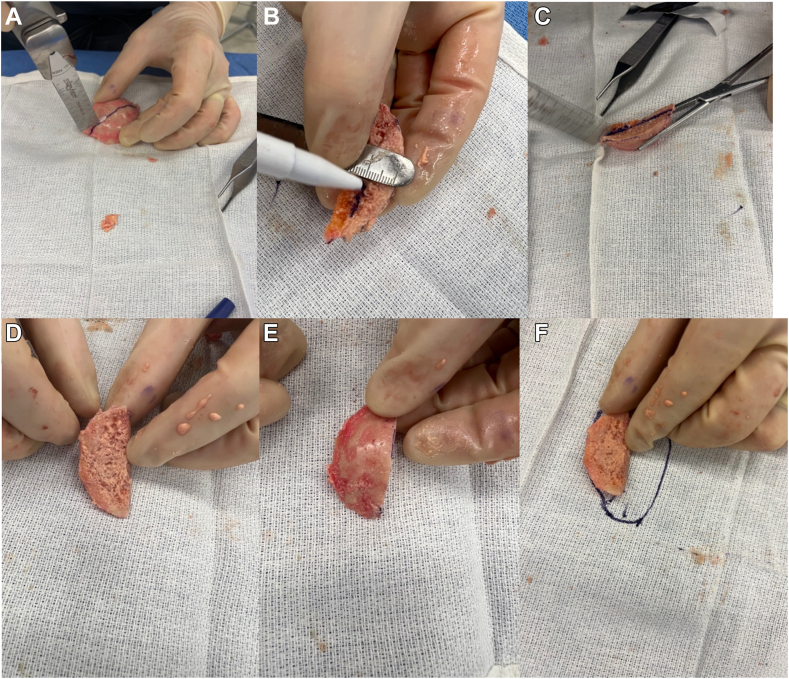
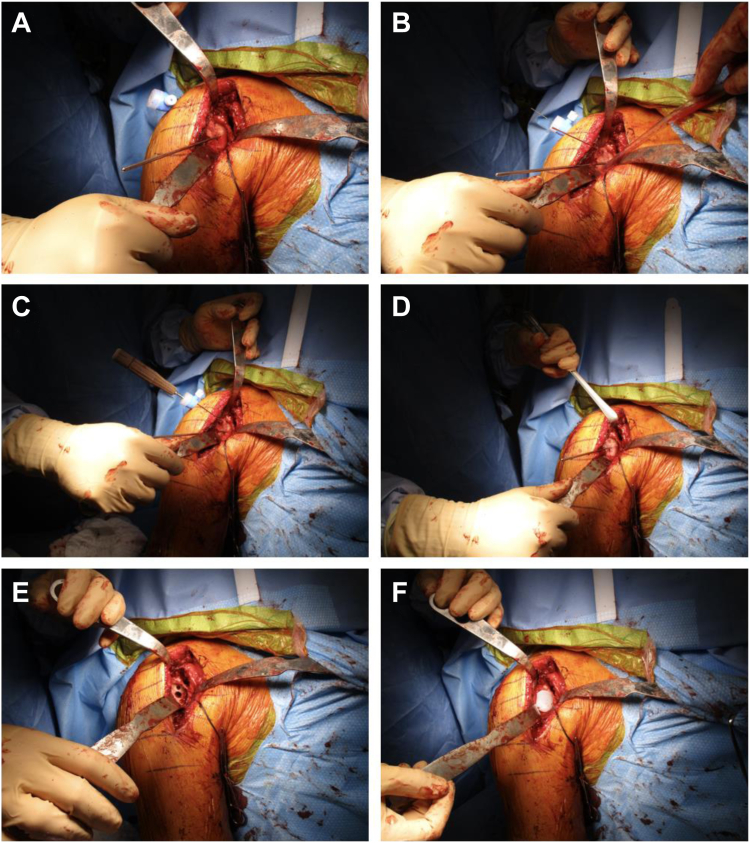
Posterior glenoid bone loss in glenohumeral osteoarthritis poses significant challenges in shoulder arthroplasty. Anatomic total shoulder arthroplasty (TSA) with a humeral head autograft to address the glenoid bone deficiency is an option for these difficult cases. Variable results with this procedure are reported in the literature. This article describes the surgical technique of posterior glenoid bone grafting in TSA using a glenoid implant with hybrid fixation and a series of reported patient functional and radiographic outcomes.
A retrospective chart review of cases from 2015 to 2020 by a single surgeon revealed 10 patients who underwent primary TSA with hybrid glenoid component and posterior glenoid bone grafting. Preoperative and postoperative radiographs were assessed for glenoid inclination, glenoid version, acromiohumeral distance, humeral stem status, and glenoid implant status. Functional outcomes were evaluated by range of motion, strength, and patient-reported clinical outcomes (pain and function on a visual analog scale, Disabilities of the Arm, Shoulder, and Hand score, Single Assessment Numeric Evaluation, American Shoulder and Elbow Surgeons score). Complications and reoperations were also evaluated.
Average follow-up was 31.4 months, active forward flexion and external rotation improved on average from 105 to 150 and 20 to 60, respectively ( < .001) and average abduction improved from 100 to 140 ( < .002). At an average of 26.7 months, patients reported assessments (visual analog scale pain and function, Disabilities of the Arm, Shoulder, and Hand score, Single Assessment Numeric Evaluation, American Shoulder and Elbow Surgeons scores) reveal significant ( < .05) improvement in pain and functional outcomes. Radiographically, at 23.0 ± 20.1 months, all patients demonstrated a well-fixed humeral and glenoid component without evidence of lucent lines. The bone graft used in each patient was well unionized and no radiographic complications were reported. No patients underwent revision surgery, and there was one clinical complication reported, which consisted of a suspected rotator cuff injury at follow-up.
Hybrid fixation with structural glenoid bone grafting in TSA resulted in excellent outcomes with no evidence of graft or component failure on follow-up radiographs and significantly reduced pain, improved functional scores, and improved active range of motion.
肩关节骨关节炎中肩胛盂后方骨缺损在肩关节置换术中带来了重大挑战。采用肱骨头自体移植来解决肩胛盂骨缺损的解剖型全肩关节置换术(TSA)是治疗这些复杂病例的一种选择。文献报道该手术的结果存在差异。本文描述了在TSA中使用混合固定的肩胛盂植入物进行肩胛盂后方骨移植的手术技术,以及一系列报告的患者功能和影像学结果。
一位外科医生对2015年至2020年的病例进行回顾性图表分析,发现10例患者接受了采用混合肩胛盂组件和肩胛盂后方骨移植的初次TSA。术前和术后X线片评估肩胛盂倾斜度、肩胛盂旋转角度、肩峰下间隙、肱骨干状况和肩胛盂植入物状况。通过活动范围、力量以及患者报告的临床结果(视觉模拟评分法的疼痛和功能、上肢、肩部和手部功能障碍评分、单项评估数值评定、美国肩肘外科医生评分)评估功能结果。还评估了并发症和再次手术情况。
平均随访31.4个月,主动前屈和外旋平均分别从105°改善至150°以及从20°改善至60°(P<0.001),外展平均从100°改善至140°(P<0.002)。平均在26.7个月时,患者报告的评估结果(视觉模拟评分法的疼痛和功能、上肢、肩部和手部功能障碍评分、单项评估数值评定、美国肩肘外科医生评分)显示疼痛和功能结果有显著(P<0.05)改善。影像学上,在23.0±20.1个月时,所有患者的肱骨头和肩胛盂组件固定良好,无透亮线迹象。每位患者使用的骨移植均愈合良好,未报告影像学并发症。没有患者接受翻修手术,报告了1例临床并发症,为随访时疑似肩袖损伤。
TSA中采用结构性肩胛盂骨移植的混合固定取得了优异的结果,随访X线片未显示骨移植或组件失败迹象,疼痛显著减轻,功能评分改善,活动范围增加。