Yang Dong, Ge Tingrui, Zhou Jingyi, Li Huazhuan, Zhang Yonggang
Department of Anorectal Surgery, The First People's Hospital of Lianyungang, NO.6 Zhenhua East Road, Haizhou District, Lianyungang, 222061, Jiangsu, China.
Heliyon. 2024 Jul 22;10(15):e34932. doi: 10.1016/j.heliyon.2024.e34932. eCollection 2024 Aug 15.
Inflammatory bowel disease (IBD) is a global health concern. Aloe-emodin (AE) has diverse pharmacological benefits, including anti-inflammatory effects. However, its role in IBD remains unclear, prompting our investigation of its regulatory effects and mechanisms in an IBD mouse model.
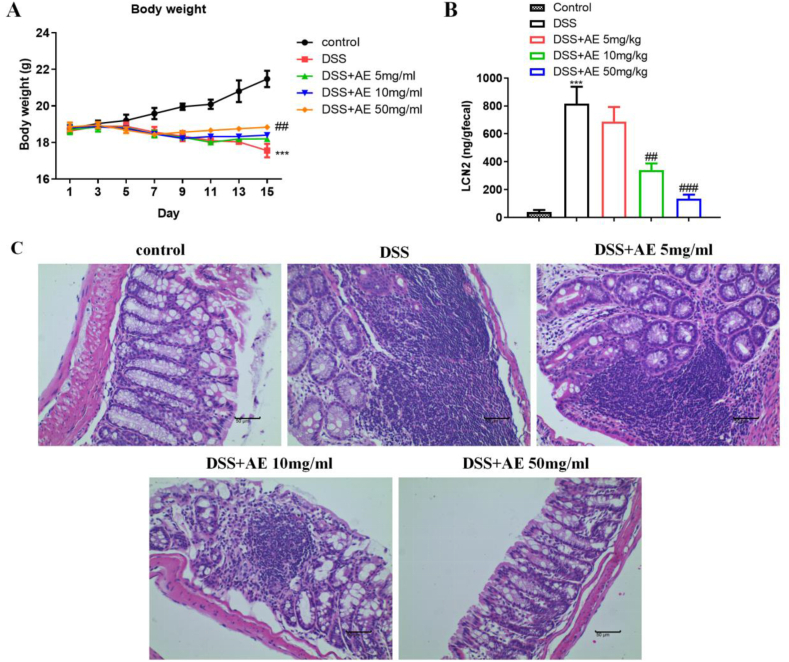
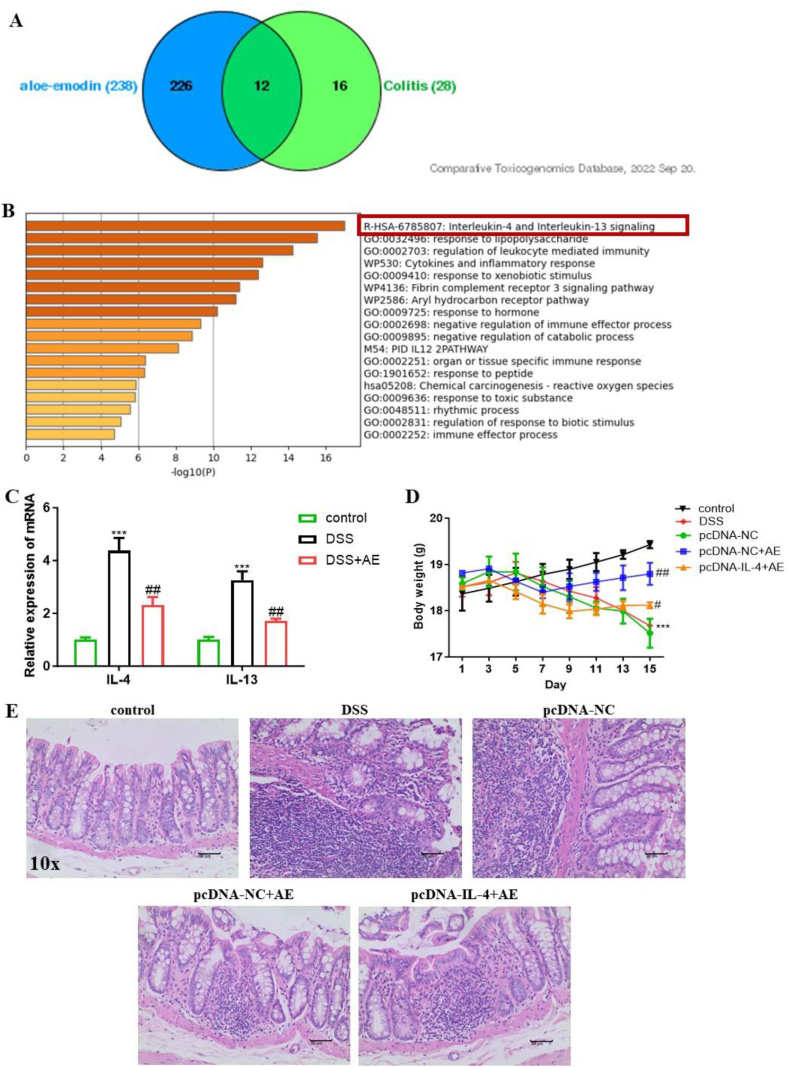
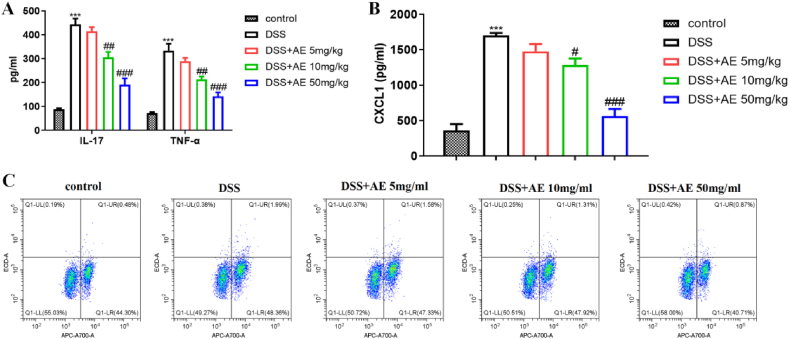
We studied the therapeutic efficacy of AE in alleviating symptoms and modulating cytokine secretion in a murine model of dextran sulfate sodium (DSS)-induced colitis. BALB/c mice were administered DSS to induce colitis and were subsequently treated with varying doses of AE. Changes in body weight, fecal lipocalin-2 (LCN2) levels, colon tissue histology, and serum cytokine concentrations were evaluated to assess the effects of AE treatment. Additionally, 16 S rRNA sequencing was used to analyze alterations in the composition of the gut microbiota following AE intervention. Finally, the database was used to analyze the signaling pathways associated with IBD in AE and to detect the expression levels of interleukin (IL)-4 pathway using real-time quantitative reverse transcription PCR. Exogenous IL-4 was used in rescue experiments to observe its effects on the disease process of IBD under AE regulation.
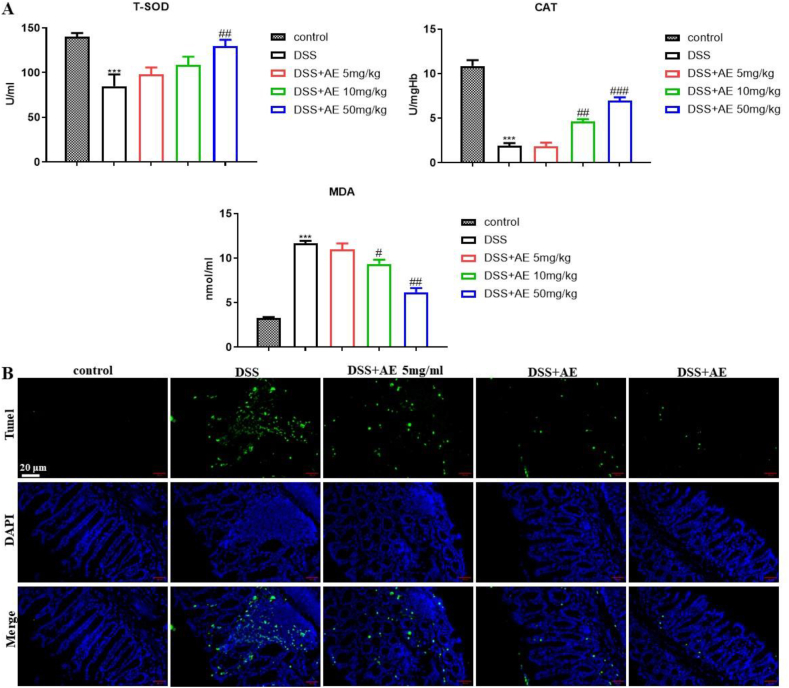
AE treatment resulted in a dose-dependent mitigation of weight loss, reduction in fecal LCN2 levels, and amelioration of histological damage in DSS-induced colitis in mice. The levels of superoxide dismutase and catalase increased, whereas malondialdehyde decreased following AE treatment, indicating a dose-dependent alleviation of colitis symptoms. Furthermore, AE administration attenuated the secretion of pro-inflammatory cytokines, including IL-17, tumor necrosis factor-alpha (TNF-α), and chemokine ligand 1, while promoting the expression of anti-inflammatory cytokines IL-4 and IL-13. Analysis of the gut microbiota revealed that AE effectively suppressed the overgrowth of colitis-associated bacterial species and restored microbial homeostasis. Finally, we found that overexpression of IL-4 was able to reverse the therapeutic effect of AE for DSS-induced IBD.
AE shows promise in alleviating colitis severity, influencing inflammatory cytokines, and modulating the gut microbiota in an IBD mouse model via the IL-4/IL-13 pathway, suggesting its potential as a natural IBD remedy.
炎症性肠病(IBD)是一个全球性的健康问题。芦荟大黄素(AE)具有多种药理益处,包括抗炎作用。然而,其在IBD中的作用仍不清楚,这促使我们在IBD小鼠模型中研究其调节作用和机制。
我们研究了AE在葡聚糖硫酸钠(DSS)诱导的小鼠结肠炎模型中减轻症状和调节细胞因子分泌的治疗效果。给BALB/c小鼠施用DSS以诱导结肠炎,随后用不同剂量的AE进行治疗。评估体重变化、粪便脂质运载蛋白-2(LCN2)水平、结肠组织组织学和血清细胞因子浓度,以评估AE治疗的效果。此外,使用16S rRNA测序分析AE干预后肠道微生物群组成的变化。最后,利用数据库分析AE中与IBD相关的信号通路,并使用实时定量逆转录PCR检测白细胞介素(IL)-4通路的表达水平。在挽救实验中使用外源性IL-4来观察其在AE调节下对IBD疾病进程的影响。
AE治疗导致DSS诱导的小鼠结肠炎体重减轻呈剂量依赖性缓解、粪便LCN2水平降低以及组织学损伤改善。AE治疗后超氧化物歧化酶和过氧化氢酶水平升高,而丙二醛降低,表明结肠炎症状呈剂量依赖性缓解。此外,AE给药减弱了促炎细胞因子的分泌,包括IL-17、肿瘤坏死因子-α(TNF-α)和趋化因子配体1,同时促进抗炎细胞因子IL-4和IL-13的表达。肠道微生物群分析显示,AE有效抑制了与结肠炎相关细菌种类的过度生长并恢复了微生物稳态。最后,我们发现IL-4的过表达能够逆转AE对DSS诱导的IBD的治疗效果。
AE在减轻结肠炎严重程度、影响炎症细胞因子以及通过IL-4/IL-13途径调节IBD小鼠模型中的肠道微生物群方面显示出前景,表明其作为天然IBD治疗药物的潜力。