Physiology Department, Faculty of Medicine, University of Malaga, Malaga, Spain.
Occupational Therapy Department, Hospital Civil, Malaga, Spain.
PLoS One. 2024 Aug 19;19(8):e0308800. doi: 10.1371/journal.pone.0308800. eCollection 2024.
Occupational therapy (OT) is an effective evidence-based intervention that positively influences stroke patients'independence recovery, leading to new opportunities for better quality of life outcomes.
To explore the effectiveness of an early OT intervention program (EOTIPS) in the process of hospital to home discharge after stroke in Spain.
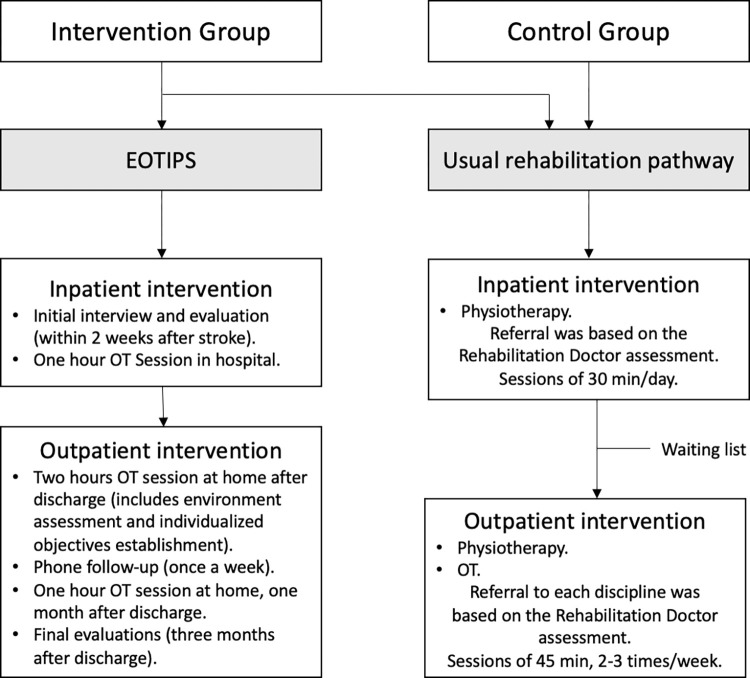
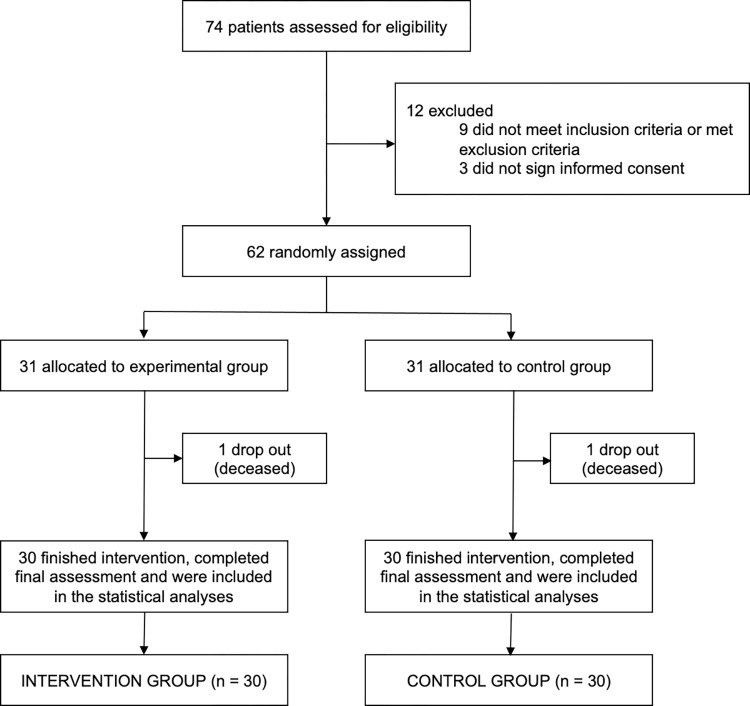
We conducted a prospective, randomized controlled clinical trial that included 60 adults who suffered a stroke and were discharged home. Participants assigned to the experimental group (n = 30) were included in EOTIPS and compared with a control group (n = 30). Evaluations assessed quality of life (Stroke and Aphasia Quality of Life Scale [SAQOL-39]), functional independence (Modified Rankin Scale [mRS], Barthel Index [BI] and Stroke Impact Scale-16 [SIS-16]), perceptual-cognitive skills (Montreal Cognitive Assessment [MoCA]), upper limb function (Fugl Meyer Assessment [FMA]), mobility (Berg Balance Scale [BBS] and Timed Up & Go [TUG]), communication skills (Communicative Activity Log [CAL]) and mood disorders (Beck Depression Inventory-II [BDI-II] and Hamilton Anxiety Scale [HAM-A]); they were completed within two weeks post-stroke and after three months follow-up. Statistical analysis included intent-to-treat analysis, considering all participants (dropouts as failures), and efficacy analysis, considering only end-of-treatment participants.
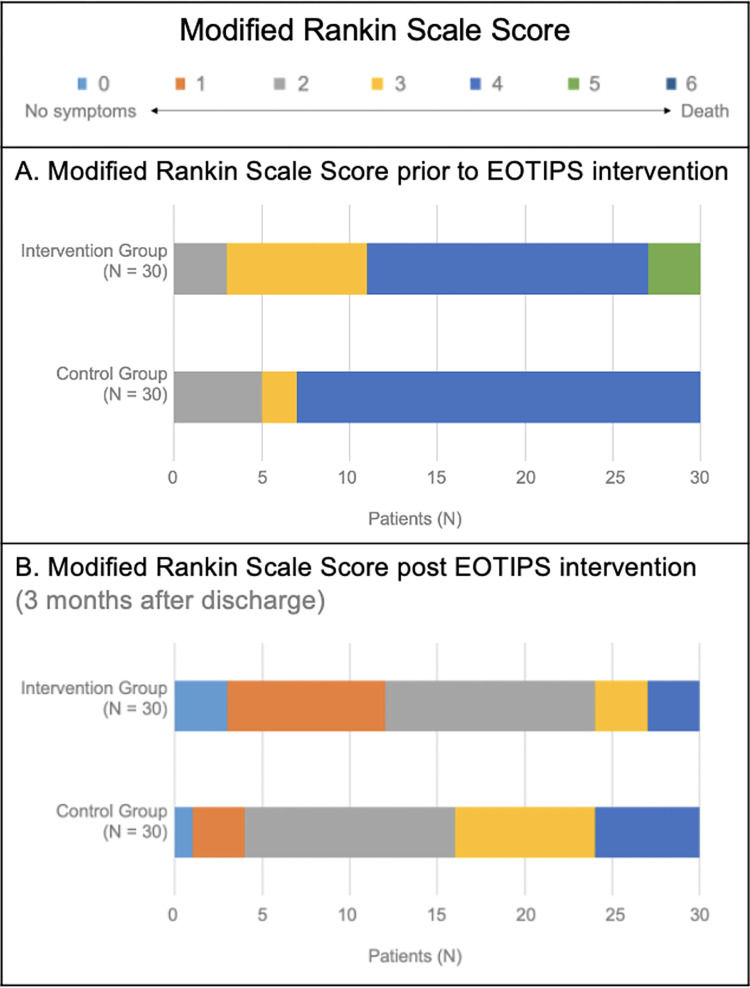
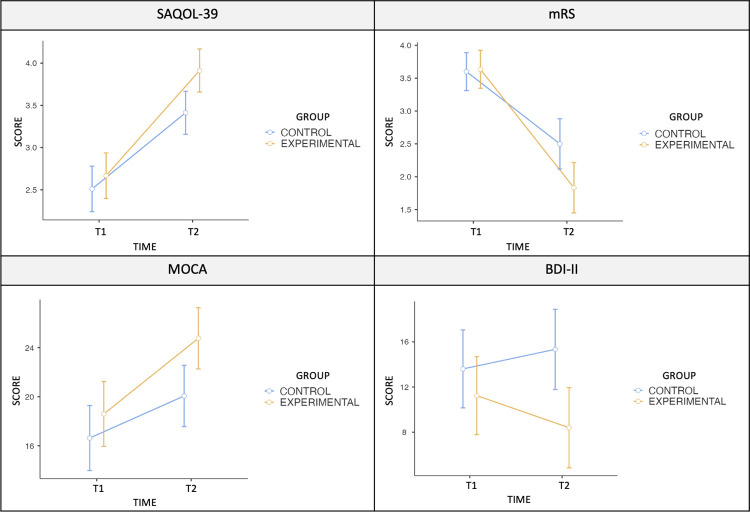
Participants in the intervention group showed a significant better evolution in the main outcome measure of quality of life (SAQOL-39 p = .029), as well as for independence (mRSp = .004), perceptual-cognitive skills (MoCA p = .012)and symptoms of depression (BDI-II p = .011) compared to the control group.
EOTIPS was effective in improving quality of life, as well as enhancing perceptual-cognitive skills, independence and reducing levels of depression for patients who suffered a stroke in a Spanish cohort and could be considered as an applicable non-pharmacologic therapeutic tool that can lead to patients' positive outcomes after stroke. This study was registered on ClinicalTrials.gov with the identifier NCT04835363.
职业疗法(OT)是一种有效的循证干预措施,它对中风患者的独立康复有积极影响,为改善生活质量提供了新的机会。
探索西班牙在从医院到家庭的中风患者出院过程中早期职业治疗干预方案(EOTIPS)的有效性。
我们进行了一项前瞻性、随机对照临床试验,纳入了 60 名出院回家的中风成人患者。将实验组(n=30)的患者纳入 EOTIPS,并与对照组(n=30)进行比较。评估包括生活质量(中风和失语症生活质量量表[SAQOL-39])、功能独立性(改良 Rankin 量表[mRS]、巴氏指数[BI]和中风影响量表-16[SIS-16])、知觉认知技能(蒙特利尔认知评估[MoCA])、上肢功能(Fugl Meyer 评估[FMA])、移动能力(伯格平衡量表[BBS]和计时起立行走测试[TUG])、沟通技能(沟通活动日志[CAL])和情绪障碍(贝克抑郁量表-II[BDI-II]和汉密尔顿焦虑量表[HAM-A]);在中风后两周内和三个月随访时进行。统计分析包括意向治疗分析,将所有参与者(脱落者视为失败)考虑在内,以及仅考虑治疗结束时的参与者的疗效分析。
干预组在主要生活质量结局测量(SAQOL-39,p=0.029)、独立性(mRS,p=0.004)、知觉认知技能(MoCA,p=0.012)和抑郁症状(BDI-II,p=0.011)方面的改善明显优于对照组。
EOTIPS 对提高西班牙中风患者的生活质量,以及增强知觉认知技能、独立性和减轻抑郁水平有效,可作为一种可行的非药物治疗工具,为中风患者带来积极的结果。本研究在 ClinicalTrials.gov 注册,标识符为 NCT04835363。