Department of Microbiology and Immunology, The University of Western Ontario, London, Ontario, Canada.
Department of Chemistry, The University of Western Ontario, London, Ontario, Canada.
J Biol Chem. 2024 Oct;300(10):107689. doi: 10.1016/j.jbc.2024.107689. Epub 2024 Aug 17.
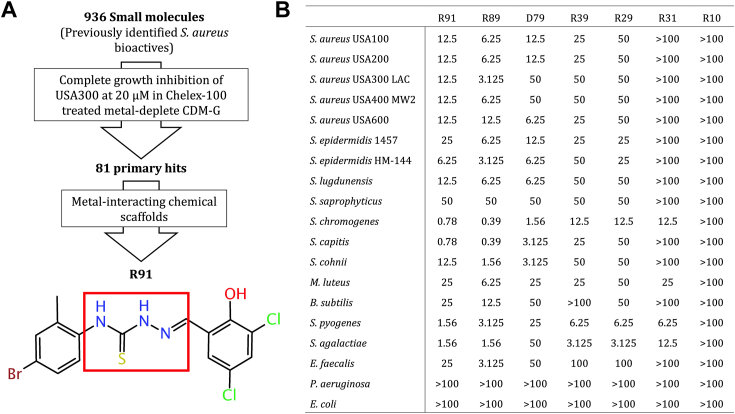
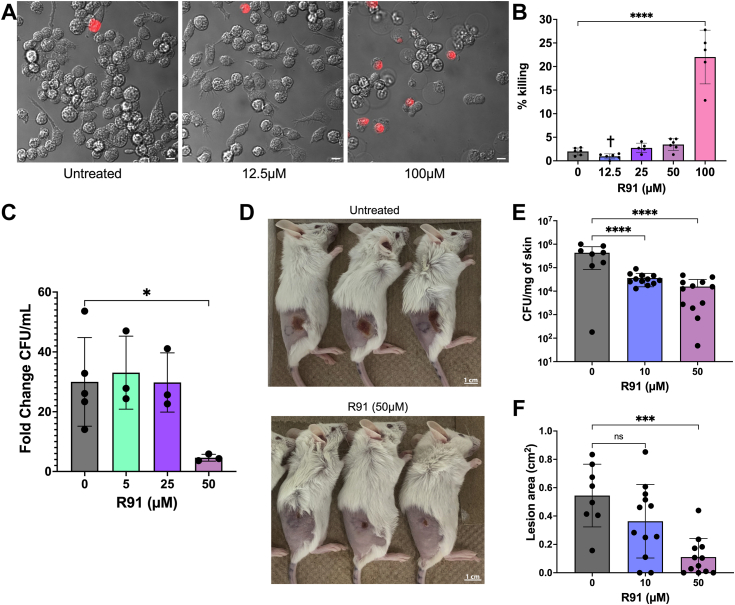
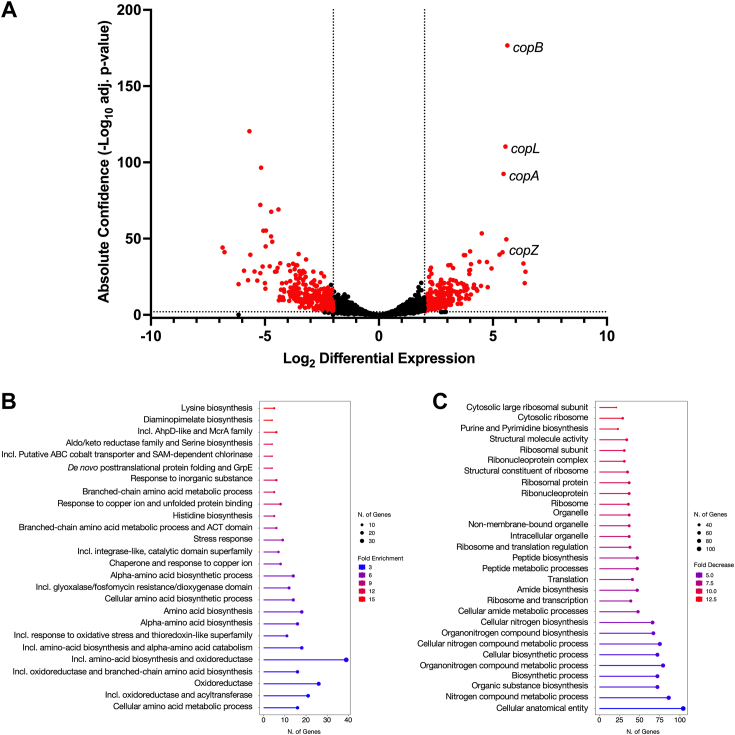
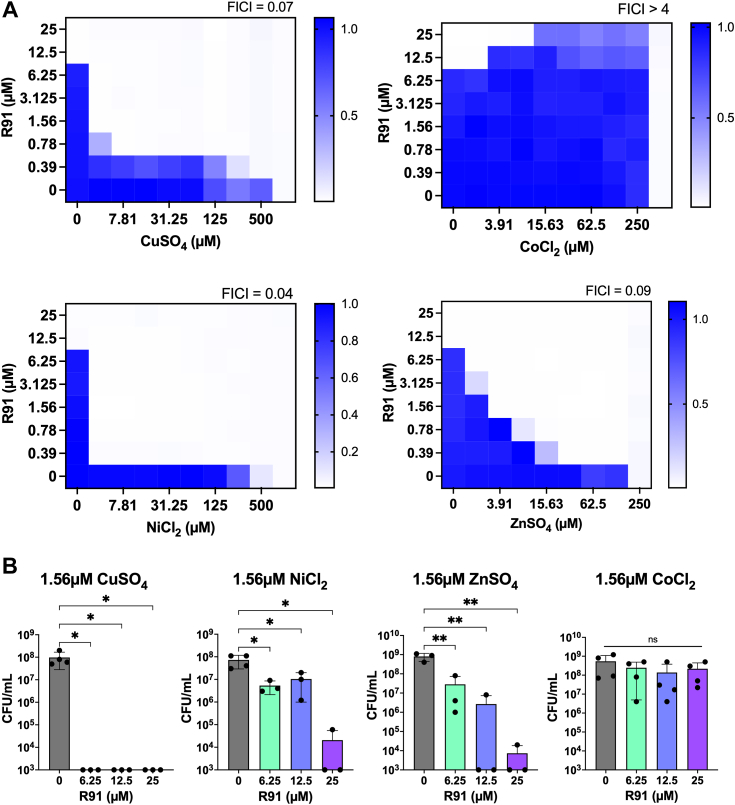
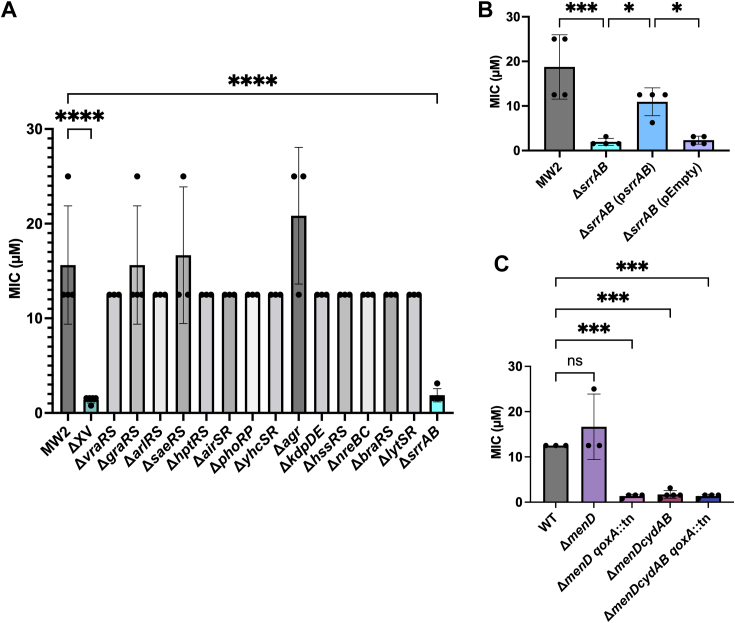
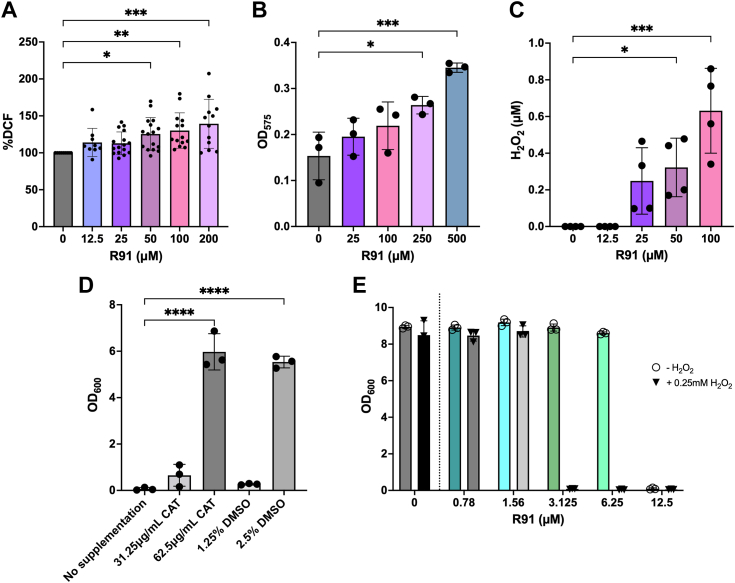
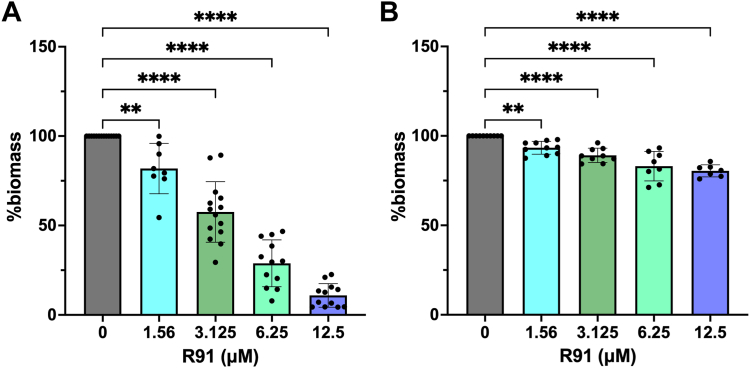
Staphylococcus aureus poses a significant threat in both community and hospital settings due to its infective and pathogenic nature combined with its ability to resist the action of chemotherapeutic agents. Methicillin-resistant S. aureus (MRSA) represents a critical challenge. Metal-chelating thiosemicarbazones (TSCs) have shown promise in combating MRSA and while previous studies hinted at the antimicrobial potential of TSCs, their mechanisms of action against MRSA are still under investigation. We screened a chemical library for anti-staphylococcal compounds and identified a potent molecule named R91 that contained the NNSN structural motif found within TSCs. We identified that R91 and several structural analogs exhibited antimicrobial activity against numerous S. aureus isolates as well as other Gram-positive bacteria. RNAseq analysis revealed that R91 induces copper and oxidative stress responses. Checkerboard assays demonstrated synergy of R91 with copper, nickel, and zinc. Mutation of the SrrAB two-component regulatory system sensitizes S. aureus to R91 killing, further linking the oxidative stress response to R91 resistance. Moreover, R91 was found to induce hydrogen peroxide production, which contributed to its antimicrobial activity. Remarkably, no mutants with elevated R91 resistance were identified, despite extensive attempts. We further demonstrate that R91 can be used to effectively treat an intracellular reservoir of S. aureus in cell culture and can reduce bacterial burdens in a murine skin infection model. Combined, these data position R91 as a potent TSC effective against MRSA and other Gram-positive bacteria, with implications for future therapeutic development.
金黄色葡萄球菌由于其感染性和致病性,以及对化疗药物的抵抗力,在社区和医院环境中都构成了重大威胁。耐甲氧西林金黄色葡萄球菌(MRSA)是一个重大挑战。金属螯合噻唑烷酮(TSC)在对抗 MRSA 方面显示出了潜力,尽管先前的研究暗示了 TSC 的抗菌潜力,但它们对 MRSA 的作用机制仍在研究中。我们从化学文库中筛选出抗葡萄球菌化合物,并鉴定出一种名为 R91 的有效分子,它含有 TSC 中发现的 NNSN 结构基序。我们发现 R91 和几种结构类似物对许多金黄色葡萄球菌分离株以及其他革兰氏阳性菌具有抗菌活性。RNAseq 分析显示 R91 诱导铜和氧化应激反应。棋盘试验表明 R91 与铜、镍和锌具有协同作用。SrrAB 双组分调节系统的突变使金黄色葡萄球菌对 R91 的杀伤作用敏感,进一步将氧化应激反应与 R91 耐药性联系起来。此外,发现 R91 诱导过氧化氢的产生,这有助于其抗菌活性。值得注意的是,尽管进行了广泛的尝试,但没有发现对 R91 耐药性升高的突变体。我们进一步证明,R91 可有效用于治疗细胞培养物中金黄色葡萄球菌的细胞内储存库,并可减少小鼠皮肤感染模型中的细菌负荷。综上所述,这些数据表明 R91 是一种有效的 TSC,可有效对抗 MRSA 和其他革兰氏阳性菌,为未来的治疗开发提供了依据。