Lunenfeld-Tanenbaum Research Institute, Sinai Health, Toronto, Ontario, Canada; Institute of Medical Science, University of Toronto, Toronto, Ontario, Canada.
Lunenfeld-Tanenbaum Research Institute, Sinai Health, Toronto, Ontario, Canada.
J Biol Chem. 2024 Sep;300(9):107686. doi: 10.1016/j.jbc.2024.107686. Epub 2024 Aug 17.
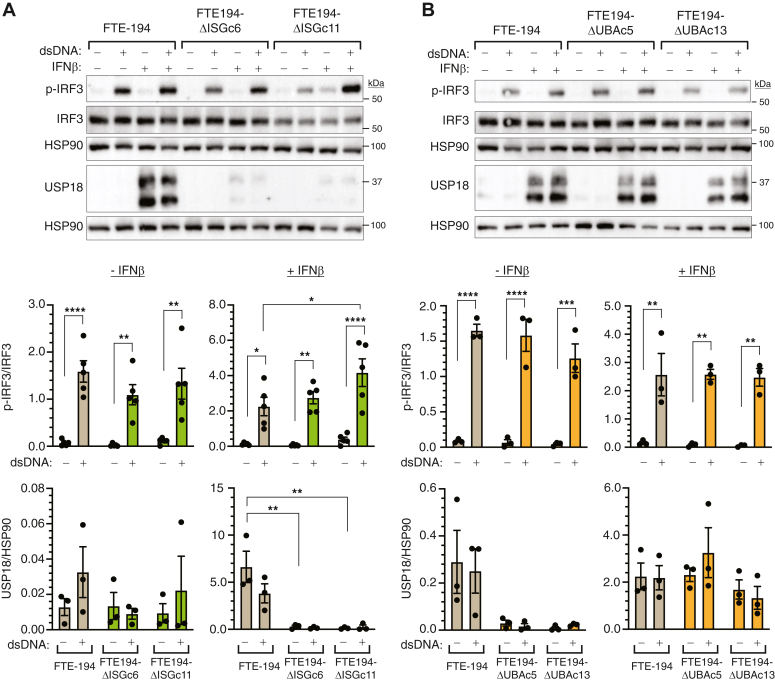
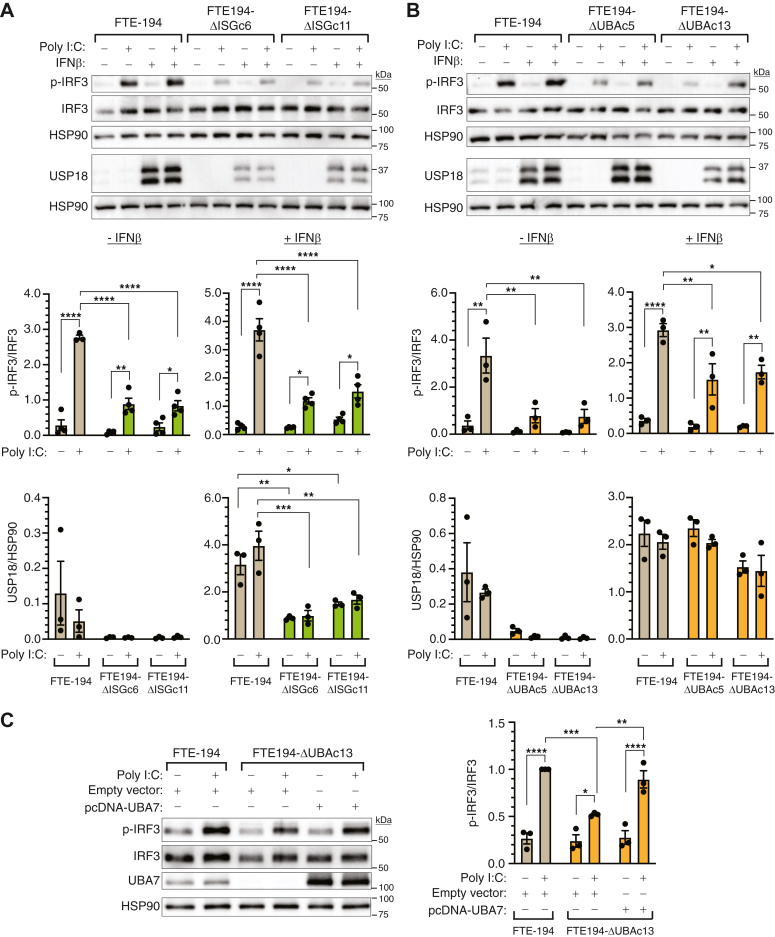
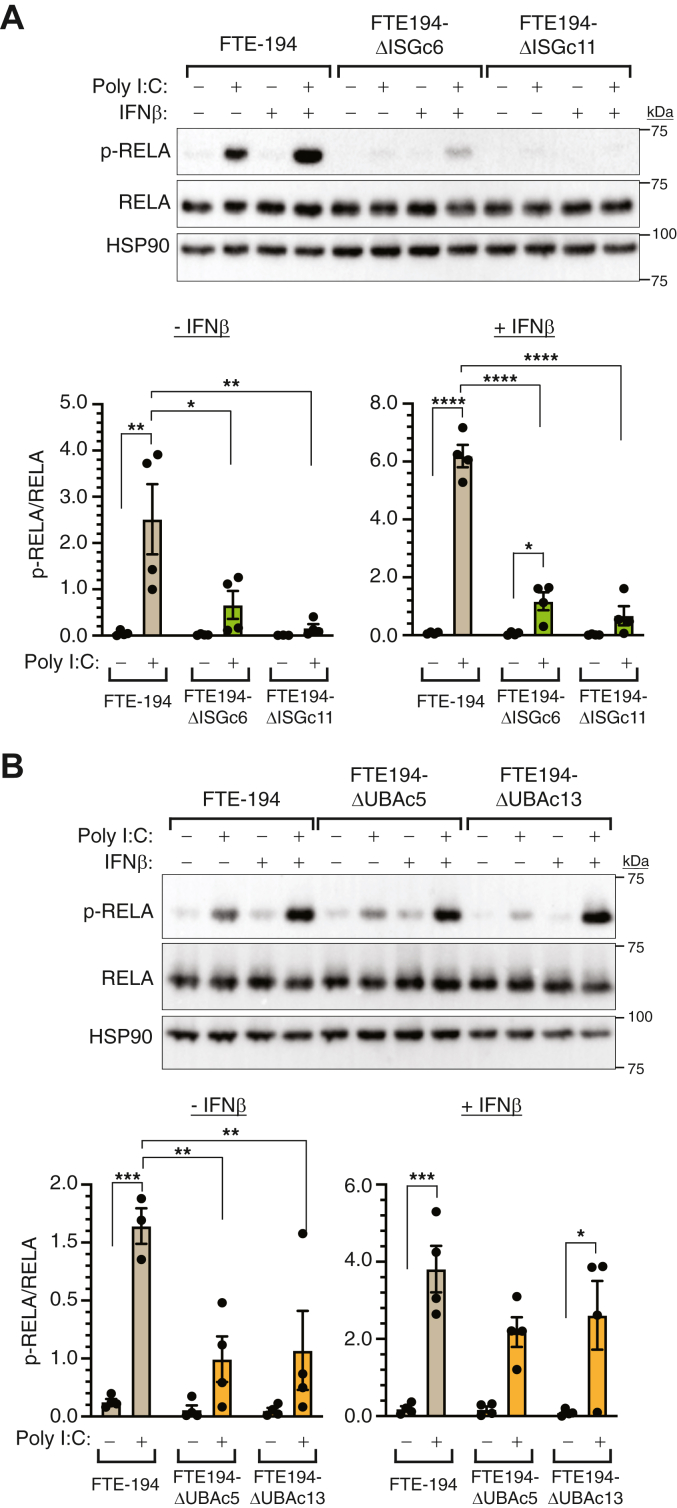
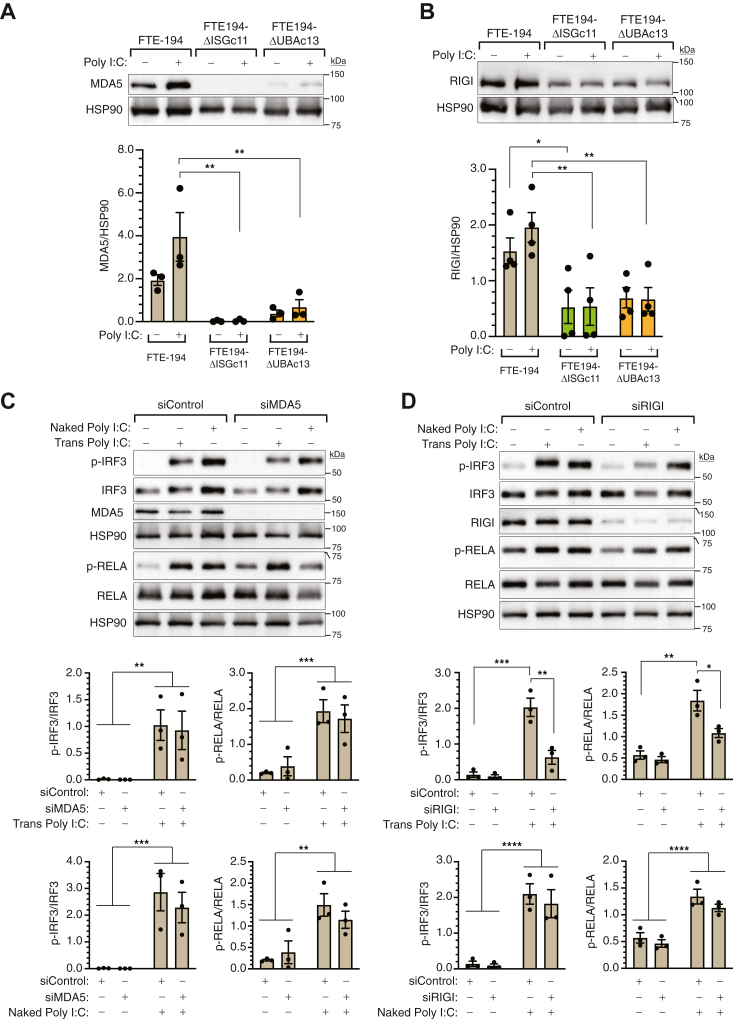
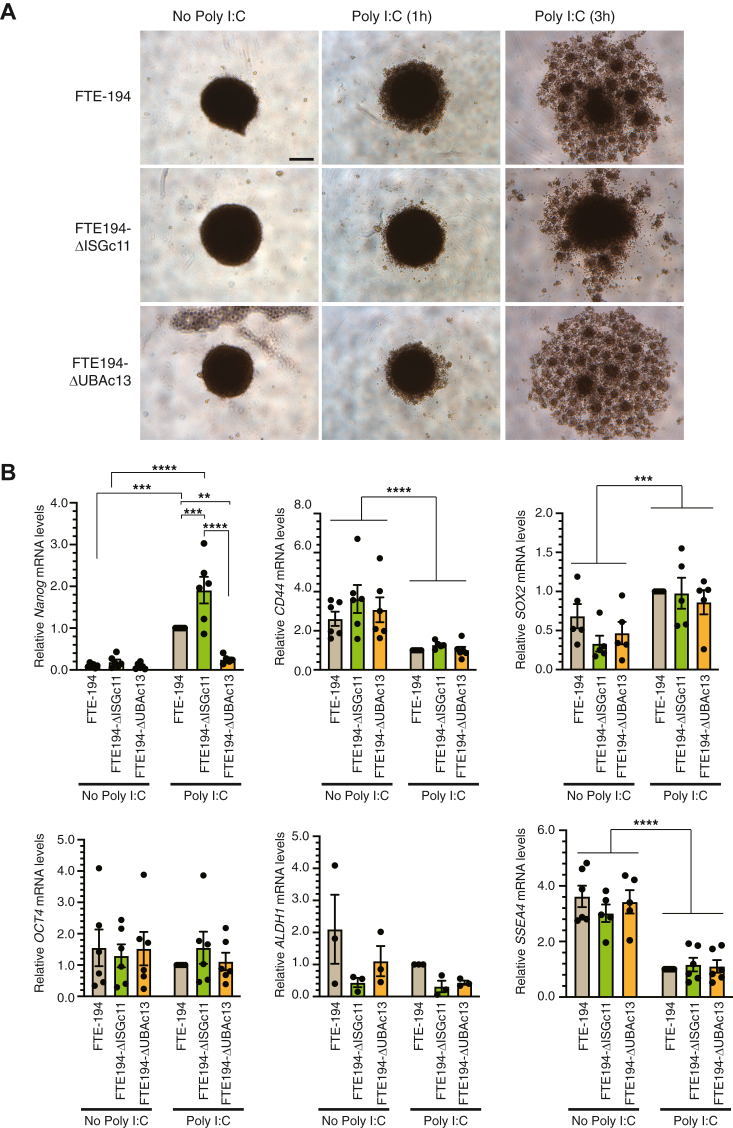
Heritable mutations in BRCA1 associate with increased risk of high-grade serous tubo-ovarian cancer. Nongenetic risk factors associated with this cancer, which arises from fallopian tube epithelial (FTE) cells, suggests a role for repetitive ovulation wherein FTE cells are exposed to inflammatory signaling molecules within follicular fluid. We previously reported increased NFκB and EGFR signaling in BRCA1-deficient primary FTE cells, with follicular fluid exposure further increasing abundance of interferon-stimulated gene (ISG) transcripts, including the ubiquitin-like protein ISG15 and other ISGylation pathway members. Both NFκB and type I interferon signaling are upregulated by stimulation of cGAS-STING or MDA5 and RIGI pattern recognition receptors. Since some pattern recognition receptors and their signal transduction pathway members are ISGylated, we tested the impact of ISG15 and ISGylation on interferon regulatory factor 3 (IRF3) and NFκB signaling through cGAS-STING or RIGI and MDA5 activation. Expression of ISG15 or UBA7, the E1-like ISG15-activating enzyme, in immortalized FTE cells was disrupted by CRISPR gene editing. Activation of IRF3 by RIGI or MDA5 but not cGAS-STING was attenuated by loss of either ISG15 or UBA7 and this was reflected by a similar effect on NFκB activation and downstream targets. Loss of ISGylation decreased levels of both MDA5 and RIGI, with knockdown of RIGI but not MDA5, decreasing IRF3 and NFκB activation in parental cells. These finding indicate that ISGylation enhances the ability of dsRNA to activate cytokine release and proinflammatory signaling. Further work to explore ISGylation as a target for prevention of high-grade serous tubo-ovarian cancer in BRCA1 mutation carriers is warranted.
BRCA1 中的可遗传突变与高级别浆液性输卵管卵巢癌的风险增加有关。与这种源自输卵管上皮(FTE)细胞的癌症相关的非遗传风险因素表明,重复排卵可能发挥了作用,在此过程中,FTE 细胞暴露于卵泡液中的炎症信号分子中。我们之前报道了 BRCA1 缺陷的原发性 FTE 细胞中 NFκB 和 EGFR 信号的增加,卵泡液暴露进一步增加了干扰素刺激基因(ISG)转录本的丰度,包括泛素样蛋白 ISG15 和其他 ISG 化途径成员。cGAS-STING 或 MDA5 和 RIGI 模式识别受体的刺激均可上调 NFκB 和 I 型干扰素信号。由于一些模式识别受体及其信号转导途径成员被 ISG 化,我们通过 cGAS-STING 或 RIGI 和 MDA5 激活来测试 ISG15 和 ISG 化对干扰素调节因子 3(IRF3)和 NFκB 信号的影响。通过 CRISPR 基因编辑破坏永生化 FTE 细胞中 ISG15 或 E1 样 ISG15 激活酶 UBA7 的表达。RIGI 或 MDA5 而非 cGAS-STING 激活的 IRF3 被 ISG15 或 UBA7 的缺失减弱,这反映在 NFκB 激活和下游靶标的类似效应上。ISG 化的丧失降低了 MDA5 和 RIGI 的水平,RIGI 的敲低而非 MDA5 的敲低降低了亲本细胞中 IRF3 和 NFκB 的激活。这些发现表明 ISG 化增强了 dsRNA 激活细胞因子释放和促炎信号的能力。进一步研究 ISG 化作为预防 BRCA1 突变携带者高级别浆液性输卵管卵巢癌的靶点是必要的。