NHC Key Laboratory of Systems Biology of Pathogens, State Key Laboratory of Respiratory Health and Multimorbidity, National Institute of Pathogen Biology and Center for Tuberculosis Research, Chinese Academy of Medical Sciences & Peking Union Medical College, Beijing, 100730, P. R. China.
NHC Key Laboratory of Human Disease Comparative Medicine, and National Center of Technology Innovation for Animal Model, Institute of Laboratory Animal Sciences, Chinese Academy of Medical Sciences & Peking Union Medical College, Beijing, 100021, P. R. China.
Adv Sci (Weinh). 2024 Oct;11(39):e2400176. doi: 10.1002/advs.202400176. Epub 2024 Aug 20.
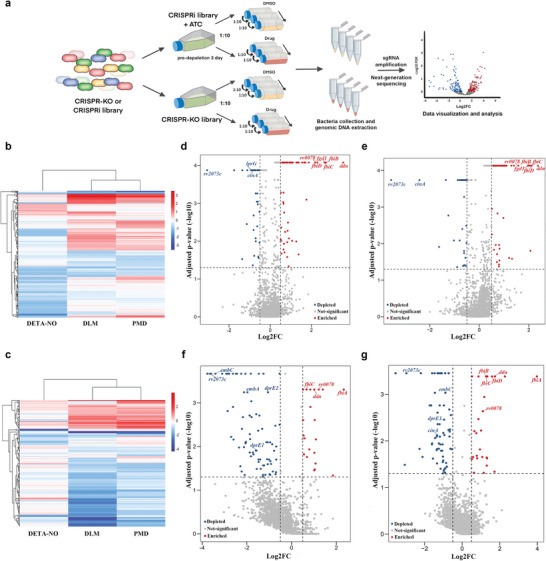
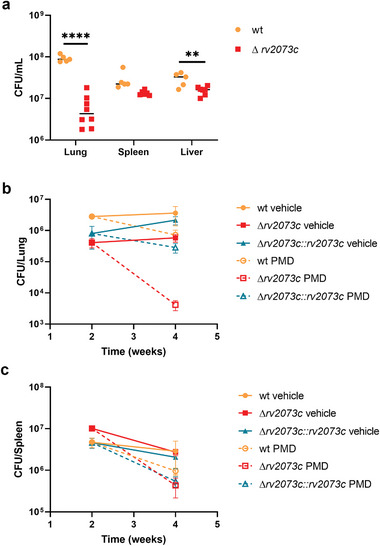
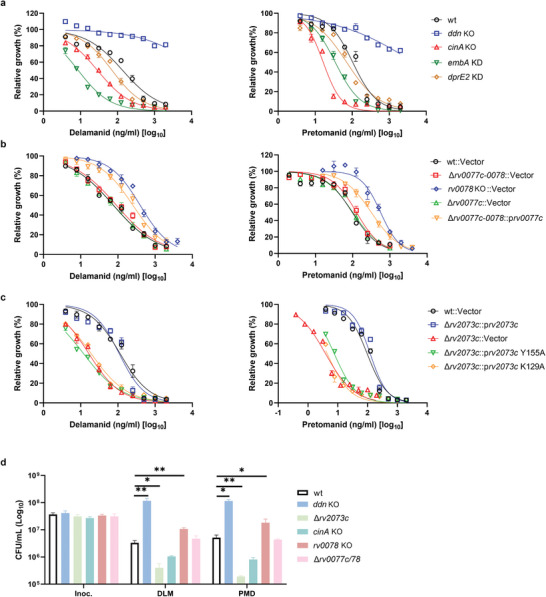
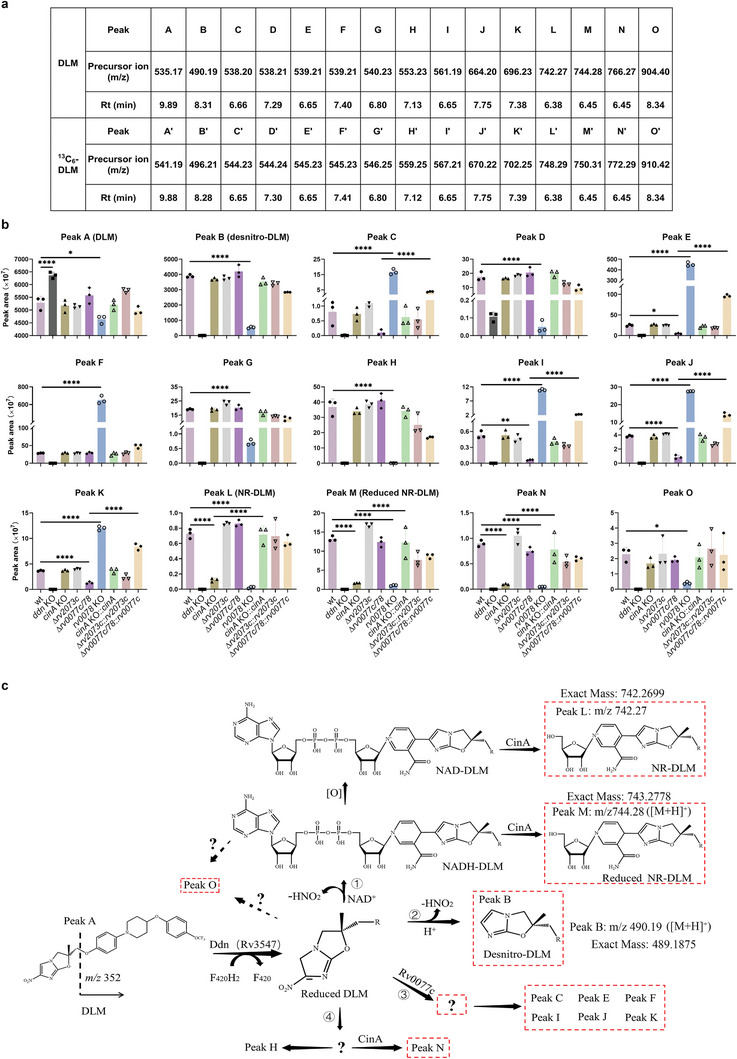
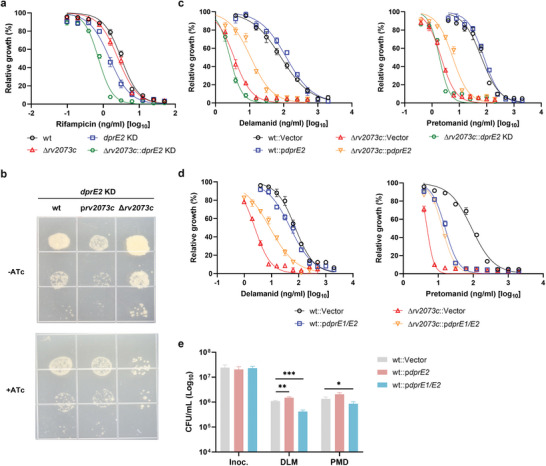
Tuberculosis (TB), the leading cause of death from bacterial infections worldwide, results from infection with Mycobacterium tuberculosis (Mtb). The antitubercular agents delamanid (DLM) and pretomanid (PMD) are nitroimidazole prodrugs that require activation by an enzyme intrinsic to Mtb; however, the mechanism(s) of action and the associated metabolic pathways are largely unclear. Profiling of the chemical-genetic interactions of PMD and DLM in Mtb using combined CRISPR screening reveals that the mutation of rv2073c increases susceptibility of Mtb to these nitroimidazole drugs both in vitro and in infected mice, whereas mutation of rv0078 increases drug resistance. Further assays show that Rv2073c might confer intrinsic resistance to DLM/PMD by interfering with inhibition of the drug target, decaprenylphophoryl-2-keto-b-D-erythro-pentose reductase (DprE2), by active nicotinamide adenine dinucleotide (NAD) adducts. Characterization of the metabolic pathways of DLM/PMD in Mtb using a combination of chemical genetics and comparative liquid chromatography-mass spectrometry (LC-MS) analysis of DLM/PMD metabolites reveals that Rv0077c, which is negatively regulated by Rv0078, mediates drug resistance by metabolizing activated DLM/PMD. These results might guide development of new nitroimidazole prodrugs and new regimens for TB treatment.
结核病(TB)是全球细菌性感染导致死亡的主要原因,由结核分枝杆菌(Mtb)感染引起。抗结核药物德拉马尼(DLM)和普托马尼(PMD)是硝基咪唑前药,需要由 Mtb 内在的酶激活;然而,其作用机制和相关代谢途径在很大程度上尚不清楚。使用组合 CRISPR 筛选对 PMD 和 DLM 在 Mtb 中的化学遗传相互作用进行分析,结果表明,rv2073c 的突变增加了 Mtb 对这些硝基咪唑类药物的体外和感染小鼠的敏感性,而 rv0078 的突变则增加了药物的耐药性。进一步的实验表明,Rv2073c 可能通过干扰药物靶点的抑制来赋予 DLM/PMD 内在的耐药性,该靶点是脱磷酸烯醇丙酮酰基-2-酮-β-D-赤藓糖还原酶(DprE2),通过活性烟酰胺腺嘌呤二核苷酸(NAD)加合物。使用化学遗传学和 DLM/PMD 代谢物的比较液相色谱-质谱(LC-MS)分析相结合,对 DLM/PMD 在 Mtb 中的代谢途径进行了表征,结果表明,Rv0077c 通过代谢激活的 DLM/PMD 介导耐药性,该基因受 Rv0078 的负调控。这些结果可能为新型硝基咪唑前药和新的结核病治疗方案的开发提供指导。