Zhang Dongxu, Wu Hongchao, Jiang Fangfang, Shi Zejin, Wu Chengxi
College of Energy, Chengdu University of Technology, Chengdu, 610059, Sichuan, China.
Chengdu University of Technology Geological Resources and Geological Engineering Postdoctoral Research Station, Chengdu, 610059, Sichuan, China.
Sci Rep. 2024 Aug 20;14(1):19238. doi: 10.1038/s41598-024-70086-2.
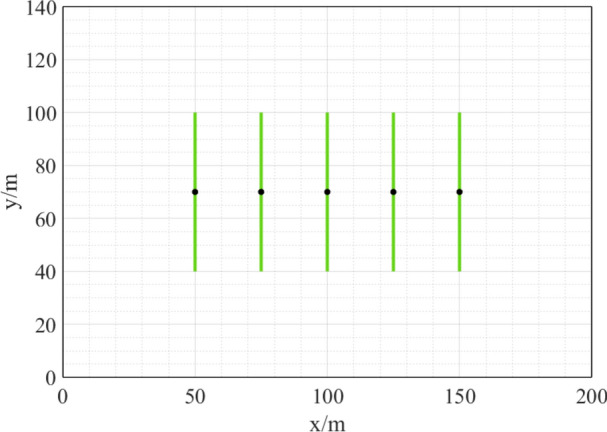
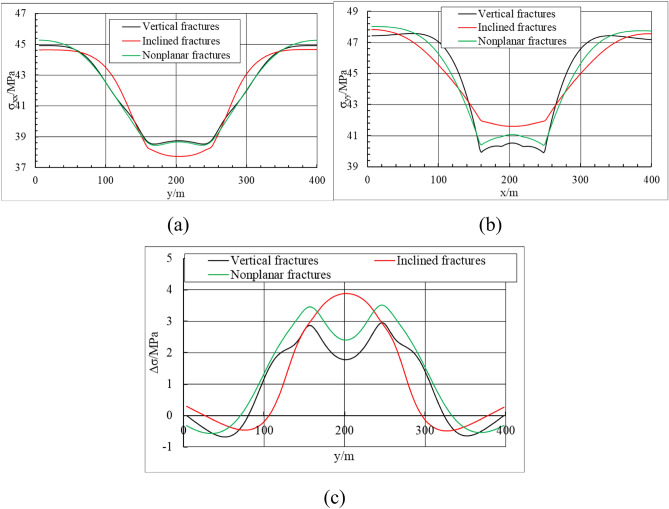
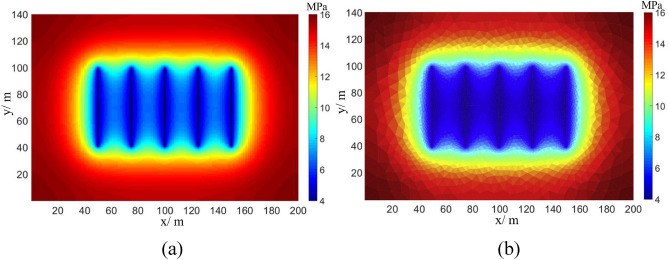
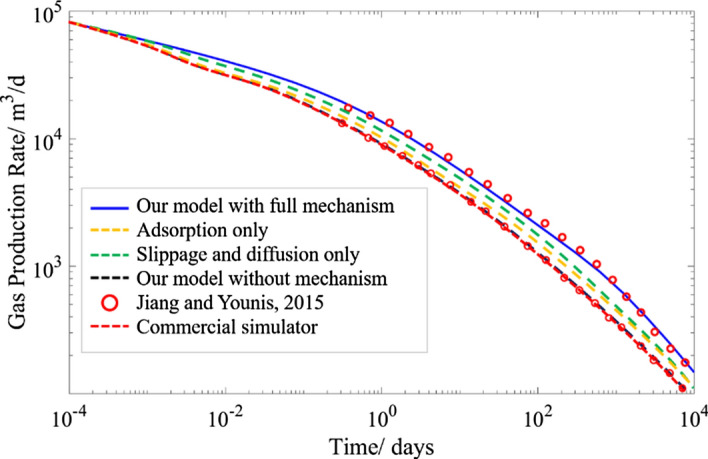
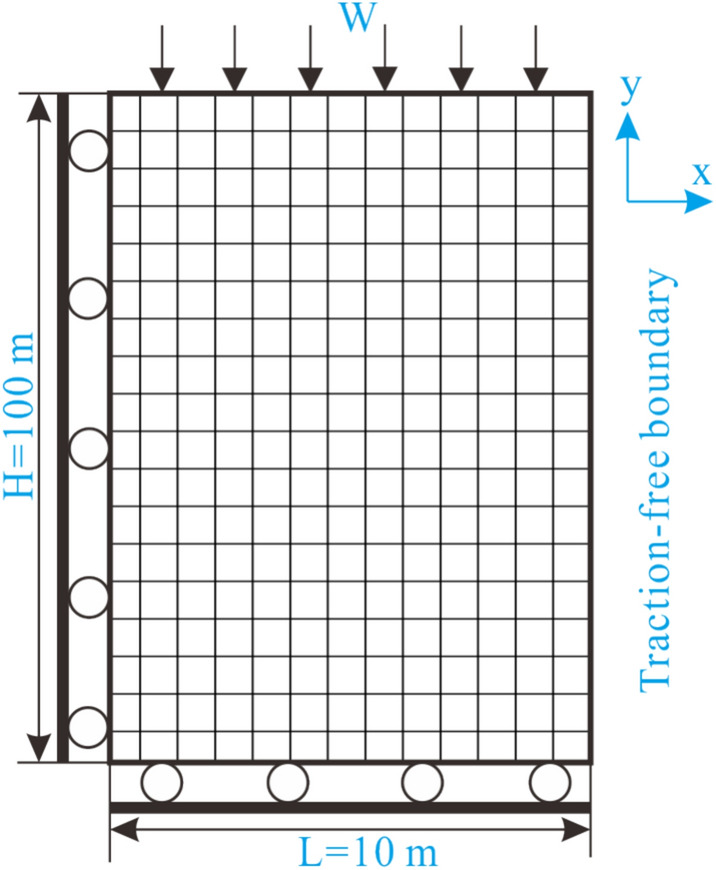
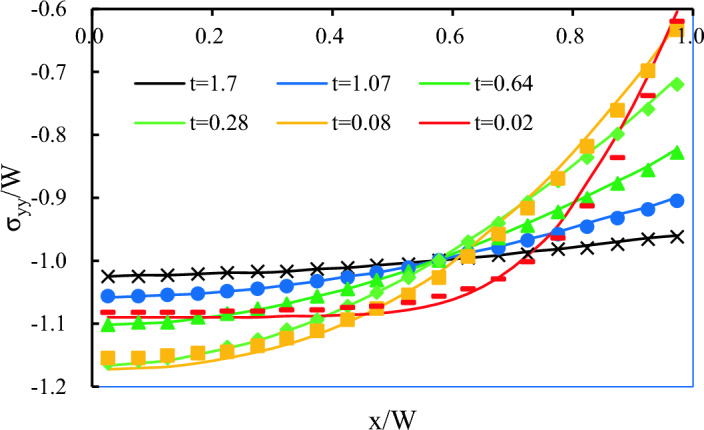
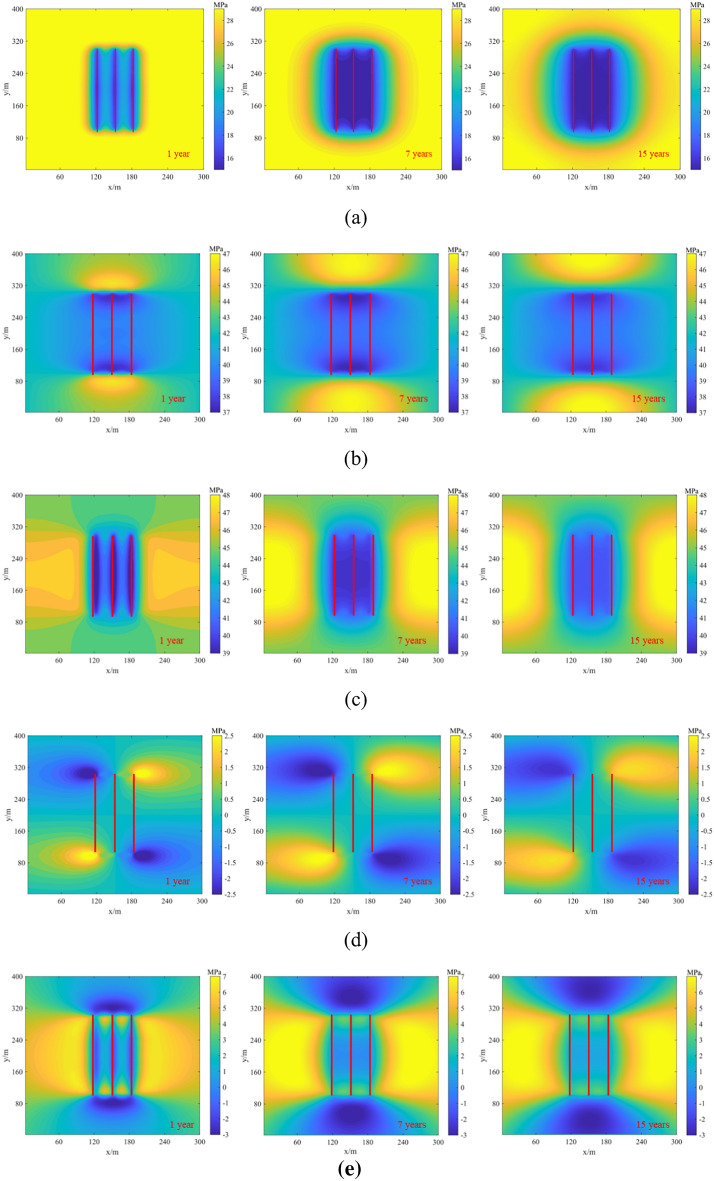
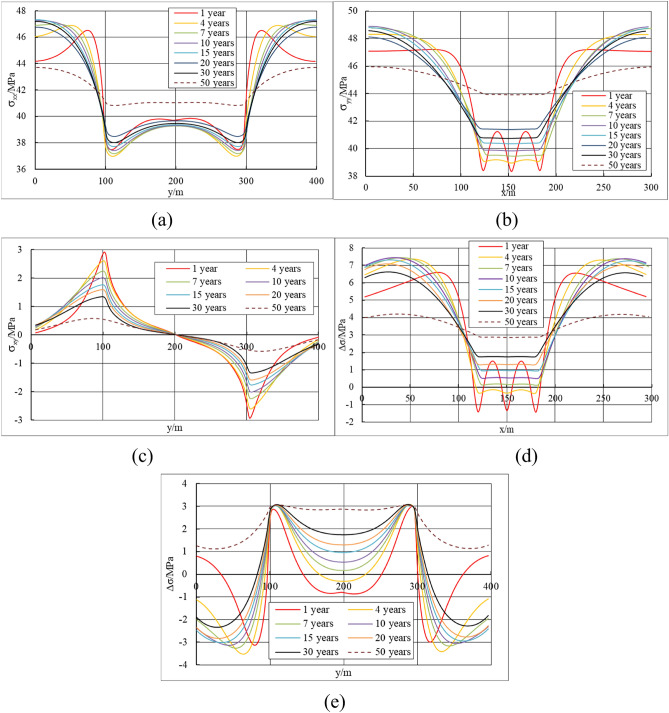
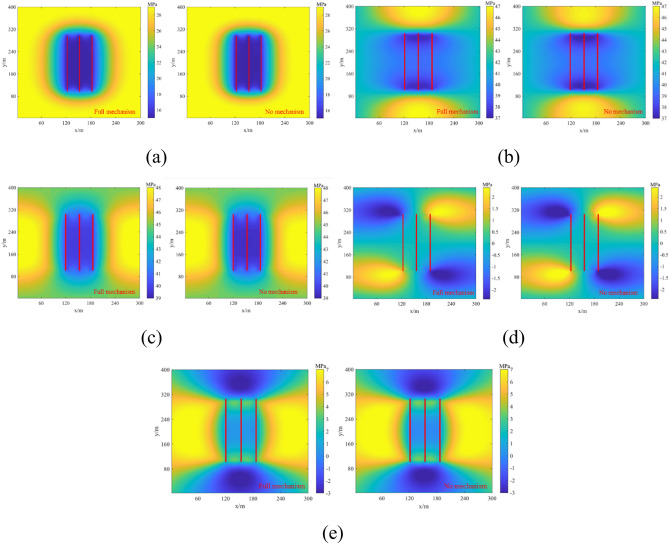
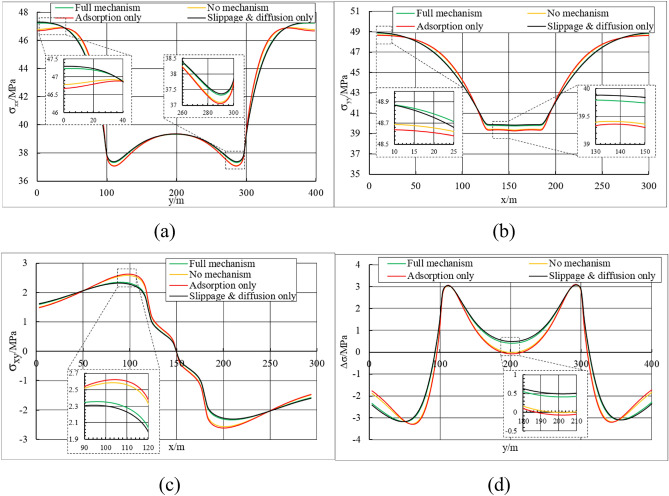
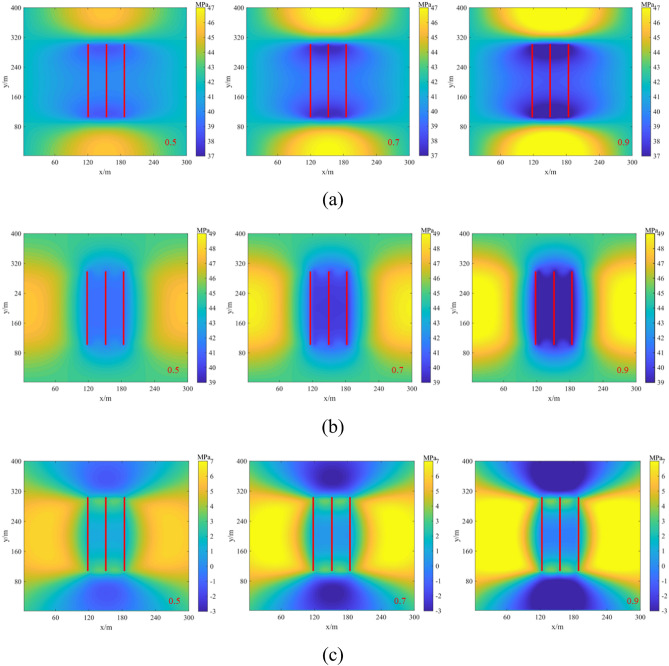
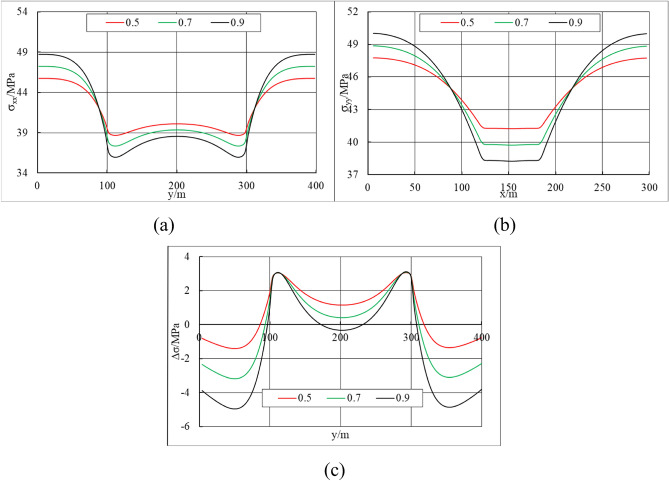
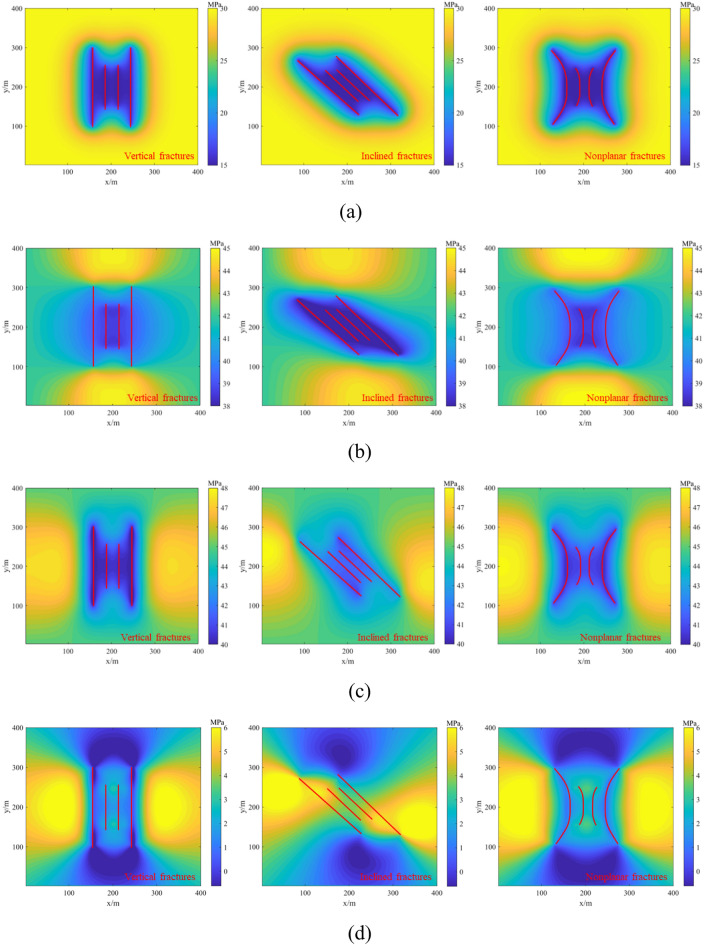
Field observations frequently demonstrate stress fluctuations resulting from the reservoir depletion. The development of reservoirs, particularly the completion of infill wells and refracturing, can be significantly impacted by stress changes in and around drainage areas. Previous studies mainly focus on plane fractures and few studies consider the influence of complex transport and storage mechanism and irregular fracture geometry on stress evolution in shale gas reservoirs. Based on the embedded discrete fracture model (EDFM) and finite-volume method (FVM), a coupled geomechanics/fluid model has been successfully developed considering the adsorption, desorption, diffusion and slippage of shale gas. This model achieves coupling simulation of natural fractures, hydraulic fractures with complex geometry, storage and transport mechanism, reservoir stress, and pore-elastic effect. The open-source software OpenFOAM is used as the main solver for this model. The stress calculation and productivity simulation of the model are verified by the classical poroelasticity problem and the simulation results of published research and commercial simulator with EDFM respectively. The simulation results indicate that σ, σ, σ and Δσ changes with time and space due to the time effect and anisotropy of formation pressure depletion; Due to the influence of different mechanisms on shale gas storage and transport, the reservoir pressure and stress distribution under different mechanisms are different; Among them, the stress with full mechanisms differs the most compared to the stress without any mechanism. The reservoir with stronger stress sensitivity (smaller Biot coefficient) is less sensitive to formation pressure depletion, and the stress variation range is smaller. For reservoirs with weak stress sensitivity, formation pressure depletion is more likely to lead to stress reversal. Under the influence of fracture geometry, the pressure depletion regions caused by the three types of fracture geometry are approximately rectangular, parallelogram and square, respectively. The corresponding σ, σ and Δσ also have great differences in spatial distribution and values. Therefore, the time effect, shale gas storage and transport mechanism and the influence of complex fracture geometry should be considered when predicting pressure depletion induced stress under the condition of simultaneous production. This study is of great significance for understanding the evolution law of stress induced by pressure consumption, as well as the design of infill wells and repeated fracturing.
现场观测经常表明油藏衰竭会导致应力波动。油藏的开发,尤其是加密井的完井和重复压裂,会受到排水区域及其周边应力变化的显著影响。以往的研究主要集中在平面裂缝,很少有研究考虑复杂的运移和储存机制以及不规则裂缝几何形状对页岩气藏应力演化的影响。基于嵌入式离散裂缝模型(EDFM)和有限体积法(FVM),成功开发了一个考虑页岩气吸附、解吸、扩散和滑脱的地质力学/流体耦合模型。该模型实现了天然裂缝、复杂几何形状的水力裂缝、储存和运移机制、油藏应力以及孔隙弹性效应的耦合模拟。开源软件OpenFOAM被用作该模型的主要求解器。该模型的应力计算和产能模拟分别通过经典的多孔弹性问题以及已发表研究和具有EDFM的商业模拟器的模拟结果进行了验证。模拟结果表明,由于地层压力衰竭的时间效应和各向异性,σ、σ、σ和Δσ随时间和空间变化;由于不同机制对页岩气运移和储存的影响,不同机制下的油藏压力和应力分布不同;其中,考虑所有机制的应力与不考虑任何机制的应力相比差异最大。应力敏感性较强(毕奥系数较小)的油藏对地层压力衰竭不太敏感,应力变化范围较小。对于应力敏感性较弱的油藏,地层压力衰竭更有可能导致应力反转。在裂缝几何形状的影响下,三种裂缝几何形状导致的压力衰竭区域分别近似为矩形、平行四边形和正方形。相应的σ、σ和Δσ在空间分布和数值上也有很大差异。因此,在同时生产条件下预测压力衰竭诱导应力时,应考虑时间效应、页岩气运移和储存机制以及复杂裂缝几何形状的影响。本研究对于理解压力消耗引起的应力演化规律以及加密井和重复压裂设计具有重要意义。