• 文献检索
  • 文档翻译
  • 深度研究
  • 学术资讯
  • Suppr Zotero 插件Zotero 插件
  • 邀请有礼
  • 套餐&价格
  • 历史记录
应用&插件
Suppr Zotero 插件Zotero 插件浏览器插件Mac 客户端Windows 客户端微信小程序
定价
高级版会员购买积分包购买API积分包
服务
文献检索文档翻译深度研究API 文档MCP 服务
关于我们
关于 Suppr公司介绍联系我们用户协议隐私条款
关注我们

Suppr 超能文献

核心技术专利:CN118964589B侵权必究
粤ICP备2023148730 号-1Suppr @ 2026

文献检索

告别复杂PubMed语法,用中文像聊天一样搜索,搜遍4000万医学文献。AI智能推荐,让科研检索更轻松。

立即免费搜索

文件翻译

保留排版,准确专业,支持PDF/Word/PPT等文件格式,支持 12+语言互译。

免费翻译文档

深度研究

AI帮你快速写综述,25分钟生成高质量综述,智能提取关键信息,辅助科研写作。

立即免费体验

缩小差距:在持续的疫情时代解决各专业远程医疗的差异问题。

Closing the gap: addressing telehealth disparities across specialties in the sustained pandemic era.

作者信息

Amagai Saki, Vonesh Edward, Adams James, Luo Yuan

机构信息

Department of Preventive Medicine, Northwestern University Feinberg School of Medicine, Chicago, IL, USA.

Department of Emergency Medicine, Northwestern University Feinberg School of Medicine, Chicago, IL, USA.

出版信息

NPJ Digit Med. 2024 Aug 21;7(1):217. doi: 10.1038/s41746-024-01201-w.

DOI:10.1038/s41746-024-01201-w
PMID:39164391
原文链接:https://pmc.ncbi.nlm.nih.gov/articles/PMC11335954/
Abstract

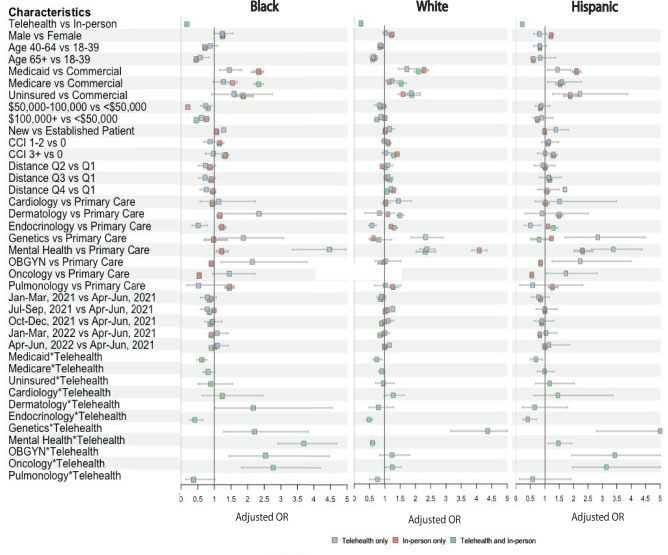
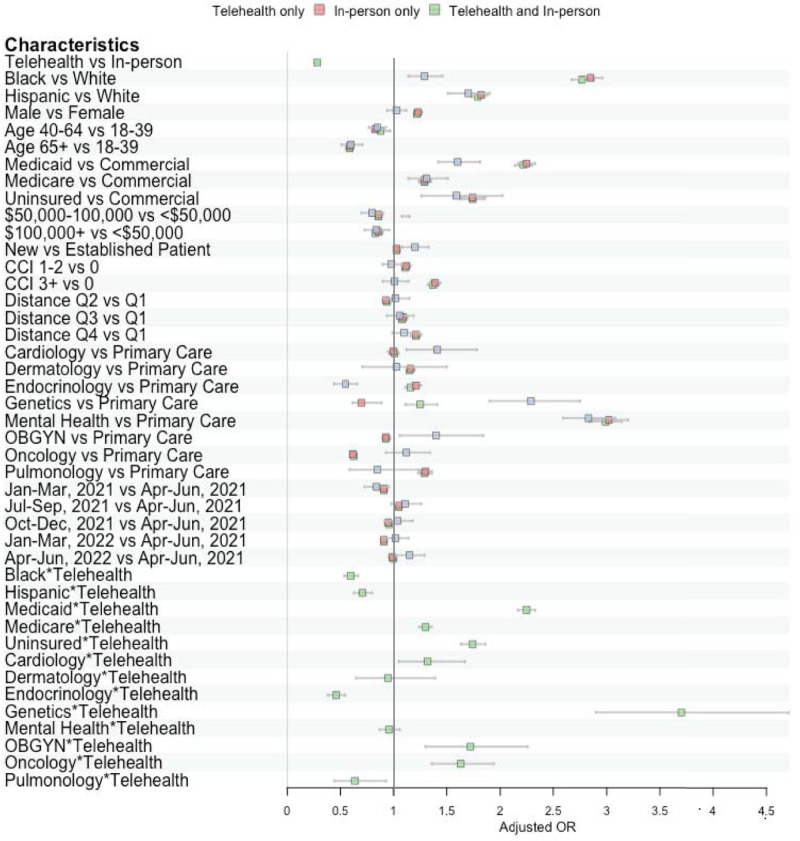
Missed appointments, or no-shows, disrupt healthcare delivery, exacerbating chronic disease management and leading to worse health outcomes. Telehealth has surged as a viable solution to reduce no-shows and improve healthcare accessibility, especially during the COVID-19 pandemic. However, telehealth disparities and its long-term efficacy across various medical specialties remain understudied. To address this, we performed a retrospective analysis of electronic health records from a heterogenous network of hospitals in Illinois, examining telehealth use and no-shows across among 444,752 adult patients with 1,973,098 outpatient encounters across nine specialties during the sustained pandemic phase (i.e., January 1, 2021 to July 1, 2022). Among them, 84,290 (4.27%) were no-shows, and telehealth constituted 202,933 (10.3%) of the total encounters. Telehealth use during the sustained phase varied significantly by specialty type. Overall, telehealth encounters were associated with reduced no-show odds compared to in-person encounters (OR, 0.28; 95% CI, 0.26-0.29). Black and Hispanic patients, as well as those with Medicaid, had higher no-show odds relative to their counterparts, even when using telehealth. Mental health specialty had the highest telehealth usage rate and the highest no-show odds (OR, 2.99; 95% CI, 2.84-3.14) relative to other specialties included in the study. Moreover, specialty type had differential effects on no-shows for telehealth. These results underscore the variability in telehealth use by specialty type and pervasive disparities telehealth use and no-shows. As we move beyond the pandemic, our findings can inform policymakers to tailor policies and incentives to reach different patient groups as well as specialties, with varying needs, to promote equitable telehealth utilization.

摘要

失约,即未按时赴约,会扰乱医疗服务的提供,加剧慢性病管理问题,并导致更差的健康结果。远程医疗作为一种可行的解决方案迅速兴起,以减少失约情况并提高医疗服务的可及性,尤其是在新冠疫情期间。然而,远程医疗的差异及其在各个医学专科中的长期疗效仍未得到充分研究。为了解决这个问题,我们对伊利诺伊州一个异质医院网络的电子健康记录进行了回顾性分析,研究了在持续疫情阶段(即2021年1月1日至2022年7月1日)444,752名成年患者的1,973,098次门诊就诊中远程医疗的使用情况和失约情况。其中,84,290人(4.27%)失约,远程医疗占总就诊次数的202,933次(10.3%)。在持续阶段,远程医疗的使用因专科类型而异。总体而言,与面对面就诊相比,远程医疗就诊与较低的失约几率相关(比值比,0.28;95%置信区间,0.26 - 0.29)。黑人、西班牙裔患者以及医疗补助患者,即使在使用远程医疗时,其失约几率也高于相应的对照组。与研究中纳入的其他专科相比,精神科专科的远程医疗使用率最高,失约几率也最高(比值比,2.99;95%置信区间,2.84 - 3.14)。此外,专科类型对远程医疗的失约情况有不同影响。这些结果强调了远程医疗使用因专科类型而异的变异性,以及远程医疗使用和失约情况中普遍存在的差异。随着我们度过疫情,我们的研究结果可为政策制定者提供参考,以便制定政策和激励措施,针对不同需求的不同患者群体以及专科,促进公平的远程医疗利用。

https://cdn.ncbi.nlm.nih.gov/pmc/blobs/40ba/11335954/d57fbd390fba/41746_2024_1201_Fig4_HTML.jpg
https://cdn.ncbi.nlm.nih.gov/pmc/blobs/40ba/11335954/d0fc98ed616e/41746_2024_1201_Fig1_HTML.jpg
https://cdn.ncbi.nlm.nih.gov/pmc/blobs/40ba/11335954/93bfc2ef6dbf/41746_2024_1201_Fig2_HTML.jpg
https://cdn.ncbi.nlm.nih.gov/pmc/blobs/40ba/11335954/86193e094ab0/41746_2024_1201_Fig3_HTML.jpg
https://cdn.ncbi.nlm.nih.gov/pmc/blobs/40ba/11335954/d57fbd390fba/41746_2024_1201_Fig4_HTML.jpg
https://cdn.ncbi.nlm.nih.gov/pmc/blobs/40ba/11335954/d0fc98ed616e/41746_2024_1201_Fig1_HTML.jpg
https://cdn.ncbi.nlm.nih.gov/pmc/blobs/40ba/11335954/93bfc2ef6dbf/41746_2024_1201_Fig2_HTML.jpg
https://cdn.ncbi.nlm.nih.gov/pmc/blobs/40ba/11335954/86193e094ab0/41746_2024_1201_Fig3_HTML.jpg
https://cdn.ncbi.nlm.nih.gov/pmc/blobs/40ba/11335954/d57fbd390fba/41746_2024_1201_Fig4_HTML.jpg

相似文献

1
Closing the gap: addressing telehealth disparities across specialties in the sustained pandemic era.缩小差距:在持续的疫情时代解决各专业远程医疗的差异问题。
NPJ Digit Med. 2024 Aug 21;7(1):217. doi: 10.1038/s41746-024-01201-w.
2
AcademyHealth Annual Research Meeting (ARM): A Selection of Abstracts Accepted for Oral Presentation, 2021.美国卫生学会年度研究会议(ARM):2021年入选口头报告的摘要选集
Health Serv Res. 2021 Sep;56 Suppl 2(Suppl 2):5-91. doi: 10.1111/1475-6773.13717.
3
The Evolution of Primary Care Telehealth Disparities During COVID-19: Retrospective Cohort Study.《COVID-19 期间初级保健远程医疗差距的演变:回顾性队列研究》
J Med Internet Res. 2023 May 17;25:e43965. doi: 10.2196/43965.
4
Use of Telehealth Across Pediatric Subspecialties Before and During the COVID-19 Pandemic.儿科各亚专业在新冠疫情前后的远程医疗使用情况。
JAMA Netw Open. 2022 Mar 1;5(3):e224759. doi: 10.1001/jamanetworkopen.2022.4759.
5
Perceptions and Use of Telehealth Among Mental Health, Primary, and Specialty Care Clinicians During the COVID-19 Pandemic.新冠疫情期间精神科、初级保健和专科保健临床医生对远程医疗的认知和使用情况。
JAMA Netw Open. 2022 Jun 1;5(6):e2216401. doi: 10.1001/jamanetworkopen.2022.16401.
6
Use of Telehealth by Surgical Specialties During the COVID-19 Pandemic.外科专业在 COVID-19 大流行期间使用远程医疗。
JAMA Surg. 2021 Jul 1;156(7):620-626. doi: 10.1001/jamasurg.2021.0979.
7
Pain Care Disparities and the Use of Virtual Care Among Racial-Ethnic Minority Groups During COVID-19.新冠疫情期间种族少数群体的疼痛护理差异与虚拟护理的使用情况
J Gen Intern Med. 2024 Feb;39(Suppl 1):68-78. doi: 10.1007/s11606-023-08473-0. Epub 2024 Jan 22.
8
Multispecialty Synchronous Telehealth Utilization and Patient Satisfaction Within Regional Health Command Europe: A Readiness and Recapture System for Health.欧洲地区卫生司令部内多专科同步远程医疗的应用与患者满意度:一种健康准备与恢复系统
Mil Med. 2017 Jul;182(7):e1693-e1697. doi: 10.7205/MILMED-D-16-00368.
9
Overall and Telehealth Addiction Treatment Utilization by Age, Race, Ethnicity, and Socioeconomic Status in California After COVID-19 Policy Changes.加利福尼亚州在 COVID-19 政策变化后,按年龄、种族、族裔和社会经济地位划分的总体和远程医疗成瘾治疗利用率。
JAMA Health Forum. 2023 May 5;4(5):e231018. doi: 10.1001/jamahealthforum.2023.1018.
10
Patient Satisfaction with Care Providers During the COVID-19 Pandemic: An Analysis of Consumer Assessment of Healthcare Providers and Systems Survey Scores for In-Person and Telehealth Encounters at an Academic Medical Center.新冠疫情期间患者对医疗服务提供者的满意度:对某学术医疗中心面对面就诊和远程医疗服务的医疗服务提供者及系统消费者评估调查分数的分析
Telemed J E Health. 2023 Aug;29(8):1114-1126. doi: 10.1089/tmj.2022.0460. Epub 2023 Jan 3.

引用本文的文献

1
Telehealth Use in Medicaid: Implications for Quality Care for Individuals With ADHD and Tourette Syndrome.医疗补助计划中的远程医疗使用:对注意力缺陷多动障碍和抽动秽语综合征患者优质护理的影响
Public Health Rep. 2025 Aug 17:333549251357825. doi: 10.1177/00333549251357825.
2
Video-based telemedicine utilization patterns and associated factors among racial and ethnic minorities in the United States during the COVID-19 pandemic: A mixed-methods scoping review.COVID-19大流行期间美国种族和少数民族基于视频的远程医疗使用模式及相关因素:一项混合方法的范围综述
PLOS Digit Health. 2025 Jul 24;4(7):e0000952. doi: 10.1371/journal.pdig.0000952. eCollection 2025 Jul.
3

本文引用的文献

1
Association Between Telehealth and Missed Appointments Among Patients Experiencing Behavioral Health Challenges.远程医疗与面临行为健康挑战患者的预约失约之间的关联。
JAMA Netw Open. 2023 Jul 3;6(7):e2324252. doi: 10.1001/jamanetworkopen.2023.24252.
2
Telehealth Usage Among Low-Income Racial and Ethnic Minority Populations During the COVID-19 Pandemic: Retrospective Observational Study.新冠疫情期间低收入少数族裔人群的远程医疗使用情况:回顾性观察研究。
J Med Internet Res. 2023 May 12;25:e43604. doi: 10.2196/43604.
3
The Evolution of Primary Care Telehealth Disparities During COVID-19: Retrospective Cohort Study.
Machine Learning-Based Prediction of No-Show Telemedicine Encounters.
基于机器学习的远程医疗爽约预测
Telemed Rep. 2025 Apr 7;6(1):109-119. doi: 10.1089/tmr.2025.0009. eCollection 2025.
4
No-Show Rates in a Cardiology Clinic During the COVID-19 Pandemic: A Retrospective Analysis From a Safety-Net Hospital.新冠疫情期间心脏病诊所的失约率:来自一家安全网医院的回顾性分析
Cureus. 2025 Mar 20;17(3):e80897. doi: 10.7759/cureus.80897. eCollection 2025 Mar.
5
The urgency of centering safety-net organizations in AI governance.将安全网组织置于人工智能治理核心的紧迫性。
NPJ Digit Med. 2025 Feb 21;8(1):117. doi: 10.1038/s41746-025-01479-4.
6
Telemedicine expands cardiovascular care in China - lessons for health equity in the United States.远程医疗在中国拓展心血管护理——对美国健康公平性的启示
NPJ Digit Med. 2025 Jan 30;8(1):71. doi: 10.1038/s41746-025-01474-9.
7
Implementation of a Dedicated Intake Team Reduces Time to Massed PTSD Treatment.实施专门的接诊团队可缩短至集体创伤后应激障碍治疗的时间。
J Behav Health Serv Res. 2025 Apr;52(2):342-356. doi: 10.1007/s11414-024-09920-4. Epub 2024 Dec 17.
《COVID-19 期间初级保健远程医疗差距的演变:回顾性队列研究》
J Med Internet Res. 2023 May 17;25:e43965. doi: 10.2196/43965.
4
Telemedicine is associated with reduced socioeconomic disparities in outpatient clinic no-show rates.远程医疗与降低门诊未就诊率方面的社会经济差异相关。
J Telemed Telecare. 2024 Oct;30(9):1507-1515. doi: 10.1177/1357633X231154945. Epub 2023 Mar 27.
5
Telehealth as a Tool to Improve Access and Reduce No-Show Rates in a Large Safety-Net Population in the USA.远程医疗作为一种工具,可改善美国大型医疗保障人群的就诊机会并降低爽约率。
J Urban Health. 2023 Apr;100(2):398-407. doi: 10.1007/s11524-023-00721-2. Epub 2023 Mar 8.
6
Appointment Non-attendance for Telehealth Versus In-Person Primary Care Visits at a Large Public Healthcare System.远程医疗与大型公立医疗系统中面对面初级保健就诊的预约失访比较。
J Gen Intern Med. 2023 Mar;38(4):922-928. doi: 10.1007/s11606-022-07814-9. Epub 2022 Oct 11.
7
Seeing the Value of Video: A Qualitative Study on Patient Preference for Using Video in a Veteran Affairs Telemental Health Program Evaluation.审视视频的价值:一项关于退伍军人事务远程心理健康项目评估中患者对使用视频的偏好的定性研究。
Telemed Rep. 2021 May 31;2(1):156-162. doi: 10.1089/tmr.2021.0005. eCollection 2021.
8
Increasing Telehealth Visits for Older Veterans Associated with Decreased No-Show Rate in a Geriatrics Consultation Clinic.老年退伍军人远程医疗就诊增加与老年病咨询诊所未就诊率降低相关
J Gen Intern Med. 2022 Sep;37(12):3217-3219. doi: 10.1007/s11606-022-07598-y. Epub 2022 Apr 27.
9
Study of Impact of Telehealth Use on Clinic "No Show" Rates at an Academic Practice.远程医疗使用对学术实践中诊所“爽约”率的影响研究。
Psychiatr Q. 2022 Jun;93(2):689-699. doi: 10.1007/s11126-022-09983-6. Epub 2022 Apr 12.
10
Exploring Primary Care Non-Attendance: A Study of Low-Income Patients.探索初级保健缺勤现象:对低收入患者的研究。
J Prim Care Community Health. 2022 Jan-Dec;13:21501319221082352. doi: 10.1177/21501319221082352.