School of Civil Engineering, The University of Sydney, Darlington, NSW, 2006, Australia.
Fiji Institute of Pacific Health Research, College of Medicine, Nursing & Health Sciences, Fiji National University, Hoodless House, Suva, Fiji.
Environ Sci Pollut Res Int. 2024 Aug;31(40):52948-52962. doi: 10.1007/s11356-024-34668-x. Epub 2024 Aug 21.
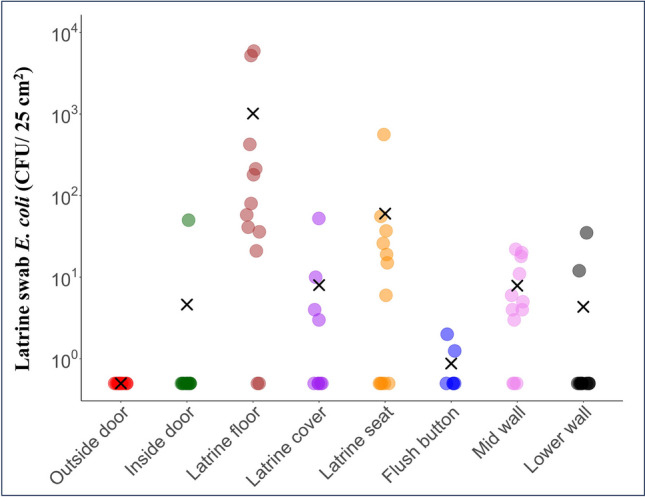
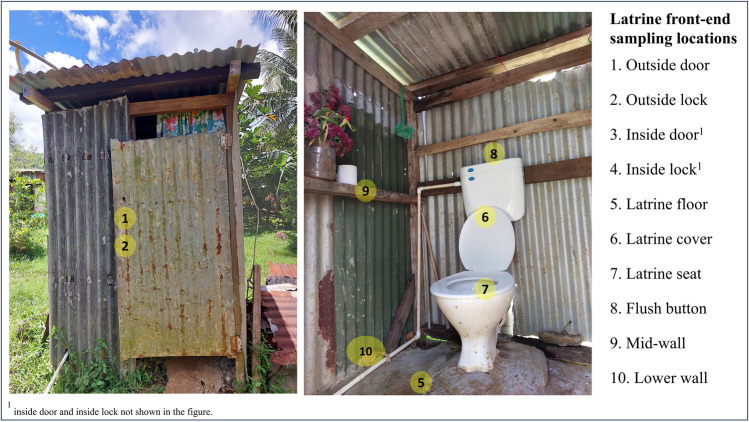
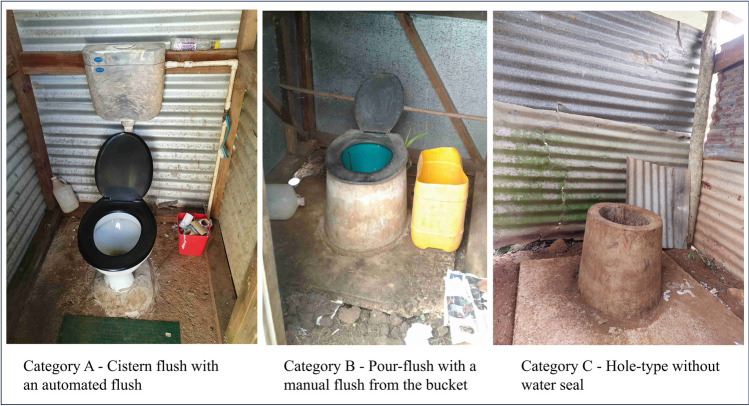
In Fiji, 90% of the population has access to basic sanitation; however, there are still persistent health risks from endemic faecal-oral diseases such as typhoid fever. There is a need to assess the contribution of existing sanitation facilities in the faecal pathogen transmission pathway. This study was conducted as part of a larger planetary health study across 29 rural communities within five river catchments. This specific research aimed to characterise latrine front-ends, both infrastructure and usage behaviour, and to assess the faecal contamination levels on various frequently contacted latrine surfaces in rural Fiji. A sanitation survey, along with observation and latrine swab sampling, was conducted in households over three phases: baseline (n = 311) (Aug-Dec 2019), endline (n = 262) (Jun-Sep 2022) and an in-depth front-end study (n = 12) (Oct-Nov 2022). Of 311 households, almost all had pedestal-type latrines, predominately cistern-flush (83%), followed by pour-flush (13%), and then hole-type (pit) latrines (4%). Washable latrine floors had significantly higher E. coli densities (6.7 × 10 CFU/25 cm) compared to non-washable floors (1.3 × 10 CFU/25 cm) (p = 0.05), despite washable floors indicating improved latrines. The in-depth front-end analysis found that moist latrine surfaces had significantly elevated E. coli densities (1.2 × 10 CFU/25 cm) compared to the dry ones (14.3 CFU/25 cm) (p < 0.001), highlighting the importance of maintaining dry latrine surfaces. Latrine floors and mid-walls were the most frequently contaminated surfaces, emphasising the need to clean and disinfect these surfaces. Only 46% of the households reported always using soap for handwashing after defecation, exacerbating the risk of transmitting faecal pathogens. This study highlights that latrine cleanliness and hygiene are as crucial as latrine infrastructures for the effective disruption of faecal pathogens transmission during latrine use.
在斐济,90%的人口能够获得基本的环境卫生设施;然而,由于伤寒等地方性粪口疾病的存在,仍存在持续的健康风险。需要评估现有环境卫生设施在粪源性病原体传播途径中的作用。本研究是在五大河流流域的 29 个农村社区进行的一项更大的行星健康研究的一部分。这项具体研究旨在描述厕所前端,包括基础设施和使用行为,并评估斐济农村地区各种经常接触的厕所表面的粪便污染水平。在三个阶段对家庭进行了环境卫生调查、观察和厕所拭子采样:基线(n=311)(2019 年 8 月至 12 月)、终点(n=262)(2022 年 6 月至 9 月)和深入前端研究(n=12)(2022 年 10 月至 11 月)。在 311 户家庭中,几乎所有家庭都使用了带基座的厕所,主要是水箱冲洗式(83%),其次是倾倒冲洗式(13%),然后是坑式(坑)厕所(4%)。可水洗的厕所地板的大肠杆菌密度明显高于不可水洗的地板(6.7×10 CFU/25 cm 比 1.3×10 CFU/25 cm)(p=0.05),尽管可水洗地板表明厕所状况得到了改善。深入的前端分析发现,潮湿的厕所表面的大肠杆菌密度明显高于干燥的厕所表面(1.2×10 CFU/25 cm 比 14.3 CFU/25 cm)(p<0.001),这突出表明保持厕所表面干燥的重要性。厕所地板和中墙是最常被污染的表面,这强调了清洁和消毒这些表面的必要性。只有 46%的家庭报告说在排便后总是使用肥皂洗手,这加剧了粪源性病原体传播的风险。本研究强调,厕所清洁和卫生与厕所基础设施一样重要,对于在使用厕所时有效阻断粪源性病原体的传播至关重要。