Laboratory of Bioanalysis, Institute of Biochemistry & Biophysics, University of Tehran, Enghelab Ave, P.O. Box: 13145-1384, Tehran, 1417614411, Iran.
Sci Rep. 2024 Aug 21;14(1):19360. doi: 10.1038/s41598-024-70003-7.
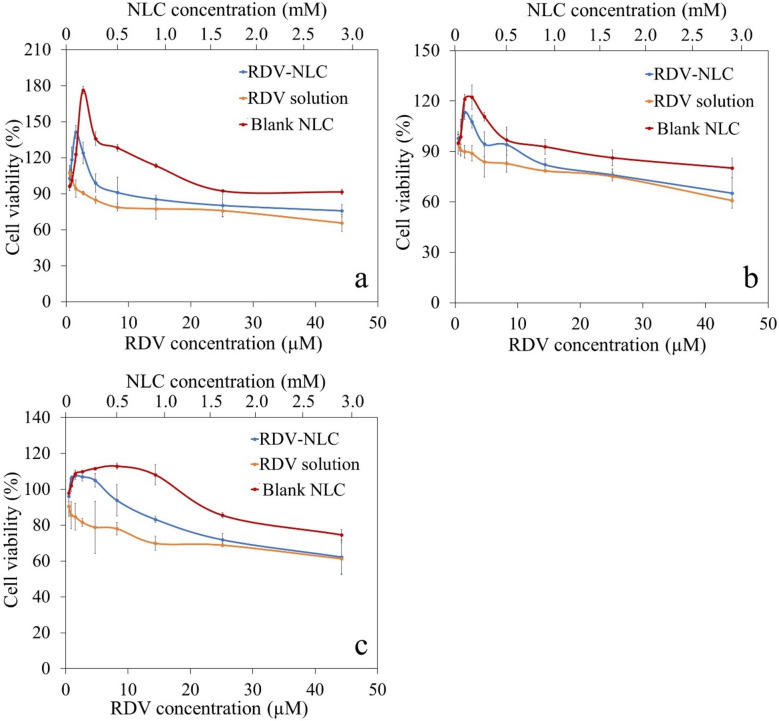
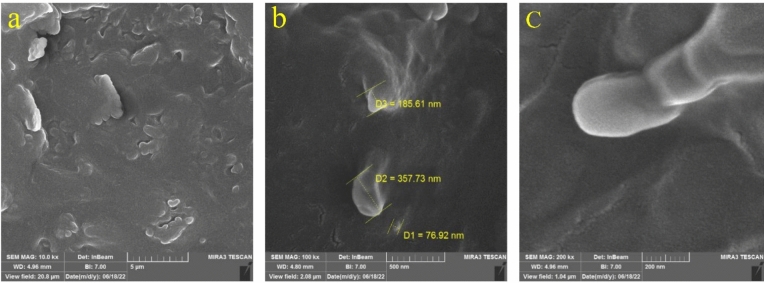
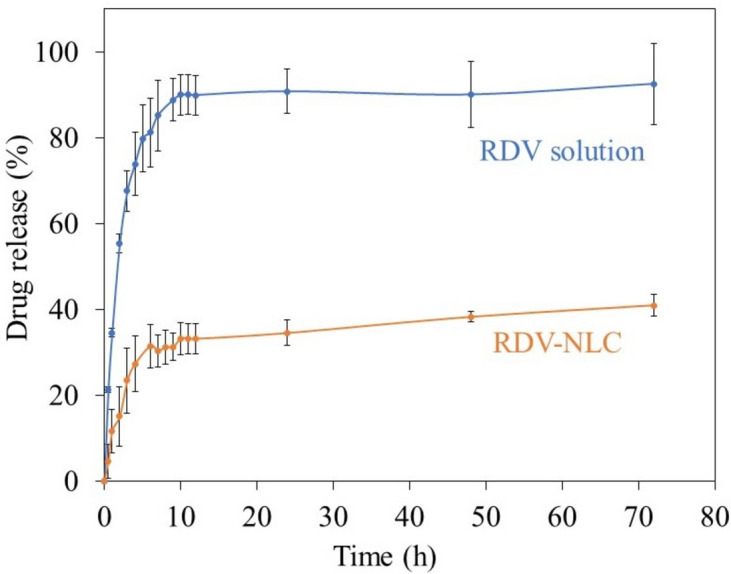
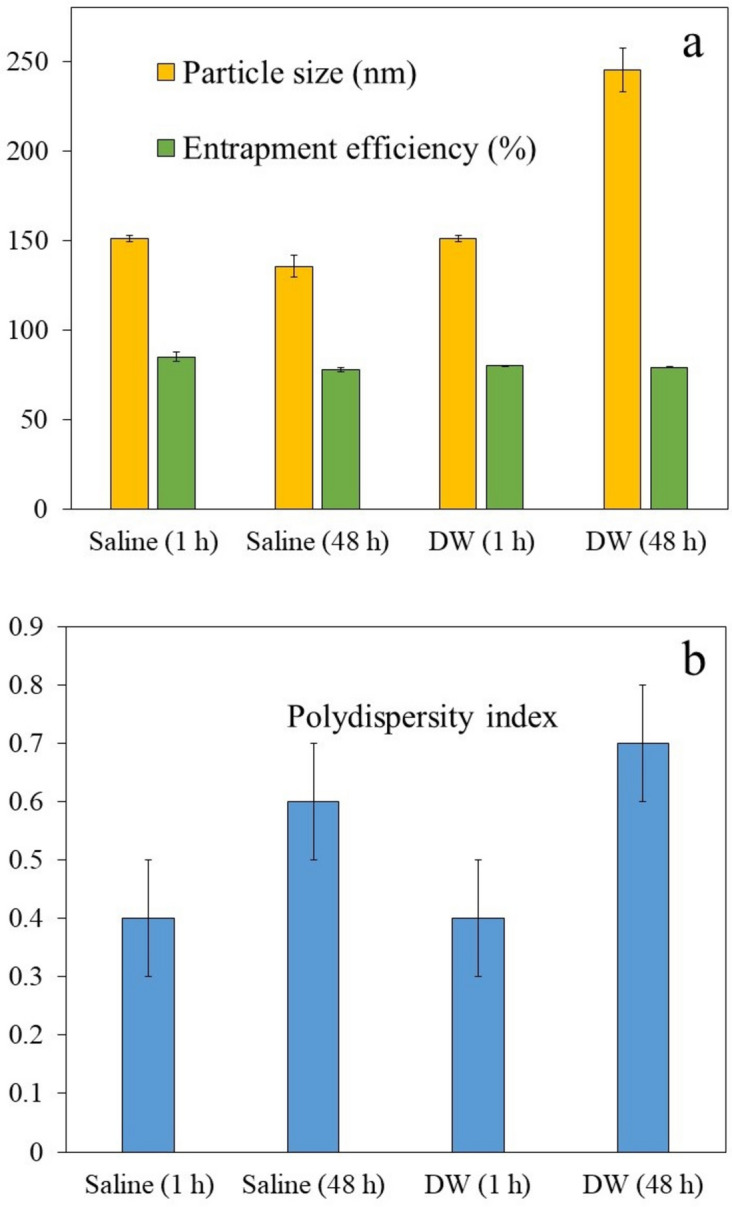
The aim of this study was to synthesize and evaluate nanostructured lipid carriers (NLCs) loaded with Remdesivir (RDV) to control its side effects in COVID-19 patients. Due to the low solubility and short half-life of RDV in the blood, an injectable formulation was prepared using sulphobutylether-beta-cyclodextrin. However, it can accumulate in the kidney and cause renal impairment. NLCs improve the parenteral delivery of hydrophobic drugs such as RDV by increasing drug solubility and bioavailability. For the synthesis of RDV-NLCs, the aqueous phase containing Tween 80 was injected into the lipid phase under rapid stirring and was sonicated. The experimental conditions were optimized using Box-Behnken design and Design Expert software. The optimum formulation contained a total lipid of 2.13%, a total surfactant of 1%, and a hot bath time of 71 min. The optimum formulation showed particle size, polydispersity index, zeta potential, and entrapment efficiency values of 151.0 ± 1.7 nm (from 149.1 to 152.1), 0.4 ± 0.1 (from 0.3 to 0.5), -43.8 ± 1.2 mV (from -42.4 to -44.7), and 81.34 ± 1.57% (from 79.52 to 82.33%), respectively. RDV-NLCs showed acceptable stability for 30 days at 25 ℃ and were compatible with commonly used intravenous infusion fluids for 48 h. FE-SEM images of RDV-NLC showed spherical particles with a mean diameter of 207 nm. The NLC-RDV formulation showed a sustained release of RDV with a low risk of dose-dumping, minimizing potential side effects. In addition, RDV in the form of RDV-NLC causes less cytotoxicity to healthy normal kidney cells, which is expected to reduce renal impairment in COVID-19 patients.
本研究旨在合成并评估载雷迪西韦(RDV)的纳米结构化脂质载体(NLC),以控制 COVID-19 患者的副作用。由于 RDV 在血液中的溶解度低且半衰期短,因此使用磺丁基醚-β-环糊精制备了可注射制剂。然而,它会在肾脏中积累并导致肾功能损害。NLC 通过增加药物的溶解度和生物利用度来改善 RDV 等疏水性药物的肠外给药。为了合成 RDV-NLC,将含有吐温 80 的水相在快速搅拌下注入脂质相,并进行超声处理。实验条件通过 Box-Behnken 设计和 Design Expert 软件进行优化。最佳配方含有 2.13%的总脂质、1%的总表面活性剂和 71 分钟的热浴时间。最佳配方的粒径、多分散指数、Zeta 电位和包封效率分别为 151.0±1.7nm(149.1nm 至 152.1nm)、0.4±0.1(0.3nm 至 0.5nm)、-43.8±1.2mV(-42.4mV 至-44.7mV)和 81.34±1.57%(79.52% 至 82.33%)。RDV-NLC 在 25℃下稳定 30 天,与常用的静脉输注液 48 小时相容。RDV-NLC 的 FE-SEM 图像显示出平均直径为 207nm 的球形颗粒。RDV-NLC 制剂显示出 RDV 的持续释放,剂量突释的风险较低,从而最小化了潜在的副作用。此外,以 RDV-NLC 形式存在的 RDV 对健康正常肾脏细胞的细胞毒性较小,有望减少 COVID-19 患者的肾功能损害。