Liu Zhongyue, Wu Boda, Shi Xiaoliu, Zhou Junfeng, Huang Hui, Li Zhihong, Yang Mei
Hunan Key Laboratory of Tumor Models and Individualized Medicine, The Second Xiangya Hospital, Central South University, Changsha, Hunan, China.
Department of Neurosurgery, The Second Xiangya Hospital, Central South University, Changsha, Hunan, China.
United European Gastroenterol J. 2025 Apr;13(3):338-348. doi: 10.1002/ueg2.12650. Epub 2024 Aug 22.
Peutz-Jeghers syndrome (PJS), is a rare autosomal dominant hereditary disease characterized by an elevated risk of various cancers. Serine/Threonine Kinase 11 (STK11) gene is a major tumor suppressor crucial for immune evasion with and beyond tumorigenic cells. It has garnered increasing attention in the realm of oncology treatment, particularly in the context of immunotherapy development.
This study aimed to assess the suitability of polyps obtained from individuals with PJS, resulting from germline STK11 deficiency, for immunotherapy. Additionally, we seek to identify potential shared mechanisms related to immune evasion between PJS polyps and cancers. To achieve this, we examined PJS polyps alongside familial adenomatous polyposis (FAP) and sporadic polyps.
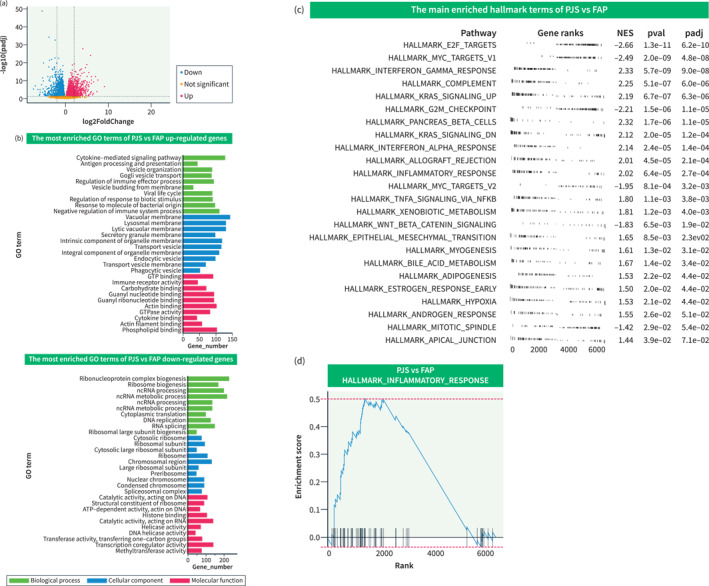
Polyps were compared among themselves and with either the paracancerous tissues or colon cancers. Pathological and gene expression profiling approaches were employed to characterize infiltrating immune cells and assess the expression of immune checkpoint genes.
Our findings revealed that PJS polyps exhibited a closer resemblance to cancer tissues than other polyps in terms of their immune microenvironment. Notably, PJS polyps displayed heightened expression of the immune checkpoint gene CD80 and an accumulation of myeloid cells, particularly myeloid-derived suppressor cells (MDSCs).
The findings suggest an immunobiological foundation for the increased cancer susceptibility in PJS patients, paving the way for potential immune therapy applications in this population. Furthermore, utilizing PJS as a model may facilitate the exploration of immune evasion mechanisms, benefiting both PJS and cancer patients.
黑斑息肉综合征(PJS)是一种罕见的常染色体显性遗传病,其特征是患各种癌症的风险升高。丝氨酸/苏氨酸激酶11(STK11)基因是一种主要的肿瘤抑制因子,对肿瘤细胞及肿瘤细胞外的免疫逃逸至关重要。它在肿瘤治疗领域,尤其是在免疫治疗发展背景下,受到越来越多的关注。
本研究旨在评估因种系STK11缺陷导致的PJS患者所患息肉用于免疫治疗的适用性。此外,我们试图确定PJS息肉与癌症之间与免疫逃逸相关的潜在共同机制。为实现这一目标,我们将PJS息肉与家族性腺瘤性息肉病(FAP)和散发性息肉一起进行了研究。
对息肉自身以及与癌旁组织或结肠癌进行比较。采用病理和基因表达谱分析方法来表征浸润性免疫细胞并评估免疫检查点基因的表达。
我们的研究结果显示,就免疫微环境而言,PJS息肉比其他息肉更类似于癌组织。值得注意的是,PJS息肉显示免疫检查点基因CD80的表达升高以及髓样细胞的积累,特别是髓样来源的抑制细胞(MDSC)。
这些发现提示了PJS患者癌症易感性增加的免疫生物学基础,为该人群潜在的免疫治疗应用铺平了道路。此外,将PJS用作模型可能有助于探索免疫逃逸机制,使PJS患者和癌症患者均受益。